Mali’s fragile security situation as Russian paramilitaries strike deals with rebels
On April 25, Mali’s transitional authorities faced a stark reality check as their security strategy—heavily reliant on Russian military support—showed alarming cracks. While officials had pinned their hopes on Moscow’s intervention to stabilize the country, events unfolded in two key locations that exposed the limits of a military-only approach. In Kidal, negotiations between Russian mercenaries and rebel groups led to a controversial withdrawal agreement, while fresh clashes erupted in Kati, the heart of Mali’s political power, underscoring the widening security vacuum.
Kidal: a symbolic retreat for Russian forces
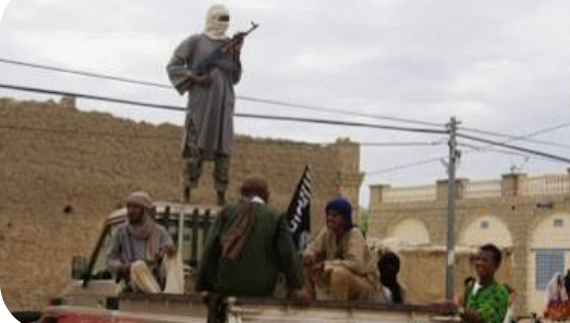
Northern Mali has become a flashpoint where military solutions are meeting their limits. According to multiple credible sources, a tacit evacuation pact was reportedly struck between Touareg rebel factions and Russian paramilitary units operating under the Africa Corps banner. While framed as a humanitarian gesture to avoid further bloodshed, the agreement carries deeper implications. It signals a de facto admission of failure by Bamako’s allies to secure the region. The Malian government had staked its legitimacy on reclaiming Kidal, a move meant to assert national sovereignty. Yet, the need for foreign brokers to negotiate safe passage for Russian troops reveals a harsh truth: external military intervention—whether Western or Russian—struggles to deliver lasting stability in Mali’s complex conflict zones.
Kati: insecurity creeps closer to the capital
The southern city of Kati, home to military barracks and a key strategic hub, has become the latest battleground in Mali’s deepening crisis. Once considered a bastion of government security, Kati now faces renewed fighting, exposing the fragility of Bamako’s defenses. This escalation is particularly concerning because Kati is not just a military outpost—it is the nerve center of Mali’s transitional government. The resurgence of violence there suggests that insecurity is no longer confined to remote regions but is encroaching on the very heart of state power, despite promises of a stronger Malian army and enhanced support from Russian advisors.
Why Russia’s military model is failing in Mali
The deployment of the Wagner Group—now rebranded under the Africa Corps—was touted as the answer to Mali’s spiraling jihadist insurgency and separatist movements. Yet, after years of cooperation, the results have been underwhelming. Violence continues to spread, and armed groups are gaining ground even in areas once considered secure. This persistent insecurity highlights a critical flaw in the strategy: brute force alone cannot substitute for political solutions or administrative control in remote regions.
The Malian government’s pivot toward Moscow has also come at a cost. By distancing itself from traditional regional and international partners, Bamako has entrenched itself in a military dependency that offers little long-term benefit. Russia, driven by its own geopolitical ambitions, has struggled to adapt to the realities of asymmetric warfare in the Sahel—where success demands not just firepower, but intelligence networks, community trust, and sustainable governance. Without these elements, even the most advanced mercenary forces will fail to break the cycle of violence.
Time to rethink Mali’s security strategy
The recent events in Kidal and Kati serve as a wake-up call for Mali’s transitional leaders. The failure to secure key regions and the growing boldness of armed groups demonstrate that a purely military solution—especially one outsourced to foreign actors—is unsustainable. The Malian state must prioritize inclusive governance, rebuild trust with local communities, and develop a defense strategy that goes beyond foreign mercenaries. Otherwise, the country risks sinking deeper into a quagmire of instability, with no clear exit in sight.