Shifting sands: how Washington is recalibrating its Sahel influence
The geopolitical landscape of the Sahel is quietly undergoing a strategic recalibration. As European security deployments gradually withdraw from Mali, Burkina Faso, and Niger, and Russia’s para-state structures gain visibility, the United States appears to be regaining momentum in the region. Yet, according to Emmanuel Dupuy, president of the Institut Prospective et Sécurité en Europe (IPSE), this perception requires nuance. In his assessment, “it’s not a resurgence, but rather confirmation that Washington never fully disengaged — instead waiting for the strategic void left by others to position itself more effectively.”
Pragmatic diplomacy in a fluid environment
This approach reflects a long-standing American strategic tradition rooted in pragmatism. “Americans prioritize transactional outcomes over ideology,” Dupuy explains. “They engage with actors whose values may differ, as long as it serves security and economic interests.” In this context, ideological alignment takes a backseat to strategic advantage — a dynamic that allows Washington to coexist with diverse partners, including Moscow.
Dupuy emphasizes that “the U.S. does not view Russia as a threat in the Sahel. In fact, they operate in complementary spheres, filling gaps left by European withdrawals.” This synergy, rather than confrontation, defines the current realignment, with each power leveraging space vacated by others.
Windows of opportunity: UN erosion and Russian limitations
Several factors are converging to create openings for U.S. re-engagement. “Everything aligns for Washington today,” Dupuy notes. “The UN’s credibility has eroded, and Russia’s counterterrorism efforts show clear operational limits.” These gaps offer indirect pathways for American influence to reassert itself without direct confrontation.
Central to this strategy is structured dialogue with de facto authorities, regardless of their origins. Dupuy draws a parallel: “The U.S. applies the same approach in Mali as it did in Afghanistan — engaging with Taliban interlocutors to secure long-term influence.” This pragmatic acceptance of political realities distinguishes U.S. policy from Europe’s more rigid stance toward military-led governments in the Sahel.
Rabat’s emerging role: Morocco’s soft power in Washington’s Sahel calculus
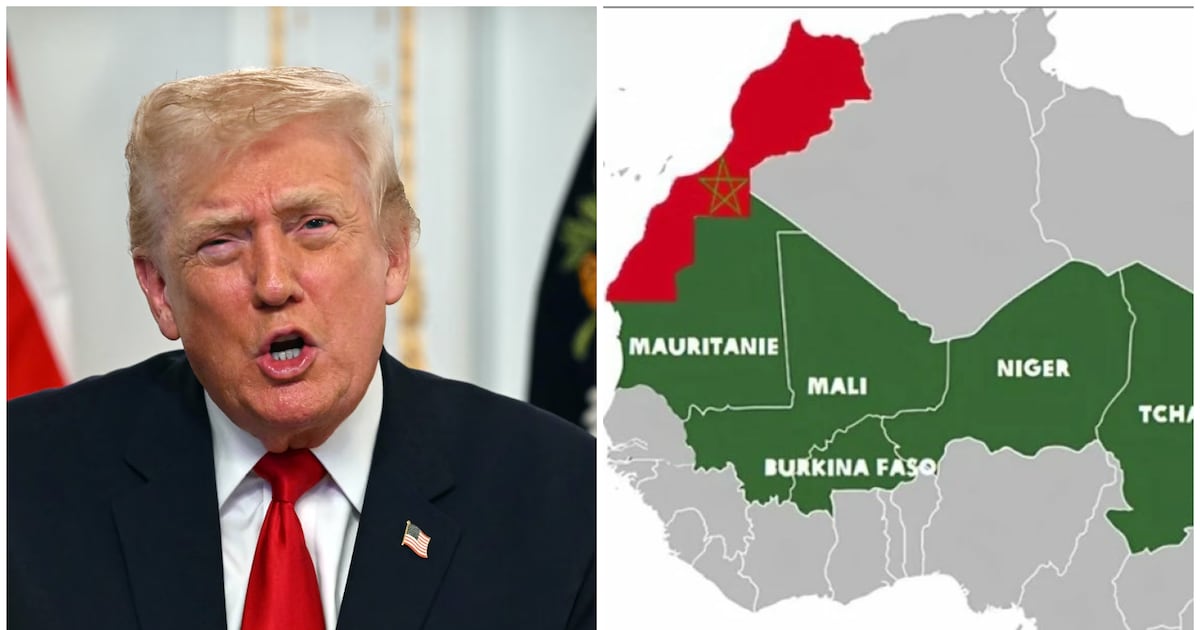
Amidst this fluid environment, Morocco has emerged as a key partner for both the Sahel states and the United States. Bilateral cooperation has deepened across military, economic, and diplomatic domains, positioning Rabat as a discreet yet pivotal actor.
Dupuy highlights Morocco’s unique position: “Rabat enjoys unparalleled legitimacy in the Sahel, including with post-coup governments in Mali, Niger, and Burkina Faso — a role Algeria has largely forfeited due to strained relations with Bamako.” This relational capital stems from Morocco’s ability to maintain dialogue where others cannot, offering a channel for Washington to advance its interests indirectly.
Beyond diplomacy, Morocco leverages soft power through religious influence. Since 2015, the Mohammed VI Institute for the Training of Imams has trained religious leaders across the region, promoting a Maliki-Sufi interpretation of Islam. “This is a highly effective tool for influence,” Dupuy asserts. “It stabilizes communities while advancing a moderate, pro-Western narrative.”
Economic levers: from mining to logistics
Economic interests further bind these relationships. Dupuy points to “U.S.-backed extractive projects in Mali and Burkina Faso for gold, and Niger for uranium — sectors where Washington prioritizes access through local partnerships.”
Looking ahead, Morocco could play a pivotal role in regional infrastructure development. Dupuy cites long-term projects such as “logistics corridors linking Burkina Faso, Niger, and Mali via Mauritania, with investments extending into southern Morocco — a vision spanning a decade or more.”
These initiatives complement U.S. trade policies, including the renewed African Growth and Opportunity Act (AGOA), which grants tariff-free access to 30 African nations. For Dupuy, this economic dimension is integral to Washington’s broader Sahel strategy, blending security, trade, and influence.
Coexistence with Russia: private contractors as the new battleground
In a region where state actors are increasingly constrained, private military companies (PMCs) have become central to power projection. Dupuy clarifies: “Neither the U.S. nor Russia will deploy regular troops. Instead, it’s private firms — American PMCs like Blackwater, operating alongside Russian structures like Wagner — that shape the battlefield.”
He cites the “facilitated deal between the DRC and Rwanda, brokered by U.S. intermediaries but executed by private contractors,” as a model of this indirect engagement. This outsourcing of security allows Washington to maintain plausible deniability while advancing its objectives.
Algeria’s shrinking influence: the Sahara dossier as a litmus test
Algeria’s strategic position has weakened amid shifting alliances. Dupuy dismisses Algiers’ current leverage: “Honestly, I don’t see much room for maneuver.” He notes that “the U.S. has reaffirmed that the only viable framework for the Sahara dispute remains the autonomy plan,” sidelining Algeria’s alternative proposals.
The 2022 Madrid summit marked a turning point, shifting discussions from ideology to practical governance — including local administration, maritime zones, and economic development. “It’s no longer about abstract debates, but implementation,” Dupuy argues. In this context, Algeria’s diplomatic maneuverability appears increasingly constrained.
A new geopolitical equation: Sahel as a crossroads of Atlantic, Mediterranean, and African interests
The Sahel today is less a theater of conflict than a chessboard of intersecting interests: resource extraction, security outsourcing, religious diplomacy, and infrastructure corridors. Washington’s strategy hinges on adaptability, while Morocco emerges as the linchpin of a new regional order.
Dupuy concludes: “A convergence of opportunities is unfolding. The U.S. gains a partner in Rabat with regional legitimacy, Sahel states secure diplomatic recognition and investment, and Morocco strengthens its role as a bridge between Africa, the Mediterranean, and the Atlantic.”