
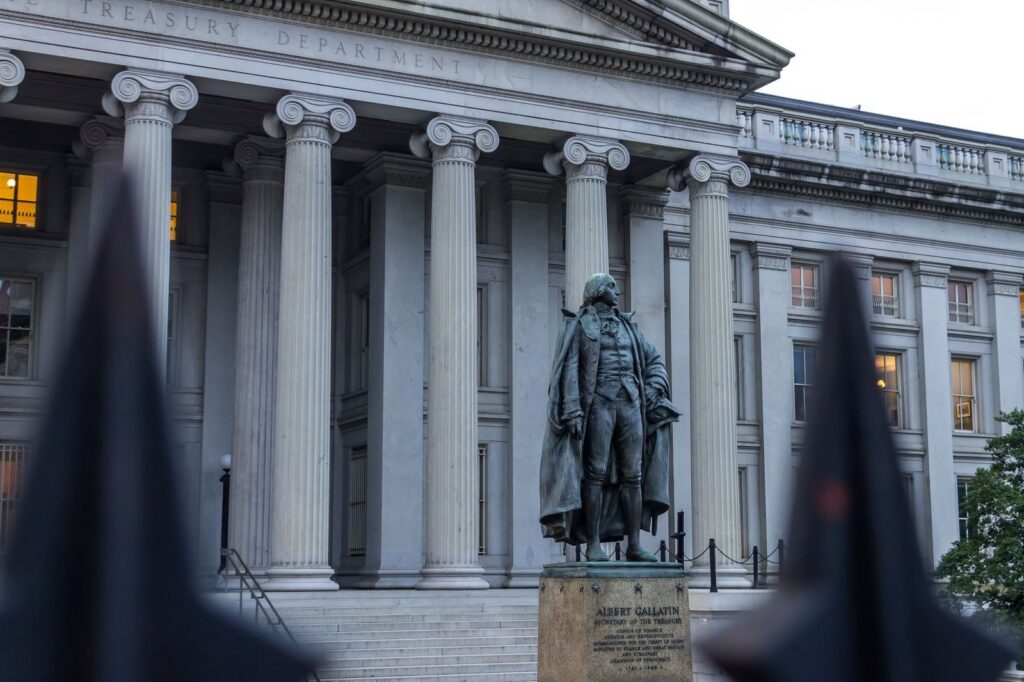
The United States has escalated pressure on key players in the ongoing conflict in eastern Democratic Republic of Congo (DRC). The US Department of the Treasury has imposed new sanctions on two individuals deeply involved in the violence plaguing North Kivu and South Kivu provinces: a senior intelligence officer of the Alliance Fleuve Congo and the March 23 Movement (AFC/M23), and a commander of the Rwandan Democratic Forces for the Liberation of Rwanda (FDLR). This move follows an earlier round of sanctions on March 2 that targeted the Rwandan military and four high-ranking officials, accusing them of backing the M23 rebellion.
Targeted measures disrupt armed group command structures
The latest sanctions reflect a more precise approach by Washington. Previous restrictions largely focused on entire organizations or state structures in Rwanda suspected of aiding the M23 logistically and militarily. By singling out specific individuals within operational networks, the US aims to cripple the internal workings of both armed factions. The designated AFC/M23 intelligence chief is said to play a pivotal role in intelligence gathering and operational planning across North Kivu.
On the FDLR side, the sanctioned commander belongs to an organization long classified as a terrorist entity by multiple international courts. Composed of former Hutu génocidaires who fled to the DRC after 1994, the FDLR remains a key pretext cited by Kigali to justify cross-border military operations. By targeting both an M23 cadre and an FDLR officer simultaneously, the Treasury signals a refusal to prioritize blame and aims to cut off resources to both sides.
US diplomacy shifts focus to the Great Lakes region
These sanctions are part of a broader diplomatic push. Since the start of the year, the US administration has sent repeated signals to Kinshasa, Kigali, and regional capitals involved in mediation. The March 2 sanctions against the Rwandan Defence Forces marked a turning point, as Washington explicitly named Rwandan generals and identified the army itself as a participant in the conflict. The new measures take this strategy further by targeting lower-level figures within non-state armed groups.
On the ground, the M23 continues to hold significant territory in North Kivu, including cities like Goma and Bukavu, captured during a major offensive earlier this year. Peace talks mediated by Qatar and Angola have yet to secure a lasting ceasefire. While these sanctions alone won’t shift the military balance, they will restrict the targeted individuals’ access to the global financial system, freeze potential US-held assets, and expose their commercial partners to secondary penalties.
Financial leverage: a question of impact
Yet doubts persist about the real-world effectiveness of these measures. Commanders of armed groups in eastern DRC often operate outside conventional banking channels, relying instead on parallel systems—particularly the trade in gold, tin, tantalum, and tungsten. Conflict mineral tracking NGOs have for years documented financial flows that sustain both the M23 and FDLR via Rwanda, Uganda, and, to a lesser extent, Burundi.
The primary impact of these individual sanctions may be symbolic. They provide a legal framework for European allies who may follow suit and weaken efforts by the targeted figures to launder funds or regain legitimacy. In March, the European Union adopted its own set of restrictions against Rwandan and Congolese figures linked to the conflict. Transatlantic coordination on the Great Lakes dossier appears to be strengthening after years in which the M23 operated with relative impunity in the face of Western indifference.
For Kinshasa, these announcements represent a measured but real diplomatic victory. President Félix Tshisekedi’s government has pushed since 2022 for tougher sanctions against Kigali and its proxies. For Rwanda, which consistently denies direct involvement, the expanded scope of US designations complicates official narratives and the work of lobbyists in Washington.
You may also like
-
Ousmane Sonko rallies Pastef militants in Bargny for membership card drive
-
Bargny rally: Ousmane Sonko rallies Pastef militants for membership drive
-
Ousmane Sonko rallies supporters in Senegal’s pastef membership drive
-
Ousmane Sonko rallies supporters in Bargny, Sébikotane, Khombole and Bambey for Pastef membership drive
-
Côte d’Ivoire electoral reform: 2PFJ pushes for inclusive political dialogue