This week’s visit by Nick Checker, head of the U.S. State Department’s African Affairs Office, to Mali signals Washington’s renewed engagement in the Sahel. However, the approach is undergoing a strategic shift across three key areas: a pivot toward trade diplomacy, particularly in minerals, a refocused security approach with reduced permanent military presence, and a move away from broad humanitarian aid in favor of targeted economic and security partnerships.
expert analysis: what’s driving u.s. policy in the Sahel?
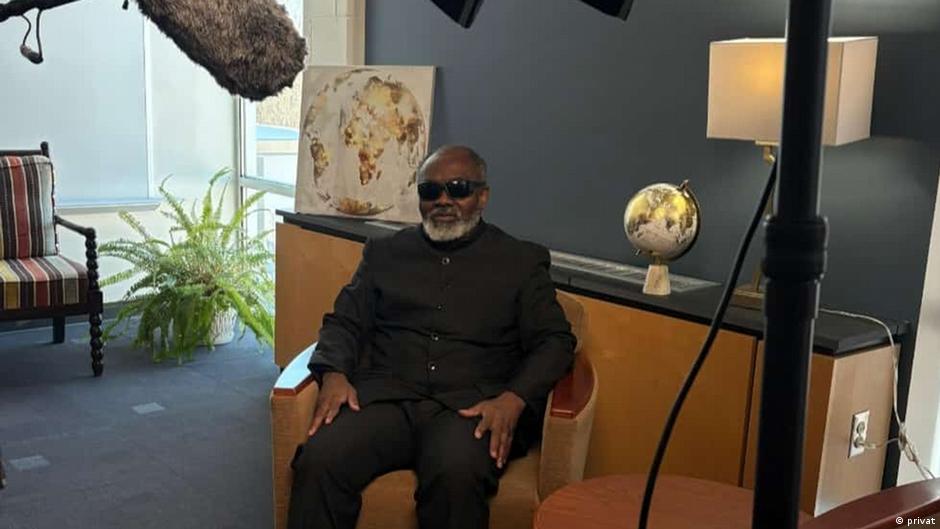
DW: Dr. Gnaka Lagoke, Nick Checker met with Mali’s Foreign Minister and interim leader Assimi Goïta during his stay in Bamako. How is U.S. foreign policy in the Sahel evolving under the current administration, and what objectives does Washington have in West Africa?
The U.S. strategy in the Sahel has shifted notably since the ousting of former Nigerien President Bazoum. While France and the European Union pursued a more assertive stance to reinstate him, the U.S. adopted a more measured approach. Even after Niger’s new authorities requested the closure of U.S. military bases and the withdrawal of American forces, Washington refrained from escalating tensions—a policy that began under the Biden administration.
Today, within the broader context of global power competition, particularly between Russia and China, U.S. policymakers emphasize two priorities: security and economic interests. The Sahel is rich in critical minerals, a key driver of American strategic policy. This pattern mirrors U.S. engagements in Venezuela, Iran, and the Democratic Republic of Congo, where access to vital resources remains a central focus.
DW: Why has the U.S. now designated Nigeria as its primary partner in West Africa, especially after withdrawing military bases from Niger?
Under President Donald Trump, the U.S. justified its actions in Nigeria by claiming to protect Christian communities allegedly targeted by Islamist militants. Following agreements with Nigerian authorities, the U.S. conducted airstrikes in the northern region. However, most analysts agree that these strikes alone cannot dismantle militant networks. The deeper motive likely involves securing access to Nigeria’s abundant oil and other resources.
This dual focus on security and economic leverage reflects the Trump administration’s broader strategy in the Sahel. It may also lead to the establishment of new military bases in neighboring countries like Benin and Côte d’Ivoire, where U.S. forces have reportedly relocated.
DW: What potential benefits could the Alliance of Sahel States (AES) gain by collaborating with the U.S. under Trump?
One key advantage is that the U.S. offers an alternative to the punitive stance adopted by France and the EU, which has marginalized AES member states. This provides diplomatic breathing room and reinforces African sovereignty—a narrative that resonates deeply across the region.
Additionally, in the context of global power rivalry between Western blocs and BRICS nations, the U.S. offers African countries greater negotiating leverage. While Washington seeks to advance its own interests, it frames its engagement as respectful of regional sovereignty—a message likely to appeal to Sahelian publics.
Yet, reports suggest complex networks involving France, the U.S., and other actors may still be pursuing regime change in Mali, Burkina Faso, and Niger. Whether this reflects strategic ambiguity or deeper geopolitical maneuvering remains an open question.