The approaching November 20, 2026 deadline in Togo is no ordinary protest call—it’s a calculated bet on how three years of unchecked hardship could rewrite the country’s political landscape. Behind every unpaid electricity bill, every unaffordable food basket, and every unreturned exile lies the question: has Faure Gnassingbé’s administration waited too long to address the cracks in its foundation?
The hidden chemistry of discontent fueling November’s test run
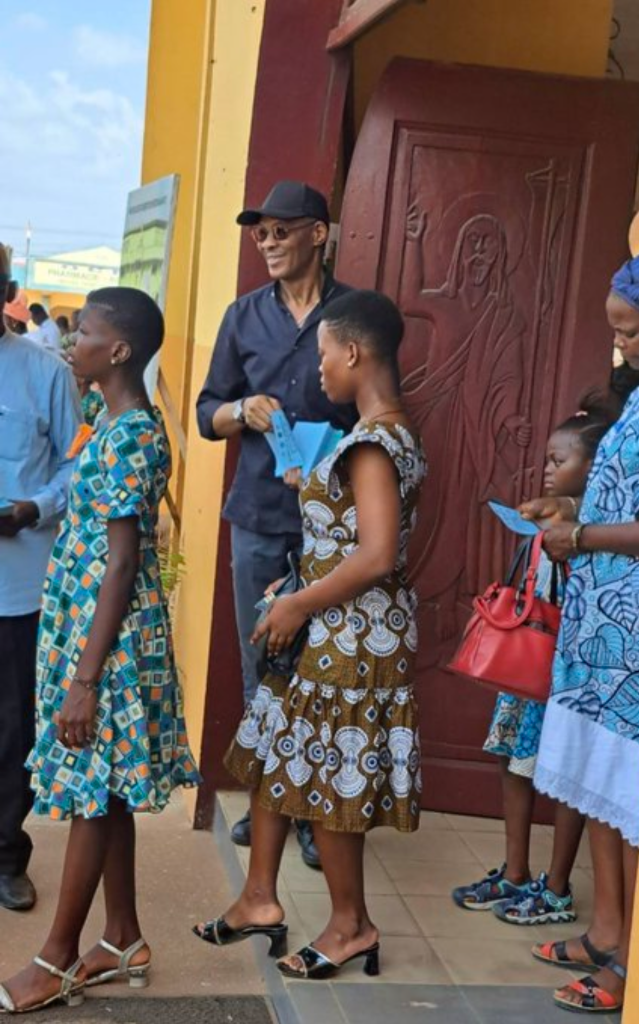
Nathaniel Olympio isn’t just mobilizing against power cuts or rising prices—he’s documenting a hidden chemistry of discontent that turns daily annoyances into tomorrow’s political tinderbox. Since early November, leaflets have surfaced at church exits, markets, and university gates, not as flyers, but as breadcrumbs leading to what organizers call the ‘Patriotic Warning Day.’ The trigger? A trio of pressures so persistent they’ve reshaped public expectations: a currency losing its value faster than salaries do, a grid that blinks more often than it lights, and a constitutional patchwork that some believe was stitched to keep one family in charge.
Olympio’s campaign isn’t random; it’s a response to a quiet erosion of faith. When citizens who once tolerated daily blackouts start calculating the cost of not acting, when traders who used to absorb price hikes begin tracking how many meals they can scrape together, small frustrations grow into shared conviction. The opposition alliance behind this push, Manifesto Generation Togo, doesn’t demand revolution—they’re scripting a script many hope will be legible to the president’s inner circle before the script becomes a real-time reality for the whole nation.
From dinner plates to polling stations: the hidden economics of despair
Take rice, a staple in most Togolese home kitchens. In 2023, a 50-kilogram bag cost around 12,000 West African CFA francs. By September 2026, the same bag breached 18,000 francs—an increase that outpaces the 5 percent average salary increase negotiated in the last public sector round. For families on tight budgets, this isn’t an arithmetic tweak; it’s a hardship compounder. Households already cutting one meal a day now face a choice: feed the children or the meter, knowing both will demand payment.
The cost-of-living squeeze isn’t confined to kitchens. Small-scale traders report that rising import taxes on goods like cooking oil and basic electronics have eroded margins small enough to spark pauses in hiring. With the local currency depreciating against both the dollar and the euro, imports—energy, food, medicines—arrive with steeper price tags. The result? A silent inflation that filters through every price tag, pay slip, and power bill.
A grid that doesn’t just flicker but flickers minds into action
Electricity blackouts in Togo have become so predictable they’re almost rhythmic—morning, noon, and early evening. But behind the grid’s flicker lies a story of missed investments, opaque contracts, and a utility (CEET) that some believe operates more like a private account for a few than a public service for millions. When outages shutter shops, stall fruit and vegetable sales, and force clinics to rely on generators during the day, frustration isn’t confined to darkness—it spills into daylight frustration that registers in polling booths and protest barometers.
Nathaniel Olympio’s alliance has turned these blackouts into a campaign emblem. Flyers don’t just list complaints—they pair each power cut with a causal link: delayed maintenance, absent transparency, and policies that prioritize foreign investors over local resilience. Their demand? A transparent audit of CEET’s finances, a clear timeline for renewable energy investments, and a commitment to keep lights on before plunging the country into further shadows.
Institutional erosion: when constitutional tweaks feel like tectonic shifts
The 2024 constitutional amendments weren’t just legal adjustments; opponents argue they were engineered to stack the deck in favor of incumbency. By extending term limits, diluting checks and balances, and centralizing executive power, critics claim the reforms didn’t just change the rulebook—they tilted the playing field. For a president who has held office since 2005, these changes read less like housekeeping and more like an insurance policy against natural turnover.
Nathaniel Olympio’s rhetoric has sharpened: he frames the November 20 call not as a protest against power cuts or inflation alone, but as a referendum on the broader compact between ruler and ruled. When citizens feel their votes don’t change outcomes, when courts are seen as extensions of the executive, and when exile becomes a safer route than dissent, the social contract frays. The opposition’s demand—an inclusive national dialogue—isn’t just procedural; it’s a plea to salvage what remains of institutional trust before it’s too late.
November 20 as a political stress test
The ‘Patriotic Warning Day’ on November 20 isn’t positioned as a revolution—it’s framed as a stress test. Organizers are asking citizens to pause their routines, not to storm the streets with torches and slogans, but to signal, in unison, that the accumulated frustrations have reached a ceiling. The campaign’s leaflets don’t carry calls for regime change; they carry receipts: grocery bills, meter readings, missed calls to family abroad, and calendar dates marking another year under the same leadership.
If the turnout matches expectations, the alliance plans to escalate in January 2027 with a broader push for national talks aimed at inclusive governance. The goal isn’t to overthrow Faure Gnassingbé—it’s to test whether the administration can still govern outside the shadow of accumulated grievances. If the November 20 signal echoes loudly enough, the administration may face a choice: open channels of dialogue or risk watching discontent metastasize into something harder to contain.
What happens if November 20 doesn’t deliver?
Failure isn’t an option the opposition is willing to present publicly, but privately, organizers acknowledge two scenarios. The first: a muted turnout that lets the administration claim legitimacy despite the protests. In that case, the alliance may regroup, intensify outreach, and broaden the pitch beyond bread-and-butter issues to systemic reform.
The second scenario, harder to quantify, is a turnout that surprises observers and forces the administration to confront the depth of discontent. If that happens, November 20 won’t just be a warning day—it could become a turning point, the day Togo’s quiet hardship reshaped its political calculus before the next election cycle even begins.