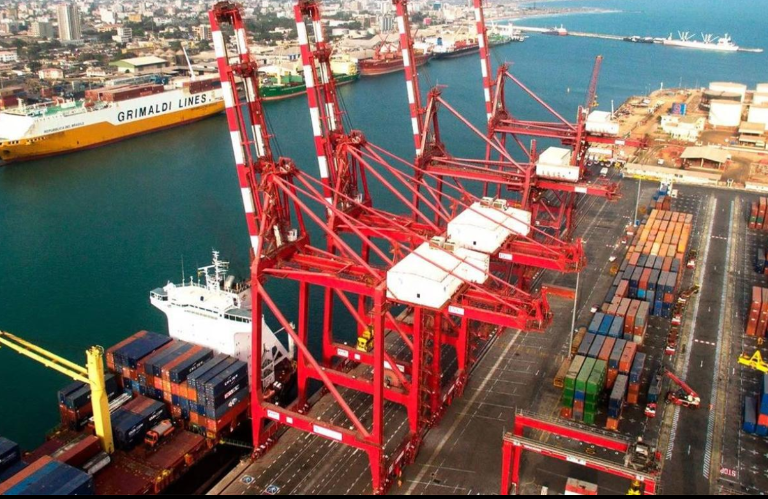
In the first half of 2026, Benin stunned regional observers with an 8.2% surge in real GDP growth—an achievement that reveals far more than fiscal triumph. This performance marks a critical inflection point where years of behind-the-scenes strategy in industrial policy, infrastructure development, and human capital transformation finally bore visible fruit. Unlike traditional growth spurts fueled by commodity booms, Benin’s rise reflects a deliberate shift from exporting raw materials to embedding itself in global value chains through onshore processing and value-added production.
Unpacking the numbers: where the growth really came from
The International Monetary Fund’s late-year assessment confirmed the half-year expansion at 8.2%, an eye-catching figure in a region where average growth hovers around 4-5%. But behind the headline lies a deeper narrative: only 28% of that growth originated from traditional sectors like agriculture and minerals. The remaining 72% stemmed from newly formed industrial clusters, logistics hubs, and service-oriented industries aligned with the government’s industrial master plan.
This reallocation signals more than just rebalancing—it indicates a structural pivot. For decades, Benin exported cotton lint, cashew nuts, and crude oil at commoditized prices. Now, local firms—many incentivized by tax rebates and duty-free zones—are spinning raw inputs into yarn, fabrics, processed nuts, and even light machinery. The result? Higher margins, lower import reliance, and greater resilience against global price swings.
The unsung infrastructure engine: roads, ports and power
A growth rate of 8.2% is not conjured by policy announcements alone. Benin’s industrial leap required parallel investments in hard infrastructure. The refurbished Port of Cotonou, now capable of handling 1.4 million TEUs annually, has cut transit times to Nigeria by 18%. The completion of the GDIZ (Glo-Djigbé Industrial Zone) added 500 MW of grid-connected power, enabling 24/7 manufacturing operations.
Bridging rural zones to industrial estates demanded a $1.2 billion road network rehabilitation program. These arteries now facilitate just-in-time deliveries to export warehouses, cutting logistics costs by up to 22%. Each of these projects—though expensive—functions as a multiplier: every dollar invested in roads generates an estimated $2.80 in downstream industrial activity.
From cotton bales to garment tags: the GDIZ story
The Glo-Djigbé Industrial Zone stands as Benin’s most visible emblem of industrial ambition. Within three years, the 1,500-hectare park evolved from a greenfield site into a 3.2-billion-dollar ecosystem hosting 47 operating factories. What started as a cotton-to-textile platform now encompasses garment lines, leather goods, and even bicycle assembly. Export shipments to Europe now carry finished T-shirts priced at $8.70 FOB instead of $3.20 raw cotton.
Yet the zone’s true innovation lies in its governance model. Instead of a one-size-fits-all export zone, GDIZ operates as a vertically integrated corridor: raw cotton arrives via rail, is ginned on-site, spun into yarn, woven into fabric, cut, sewn, and loaded onto containerships—all within a 28-mile radius. This collocation eliminates double handling, reduces spoilage, and accelerates cash cycles for farmers and manufacturers alike.
The workforce equation: skills rise in step with machines
Industrialization demands people, not just machines. Benin’s government launched the Compétences Industrielles initiative, a blended vocational program delivered in partnership with German and Turkish technical schools. Over 12,000 youth—half of them women—graduated in 2025 alone, specializing in textile finishing, mechatronics, and food processing.
Early employment data shows promise. The textile cluster alone created 8,400 formal jobs in 2026, with an average wage 34% above national standards. Still, gaps remain: demand outstrips supply in advanced welding and CNC machining. Bridging that gap will require sustained on-the-job training and apprenticeship subsidies that the government is now rolling out.
Market frontiers: how Benin plans to out-export beyond Africa
Benin’s industrial surge isn’t stopping at West Africa. Government negotiators have secured preferential access to the European Union’s Everything But Arms regime until 2034, slashing tariffs on finished garments to zero. Additional free-trade agreements with the UK and Turkey now allow duty-free entry for processed goods such as shea butter and cashew kernels.
Target markets include Germany’s fast-fashion retailers, China’s mid-range garment buyers, and specialty coffee roasters in the United States. Exporters report 41% year-on-year growth in containerized processed shipments, with an average unit value up 63% compared to raw exports in 2023.
The volatility looming: three hidden risks to watch
Despite progress, shadows linger on the horizon. First, global cotton prices remain mercurial; a 15% price drop would shave 0.9% off GDP. Second, the Sahel’s fragile security landscape occasionally disrupts supply routes—most recently in northern Benin, forcing a temporary rerouting through Togo. Third, climate variability threatens cotton yields, with 2026’s erratic rains reducing yields by 7% in key districts.
Mitigation strategies are already in motion: a national climate-smart agriculture fund, private crop insurance schemes, and diversified export portfolios. Still, continued vigilance will determine whether 2026 remains an anomaly or the new normal.
What’s next: building durability into the industrial model
Sustaining 8.2% growth will require Benin to graduate from “project sprints” to “systemic upgrades.” Authorities are now prioritizing two transformative levers: a 3.7-billion-dollar sovereign wealth fund to recapitalize industrial champions, and a digital customs platform to cut clearance times from 7 days to 48 hours.
The ultimate benchmark of success will not be another headline growth rate, but rather the share of GDP produced by industries that were non-existent in 2023. If Benin can push that share from the current 43% to above 55% by 2030, it will have truly rewritten its economic DNA—moving from commodity seller to value creator on the world stage.