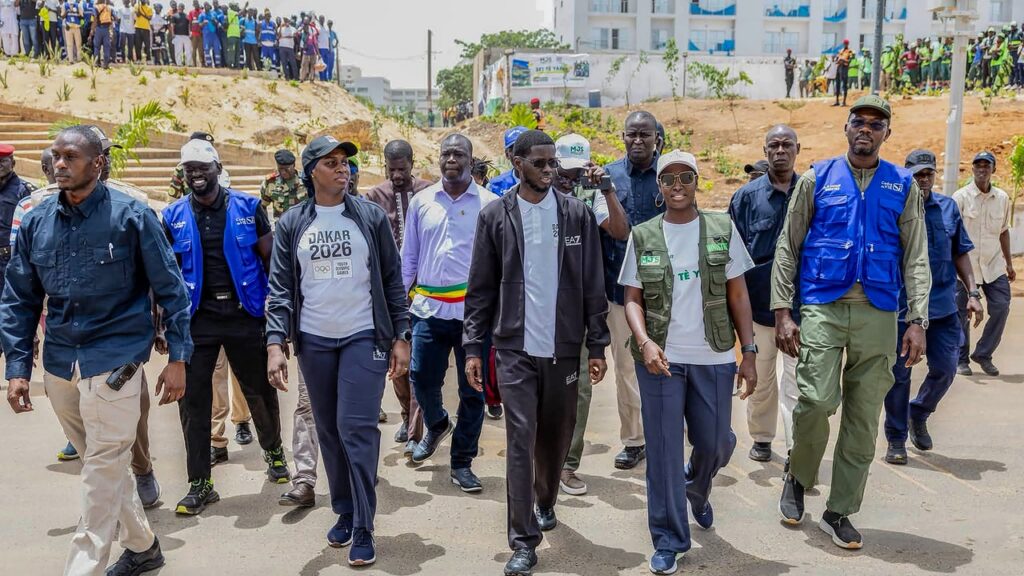
Senegalese President Bassirou Diomaye Faye has not announced a date for the country’s next local elections. The vote is theoretically scheduled for January 2027, but the head of state is keeping the timeline deliberately vague, reinforcing his political base while leaving the opposition and local officials in the dark.
Since taking office, Faye has made no secret of his intention to reshape Senegal’s political landscape. Yet on the question of local elections, his position remains carefully ambiguous. No official decree, no firm commitment, no clear timetable.
A strategic silence that frustrates local officials
For mayors, departmental councils and regional assemblies, the uncertainty is becoming untenable. Local elected officials are expected to manage budgets, launch projects and plan investments without knowing whether their mandates will be extended or cut short. The absence of a date disrupts administrative continuity and fuels speculation about behind-the-scenes manoeuvres.
Several local leaders have publicly voiced their concern. They argue that without a clear electoral calendar, decentralization itself is being undermined, as councils operate in a legal grey zone.
Kiiraay – Les Patriotes républicains: a party machine in motion
While the electoral date remains unclear, Faye’s party, Kiiraay – Les Patriotes républicains, is actively organizing. The movement has intensified its grassroots activities, holding meetings, registering members and structuring local branches across the country. This groundwork suggests that whatever the timing, the party intends to be ready.
But critics see a contradiction: a party that claims to champion transparency and institutional renewal is leaving a key democratic process in limbo.
What the delay means for Senegal’s democracy
The stakes go beyond mere logistics. Local elections are a cornerstone of Senegal’s decentralized system, giving citizens a direct say in how their communities are run. Prolonging the uncertainty risks eroding public trust, especially among young voters who propelled Faye to power on a promise of systemic change.
Some observers note that the president may be playing for time, waiting for the most favourable political configuration before calling voters to the polls. Others argue that the delay is simply administrative, linked to the complex task of preparing a nationwide vote.
Either way, the silence is becoming a political fact in itself. In a country with a strong democratic tradition, the longer the wait, the louder the questions.
The road ahead
For now, Bassirou Diomaye Faye holds the cards. He can announce a date at any moment, or continue to let the uncertainty linger. What is certain is that local officials, party activists and ordinary Senegalese are all watching, waiting for a signal that has yet to come.
You may also like
Alain-Georges Moukoko takes over Libreville prosecutor general’s office
Bénin : le Sénat tient sa séance inaugurale sous la conduite de Patrice Talon
Gabon : le citoyen au cœur de la nouvelle donne démocratique
Gabon : l’association Force lance sa rentrée citoyenne à Akanda
Is Chad truly entering a period of political easing?