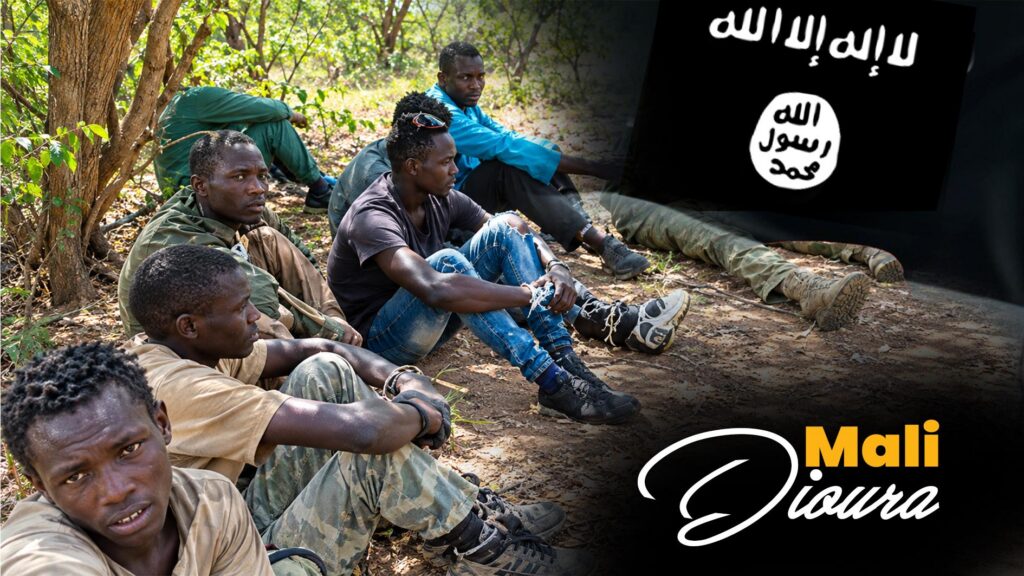
A direct challenge to Bamako’s official account
When Mali’s chief of defence staff dismissed the situation at Dioura with the curt claim that “there is nothing at Dioura,” the Group for the Support of Islam and Muslims (JNIM) answered with a detailed and devastating statement. The jihadist organisation claimed responsibility for the assault, providing extensive specifics and visual evidence that directly contradict the military’s version of events. The scale of the losses and the equipment seized expose the widening gap between the junta’s public messaging and the reality on the ground.
JNIM’s rebuttal leaves no room for doubt
The Malian junta’s attempt to downplay the incident backfired sharply. By publicly asserting that no major event had occurred in Dioura, the military command likely hoped to smother the fallout from another strategic setback. But the JNIM, Al-Qaeda’s Sahel affiliate, responded swiftly with a counter-statement that was as firm as it was detailed.
For Assimi Goïta’s government, which has built its narrative around sovereign reconquest and a growing military capability, the contrast is stark. By denying the obvious before it surfaced on social media, Bamako risks a damaging loss of credibility—not only among international observers but, more critically, among Malians who are increasingly uncertain about the country’s true security situation.
A staggering toll in lives and equipment
The figures released by the JNIM point to a military catastrophe. The group claims to have killed 150 Malian soldiers during the clashes, including senior officers—among them a colonel and a captain. In addition to this heavy human cost, 93 soldiers were reportedly taken prisoner, giving the armed group considerable political and strategic leverage.
On the logistical side, the rout described by the terrorist group is equally dramatic:
- Malian army losses: Confirmed destruction of 15 military vehicles and more than 100 motorcycles used by patrols.
- Captured vehicles: Seizure of 6 tactical vehicles and 10 operational motorcycles.
- Heavy weaponry recovered: 6 14.5mm guns, 17 DShK heavy machine guns, 32 PK machine guns, 10 RPG rocket launchers, 3 mortars, and one SPG recoilless gun.
- Light arms and ammunition: 233 Kalashnikov assault rifles and a massive stockpile of ammunition of various calibres.
To back up these claims and pre-empt any dispute, the JNIM released photographic and video evidence detailing the captured equipment and prisoners.
The information war: Bamako’s strategic weak point
The Dioura episode highlights a systemic flaw in the junta’s crisis management. By favouring denial or silence in the face of tactical reverses, the military command leaves the field open to enemy propaganda. When jihadist militias circulate verifiable images of seized materiel and captured soldiers, official communications collapse, deepening the sense of isolation among troops deployed at the front.
This battle for the narrative is all the more crucial because the JNIM has demonstrated its ability to conduct complex operations, combining mass assault with the systematic recovery of heavy weaponry. Each defeat that the authorities refuse to acknowledge erodes confidence within the army’s ranks and undermines national cohesion.
Reality on the ground versus the sovereignty discourse
The situation on the ground reaffirms the complexity of the security crisis in central and northern Mali. Despite claims of a strategic break and the reliance on new partners, the armed groups’ capacity to inflict damage remains intact. The Dioura attack proves that the JNIM retains tactical mobility and strike capability able to disrupt fortified army positions.
Given the precision of the details provided by the attackers, silence or minimisation by the authorities cannot serve as a military strategy. For the Malian junta, the challenge is no longer just about reconquering territory—it is about confronting the facts and recalibrating a security response that is now under severe strain.
You may also like
Niger: opposing Tiani’s junta means losing your citizenship
Benin and Spain: a cultural pact built on art and diplomacy
Niger: Tiani’s post-coup purge strips 25 citizens of nationality
Niger: 1.8 billion FCFA monthly military fund at centre of Tiani-Mody-Zeine power struggle
Mali press reform: a decade of internal division behind the employers’ consensus