Political tensions rise as accusations target Senegal’s spiritual heartland
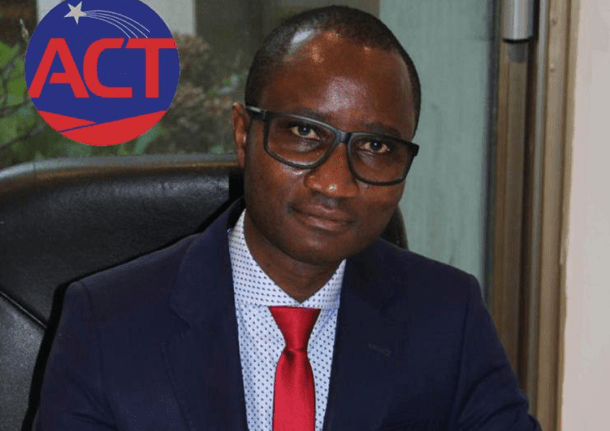
Political divisions deepened in Senegal following a sharp criticism from Ibrahima Thiam, leader of the ACT party, who accused Ousmane Sonko of fueling divisive rhetoric with his recent statements.
In a strongly worded opinion piece titled « The amalgam as a strategy: Sonko’s latest misstep », Thiam argued that Sonko’s comments were not merely part of a substantive debate but a deliberate attempt to provoke and polarize public opinion. He contended that the remarks, which appeared to link Touba—a revered spiritual and economic hub—and its Mouride community to criminal activity, crossed a dangerous line in political discourse.
Thiam emphasized that in a functioning democracy, accountability must remain individual, not collective. He warned that labeling an entire city and religious community as complicit in wrongdoing serves no purpose other than to spread unfounded suspicions and deepen societal divides.
According to Thiam, Sonko’s approach relies on populist tactics: replacing reasoned arguments with sensational soundbites and prioritizing media spectacle over meaningful dialogue. He suggested that this strategy is designed to energize the PASTEF base by fostering a climate of confrontation rather than constructive engagement.
A call for measured political speech
Thiam underscored the significance of Touba, describing it not only as a major city in Senegal but also as a spiritual cornerstone, an economic driver, and a historical landmark. He stressed that the Mouride community plays a vital role in national cohesion, and any public statement that could be interpreted as a broad indictment of this group must be handled with the utmost care.
In closing, Thiam urged political leaders to adopt a more measured tone, grounded in facts and mutual respect, to safeguard national unity and ensure that reasoned debate prevails over emotional division.