Togo’s latest attempt to revive political dialogue has hit an impasse, with four major opposition coalitions outright rejecting government-led negotiations. The breakdown stems from fundamental disagreements over the country’s constitutional reform and the interpretation of a key ruling by the ECOWAS Court of Justice, revealing deeper institutional fractures that threaten the nation’s democratic trajectory.
Opposition forces redefine the political debate
The government’s renewed push for dialogue, launched on October 9, 2026, through the Permanent Consultation Framework (CPC), was designed to foster inclusive national discussions. Yet, the initiative failed to gain traction with key opposition blocs, which swiftly dismissed it as a superficial gesture. The coalition—comprising the Dynamic Monsignor Kpodzro (DMK), the Dynamic for the Majority of the People (DMP), Light for Development in Peace (LDP), and the “Don’t Touch My Constitution” movement—issued a joint statement on October 15, branding the government’s approach a “deceptive dialogue.”
The opposition’s position is anchored in the Manifeste Génération Togo, a manifesto calling for sweeping political transition measures. Rejecting the CPC’s format, these groups argue that meaningful reform requires dismantling the current institutional framework before any substantive talks can commence. Their stance underscores a strategic shift: from negotiating within existing structures to demanding a foundational reset of Togo’s political system.
Constitutional reform and the ECOWAS ruling: the flashpoints dividing Togo
The opposition’s rejection isn’t merely procedural—it’s tied to two critical developments. First, the constitutional reform passed in March 2024, which transitioned Togo from a semi-presidential to a parliamentary system, remains deeply contested. Critics argue the reform was rammed through without adequate consultation, undermining its legitimacy and altering power dynamics in ways they describe as undemocratic.
Second, the January 29, 2026 ECOWAS Court ruling has become a focal point of contention. While the opposition interprets the judgment as a mandate for immediate institutional transition, legal experts caution against conflating judicial decisions with political demands. The ruling’s precise legal scope is nuanced, but opposition leaders have seized on it to justify their push for a government-wide reset, involving both national and regional stakeholders like the African Union’s Peace and Security Council.
What the government’s response reveals about the divide
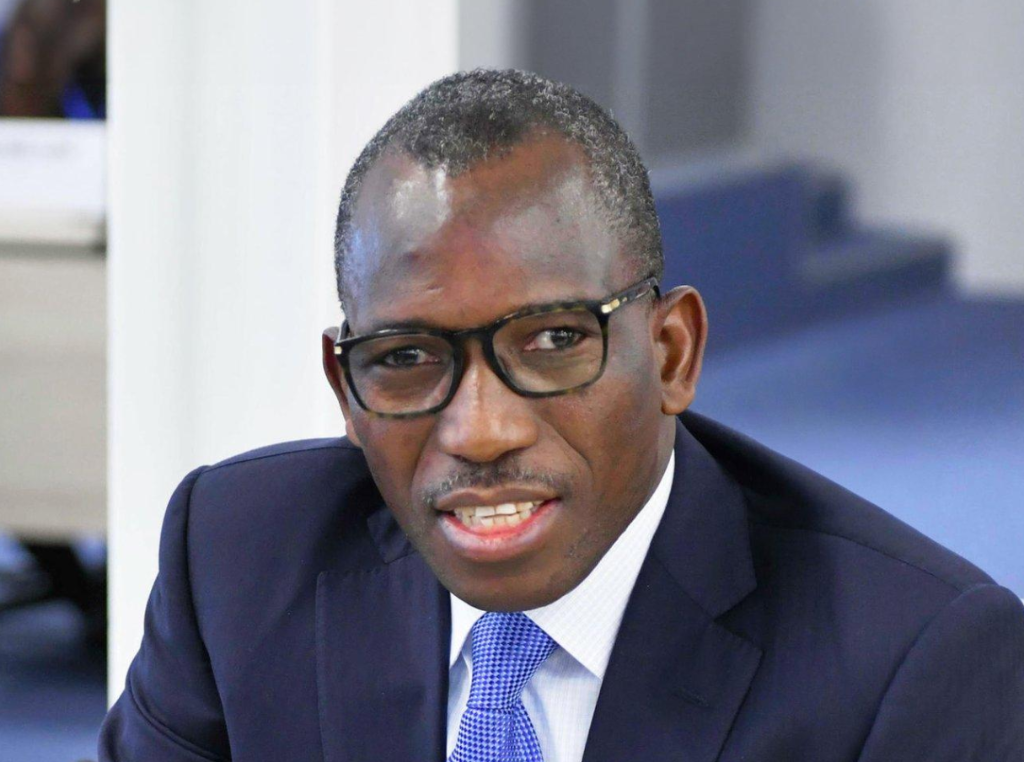
In response to the opposition’s refusal, the administration defended the CPC as the proper forum for national discourse. Minister Gilbert Bawara, speaking on October 12, emphasized that dialogue isn’t the sole responsibility of the government but requires active participation from opposition parties. His argument—that engagement within existing frameworks is the only path forward—highlights a fundamental disagreement over process.
The government’s position suggests confidence in incremental reform through institutional channels. However, the opposition’s outright rejection exposes a deeper crisis of trust: can dialogue function when its very structure is perceived as illegitimate by a significant portion of the political spectrum?
Not all opposition groups are on the same page
While the coalition’s stance dominates headlines, it’s important to note that not all opposition factions share this hardline approach. Political divisions run deep, with varying strategies on participation, reform demands, and acceptable concessions. This fragmentation raises a critical question: if the opposition itself cannot unite on foundational principles, how can it present a unified front to the government?
The stakes are high. A fractured opposition risks diluting its influence, while entrenched positions from either side could prolong Togo’s political stalemate, with potential ripple effects on economic stability and social cohesion.
The growing role of public pressure
As the stalemate persists, the opposition has escalated its tactics. A November 20, 2026 “National Warning Day” has been announced, calling for mass mobilization and signaling a new phase of political pressure. Public demonstrations could intensify, but their effectiveness hinges on broad-based support—something the movement hasn’t yet fully secured.
Is there a path forward for Togo?
The current deadlock isn’t just about participation in talks—it’s a battle over the rules of engagement. The opposition insists on a transition before dialogue, while the government insists dialogue is the only path to transition. This paradox underscores a need for creative solutions: clearer legal interpretations, third-party mediation, or a phased approach that rebuilds trust step by step.
For Togo, the challenge is existential. A resolution will require more than political maneuvers; it demands an inclusive process that addresses the grievances fueling this crisis. Without it, the risk of further polarization—and the erosion of democratic norms—looms large.