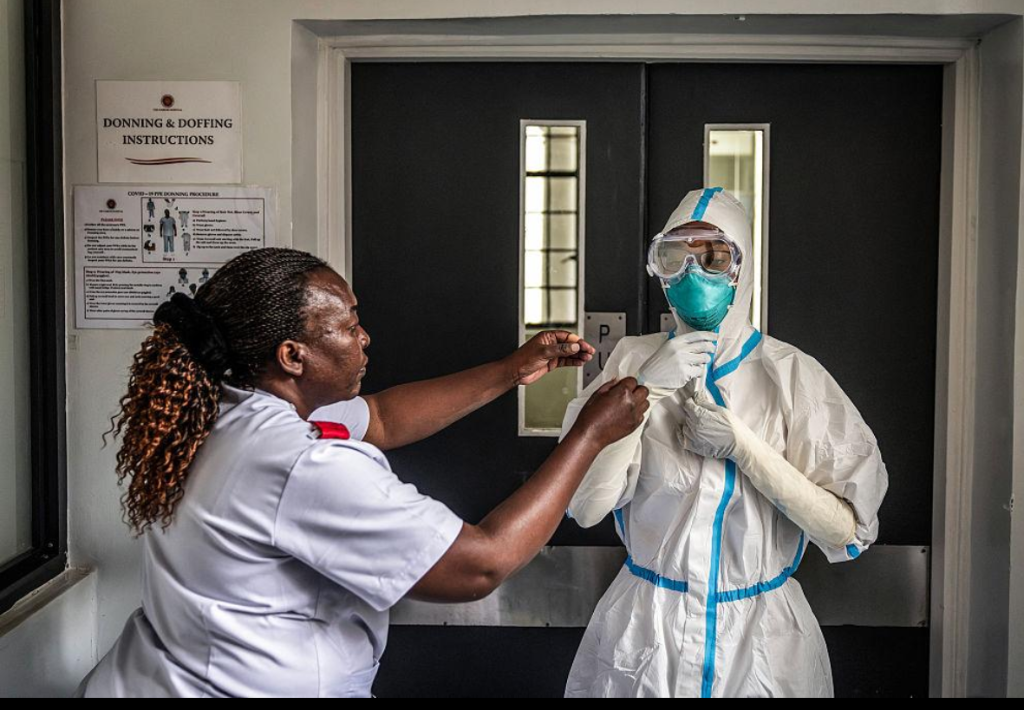
Nigeria has confirmed its first imported case of Ebola in years, with a patient recently returning from East Africa now isolated in Abuja. The detection, announced by Health Minister Muhammad Ali Pate, underscores deeper regional vulnerabilities in pandemic preparedness—particularly as the Bundibugyo virus continues to spread beyond Central Africa.
Why this case matters more than it seems: the anatomy of a silent pandemic
The confirmation in Abuja wasn’t just another headline. It exposed a critical gap: the ability of Africa’s most populous nation to detect and contain an imported virus. Since May 2026, the Bundibugyo Ebola strain has been circulating primarily in the Democratic Republic of Congo (DRC), but has now reached Kenya and Nigeria—marking the fifth country affected outside the DRC’s borders.
Unlike the West African epidemic of 2014–2016—which originated in Guinea, Liberia, and Sierra Leone—the Bundibugyo strain operates like a stealth threat. It spreads quietly across porous borders, through regional trade, air travel, and transient migration. Despite earlier alerts, the virus found a foothold in Nigeria, a nation of over 230 million people with one of the continent’s busiest international transport hubs.
The patient, a woman who developed symptoms on October 7 and sought care in a private clinic in Abuja on October 11, received a confirmed diagnosis only on October 20. The delay between first contact and isolation reveals systemic weaknesses—especially in private health sector oversight and rapid laboratory confirmation.
The hidden cost of regional mobility and weak coordination
Public health experts warn that the Bundibugyo strain is not a regional problem—it’s a continental one. While the outbreak began in the DRC, cases have appeared in Kenya and now Nigeria, tied to travelers moving through high-risk zones.
Investigations suggest the Nigerian patient may have been exposed in eastern DRC or during a layover in Uganda. Kampala officials insist the transit alone doesn’t confirm infection occurred there—but the ambiguity shows how quickly epidemiological blind spots can form in a mobile, interconnected region.
As of October 21, authorities have identified 44 high-risk contacts in Abuja—household members, health workers, and travel companions. Tracking them requires urgent action. Without it, a single imported case can ignite multiple transmission chains, especially in densely populated urban centers.
The ghost of 2014: lessons learned—or forgotten?
Nigeria’s containment success during the 2014–2016 Ebola crisis is often cited as a model for rapid response. But this victory may have bred complacency. Years of relaxed vigilance, staff shortages, and underfunded health systems now threaten to erase past gains.
The 2026 outbreak is different. The Bundibugyo strain is less known, less studied, and carries a higher case-fatality rate than the Zaire strain responsible for the West African epidemic. More importantly, the preparedness infrastructure built in 2014 is aging—laboratory capacity is stretched, surveillance systems are reactive, and funding remains inconsistent.
This time, Nigeria is not just fighting a virus—it is battling administrative inertia and regional coordination failures. The Africa CDC, NCDC, and WHO are on standby, but real outcomes depend on local implementation: accurate contact tracing, transparent case reporting, and public trust.
How Ebola spreads—and why early detection is everything
Ebola Bundibugyo presents flu-like symptoms initially—fever, fatigue, muscle pain. In severe cases, internal and external bleeding occur, leading to organ failure. The virus transmits through direct contact with blood, vomit, or other bodily fluids from an infected person—not through casual air exposure.
This means identifying outbreaks early depends on rapid symptom recognition and strict isolation. Delayed diagnosis increases the risk of undetected chains. In Nigeria’s case, the private clinic where the patient first sought care did not initially flag her symptoms as high-risk—a breakdown in infection control training.
Public messaging is now critical. Authorities must avoid panic while encouraging anyone with compatible symptoms and travel history to seek care immediately. Rumors, stigma, and self-medication can undermine containment just as effectively as the virus itself.
What comes next: can Nigeria prevent a second wave?
The next 72 hours will be decisive. Authorities are sequencing the patient’s viral strain to trace its origin and mapping every movement from symptom onset to hospitalization. But containment won’t rely on technology alone—it needs trust in institutions, rapid financing, and cross-border information-sharing.
Regional health ministers are convening emergency meetings. Airports, seaports, and land borders are on high alert. Yet the real test will be in Lagos, Kano, Port Harcourt—urban centers with high population density and porous healthcare systems.
Ebola never announces itself. It travels in silence—with human movement, in porous borders, and through gaps in surveillance. Nigeria’s case is not an isolated threat; it is a warning signal for all of West and Central Africa. The question is no longer whether Ebola will spread—it’s whether Africa is ready to stop it in time.
Key facts about the Bundibugyo Ebola strain
- Origin: Identified in Uganda in 2007 (Bundibugyo district)
- Fatality rate: Estimated 30–50%
- Symptoms: Fever, severe headache, muscle pain, vomiting, diarrhea, then bleeding in severe cases
- Transmission: Direct contact with bodily fluids of infected individuals or contaminated objects
- Current spread: Active in DRC since May 2026; cases confirmed in Kenya and Nigeria