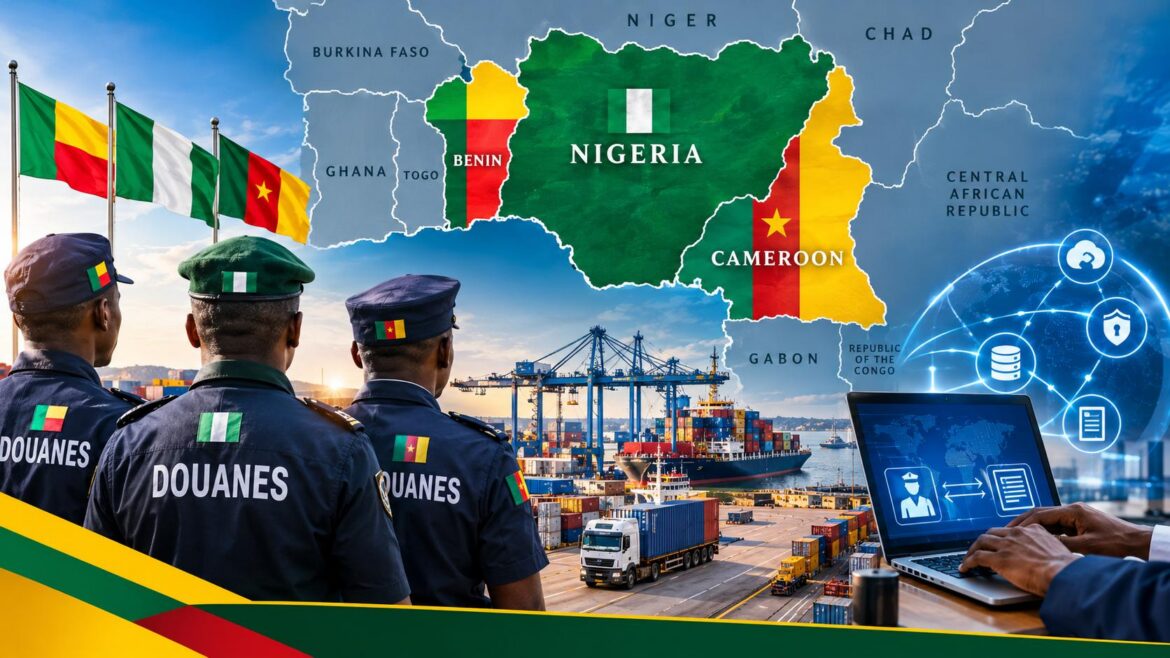
Behind the initiative to interconnect customs systems between Benin, Nigeria, and Cameroon lies a deeper economic rationale: the need to dismantle the invisible barriers that slow trade flows across West Africa. Far from a mere technical upgrade, this collaboration between three key regional players reflects a strategic shift toward eliminating redundant procedures, reducing border delays, and fostering seamless commercial exchanges within the subregion.
The human and systemic obstacles delaying customs modernization
While digital integration promises to streamline data exchange between Cotonou, Abuja, and Yaoundé, the project’s success hinges on more than just technology. Years of fragmented customs procedures, inconsistent data formats, and disjointed administrative workflows have created a labyrinth of inefficiencies that transcend national borders. For businesses operating across these markets, every extra day at the border translates into higher costs and lost revenue challenges that disproportionately affect small and medium-sized enterprises relying on cross-border trade.
These systemic inefficiencies are compounded by a lack of real-time data sharing, forcing traders to repeatedly submit the same documents to multiple agencies. The result? Protracted clearance times, unpredictable expenses, and a growing perception among regional traders that formalities remain opaque and often subject to discretionary decisions. Without addressing the underlying fragmentation in customs operations, even the most advanced digital tools risk failing to deliver their intended benefits.
Why Benin stands at the forefront of this regional transformation
The Port of Cotonou serves as a vital artery for commerce in West Africa, handling goods destined not only for Benin but for landlocked neighbors such as Burkina Faso and Niger. A seamlessly interconnected customs system would allow Benin to reinforce its role as a regional logistics hub, reducing transit times and lowering operational costs for importers and exporters alike. However, the country’s ambitions extend beyond infrastructure they reflect a broader recognition that digital customs integration is critical to maintaining its competitive edge in a rapidly evolving trade landscape.
By enabling cross-border data flows, the initiative could enhance transparency, curb documentation fraud, and provide traders with clearer timelines for customs clearance. Yet, the benefits for Benin will only materialize if the other participating countries align their systems effectively. This interdependence underscores a broader truth: in today’s interconnected economies, no single nation can modernize in isolation.
Afreximbank’s role: bridging the gap between policy and practice
The involvement of the African Export-Import Bank (Afreximbank) signals a broader commitment to addressing Africa’s trade bottlenecks. Traditionally focused on financing trade corridors and infrastructure, the institution is now turning its attention to the regulatory and procedural obstacles that hinder intra-African commerce. By supporting this customs integration project, Afreximbank acknowledges that technological solutions must be paired with policy reforms and institutional capacity-building to yield tangible results.
Central to this effort will be the development of standardized data-sharing protocols, secure platforms for information exchange, and contingency measures to ensure continuity in case of technical failures. These measures are not merely administrative they form the backbone of a system designed to withstand the pressures of high-volume trade while safeguarding against fraud and corruption.
Measuring success beyond the digital interface
Key performance indicators that will define the project’s impact
Clearance time reduction: Measuring the elapsed time between arrival at a port and final customs clearance to quantify efficiency gains.
Cost savings for traders: Tracking reductions in logistics expenses, including storage fees, demurrage charges, and port-related delays.
Documentation accuracy: Monitoring instances of corrected or rejected customs declarations to assess improvements in data reliability.
Cross-border transaction volume: Comparing trade data pre- and post-integration to determine whether higher throughput correlates with smoother procedures.
Administrative alignment: Evaluating the extent to which customs officers in all three countries adhere to harmonized clearance protocols.
Challenges that could derail progress
Despite the promising framework, several risks could undermine the initiative’s success. First among them is the potential for unequal adoption rates, where one or more countries lag in implementing the necessary IT infrastructure or training programs. Second, the compatibility of existing customs platforms may require costly upgrades, creating financial and logistical hurdles. Finally, bureaucratic resistance whether due to vested interests in maintaining the status quo or skepticism about the benefits of digitalization could slow the pace of change.
The path forward: from pilot phase to regional benchmark
The project’s early phases will likely focus on pilot ports and select high-volume trade routes to test the system’s reliability. If successful, the model could set a precedent for other African nations seeking to enhance their customs efficiency. For Benin, Nigeria, and Cameroon, the challenge now is to translate this vision into a robust, scalable mechanism one that delivers not just on paper, but in the day-to-day operations of traders navigating the region’s borders.
Beyond digits and dates: what true customs integration means for Africa
This initiative represents more than an upgrade to customs software it embodies a strategic bet on Africa’s ability to redefine its trade narrative. By dismantling the procedural red tape that has long constrained regional commerce, the three countries are not only streamlining their own operations; they are laying the groundwork for a more unified trade ecosystem. The real test will come when trucks roll across the borders of Benin, Nigeria, and Cameroon, and the time saved at each checkpoint begins to accumulate into measurable economic gains. Only then will the full extent of this digital leap be revealed.
By Claire Mvondo — Journalist