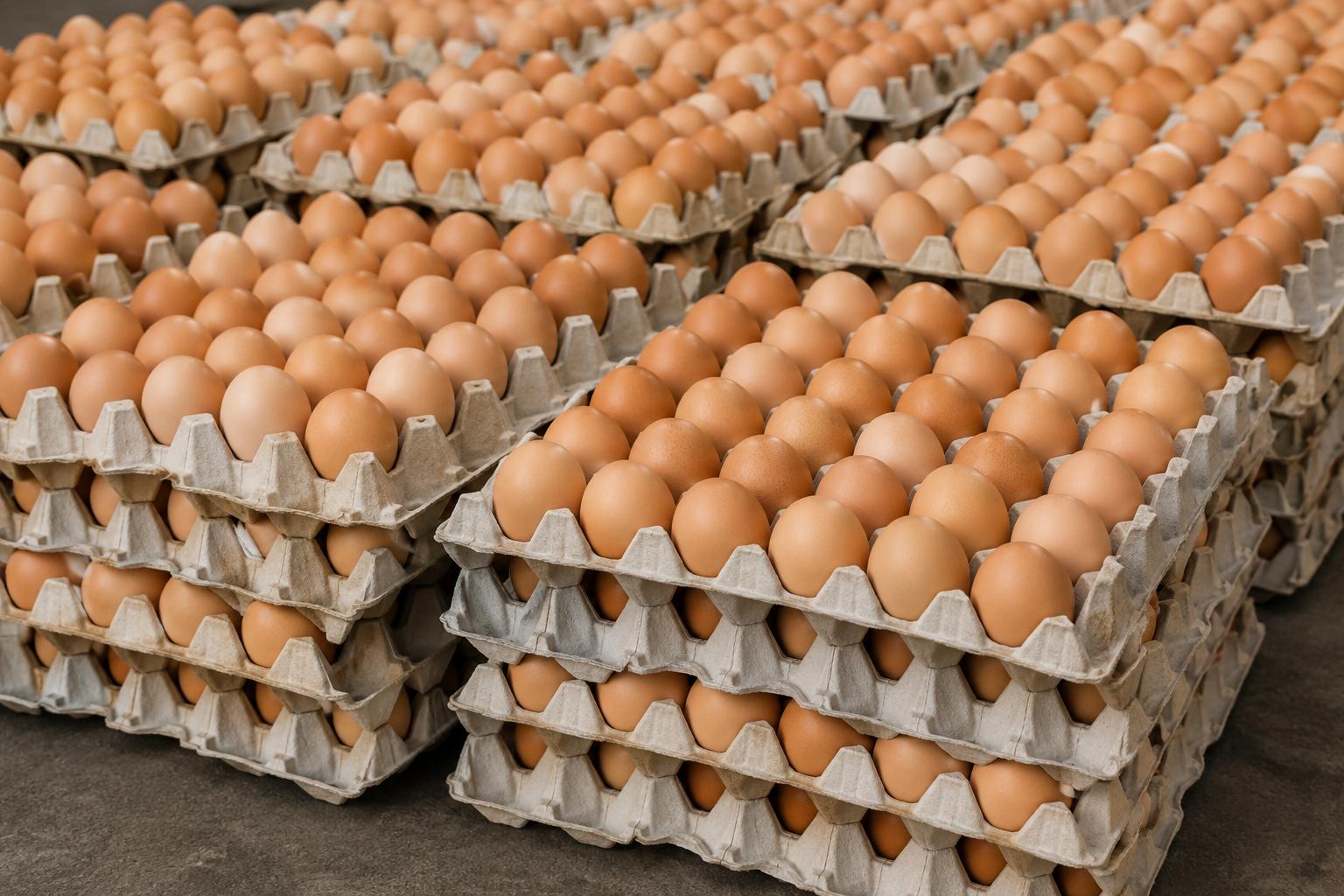
A sweeping new policy has sent shockwaves through Burkina Faso’s poultry sector. In a joint statement, the ministries of Trade and Animal Resources set a ceiling price of 100 West African CFA francs per egg for consumers, 2,600 CFA francs per crate for wholesalers, and 2,750 CFA francs per crate for retailers. Marketed as a way to shield household budgets, the move is widely seen as a direct strike against business freedom and the survival of an already strained industry.
when price caps ignore real costs
Can a government cap the sale price of a finished product while ignoring the soaring cost of its raw materials? That is the impossible equation Burkina Faso’s aviculturists now face. Layer farms rely heavily on feed—corn, soybean and cottonseed meals, mineral supplements—whose prices have recently surged due to inflation, transport costs, and supply bottlenecks. By setting an arbitrary egg price without subsidizing feed, the state is forcing producers to sell at a loss or scrape by on razor-thin margins.
a blow to business freedom
The right to do business rests on two pillars: the free interplay of supply and demand, and the entrepreneur’s ability to price goods according to their own costs. When authorities dictate internal pricing policy, they cross the line from regulation to asphyxiation. Why would an investor risk millions in poultry infrastructure, bank loans, and local hiring if the state can later cap revenues regardless of actual expenses?
the black market threat
History shows that artificial price ceilings rarely achieve their stated goals. Without viable margins, the sector faces three immediate dangers:
- Small-farm collapses: Family-run layers are far less resilient than industrial complexes; many could close, wiping out thousands of jobs.
- Production cuts: To avoid losses, breeders may downsize flocks.
- Underground markets: Scarce eggs on official shelves will drive up unregulated prices, pushing costs above the regulated 100 CFA francs and hurting consumers even more.
smart regulation, not punitive measures
Ensuring affordable eggs is commendable, but not at the expense of those who fuel the nation’s food supply. If policymakers truly want to lower prices, the answer lies upstream: subsidize feed production, waive taxes on feed inputs, and ease access to credit for poultry farmers. Capping egg prices while feed costs spiral is economic folly. It sends a dangerous signal that business freedom depends on disconnected decrees. To rescue Burkina Faso’s poultry industry and safeguard food sovereignty, the only viable route is to lift price controls and invest in production.