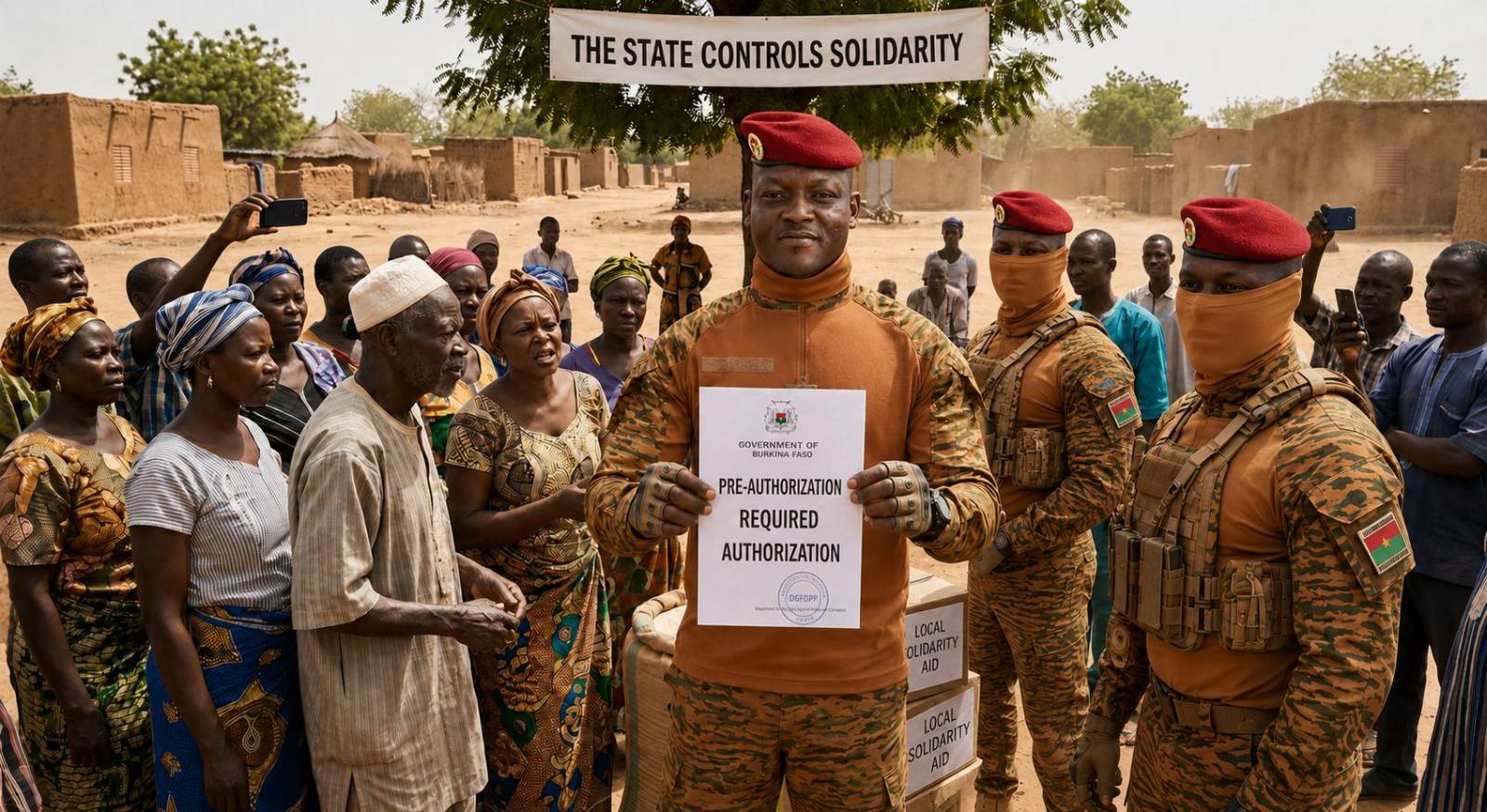
The era of unregulated charitable appeals on social media in Burkina Faso has come to an end. The Ministry of Solidarity has introduced stringent measures requiring prior authorization for all humanitarian initiatives, under threat of penalties. While officials cite the need to uphold dignity and prevent digital voyeurism, the broader implications are deeply troubling: Can altruism remain a free act when generosity itself becomes a potential offense?
From legitimate oversight to administrative overreach
At first glance, regulating charitable practices may appear justified. The misuse of human suffering for online visibility—or worse, financial gain—has indeed crossed ethical boundaries. However, the decision to impose blanket authorization requirements rather than addressing specific abuses risks criminalizing spontaneous acts of kindness. When even the simplest gesture of goodwill must be vetted by state officials, it signals a troubling erosion of individual freedom in a nation where suspicion now permeates even the realm of social welfare.
The paradox of state-led solidarity
This policy raises critical questions about the role of civil society in Burkina Faso. Historically, during crises, it has been citizens, grassroots organizations, religious groups, and the diaspora who provide the first response—often long before government agencies mobilize. Their ability to act swiftly stems from autonomy, a quality now systematically undermined by mandatory bureaucratic approval. Slowing down humanitarian efforts in the name of control threatens to dismantle the very networks that have sustained communities through years of public sector shortcomings.
The bureaucratic gaze on human compassion
The regulation exposes a deeper authoritarian tendency: a state that views independent civic action as a challenge to its authority. By positioning itself as the sole legitimate source of aid, the transitional government—led by Captain Ibrahim Traoré—risks monopolizing compassion itself. This centralization fosters a climate of mutual distrust, where even the most selfless acts are treated as potential threats to state power.
Dignity or deprivation? The false dichotomy
Officials argue that these measures protect the dignity of vulnerable populations by banning the “poverty spectacle” on social media. Yet this framing ignores a stark reality: Is it dignified to starve in silence, hidden behind ministerial decrees, rather than seek assistance openly? Dignity is not preserved by erasing suffering from public view; it is upheld by ensuring timely, accessible support when people need it most. Between exploitative exposure and total invisibility lies a middle path—one built on ethical fundraising, informed consent, and transparent accountability—not blanket suppression.
The human cost of bureaucratic delays
More concerning still is the disconnect between policy and ground realities. Burkina Faso faces severe security and humanitarian challenges, including mass displacements, economic precarity, and escalating community needs. These crises demand rapid, flexible responses—precisely the kind that state agencies, with their rigid structures and limited resources, cannot provide. By stifling spontaneous aid, the government creates a dangerous void that its own administration is ill-equipped to fill. Medical emergencies, forced displacements, and food shortages do not pause for ministerial approvals; meanwhile, families suffer as paperwork languishes in government offices.
Eroding the fabric of solidarity
The policy also risks a chilling effect on generosity. Fearing sanctions or cumbersome procedures, many citizens may abandon charitable acts altogether. A society where people hesitate to help their neighbors for fear of state repercussions is a society where trust—and social cohesion—wither away. The so-called “solidarity of the bush”—the lifeline connecting diaspora communities, urban centers, and rural villages—risks collapsing under the weight of administrative burdens, leaving entire regions more vulnerable than ever.
Conclusion: A policy of control, not care
Ultimately, this regulation prioritizes state control over human needs. It assumes that bureaucratic oversight can replace organic solidarity, despite overwhelming evidence to the contrary. History shows that resilient societies thrive when citizens and institutions collaborate—not when one monopolizes the other’s role. By turning humanitarian aid into a state-sanctioned process, Burkina Faso’s government may secure short-term administrative dominance, but at the cost of long-term social resilience. The true measure of dignity lies not in suppressing acts of kindness, but in ensuring they reach those in need, unhampered and unhidden.