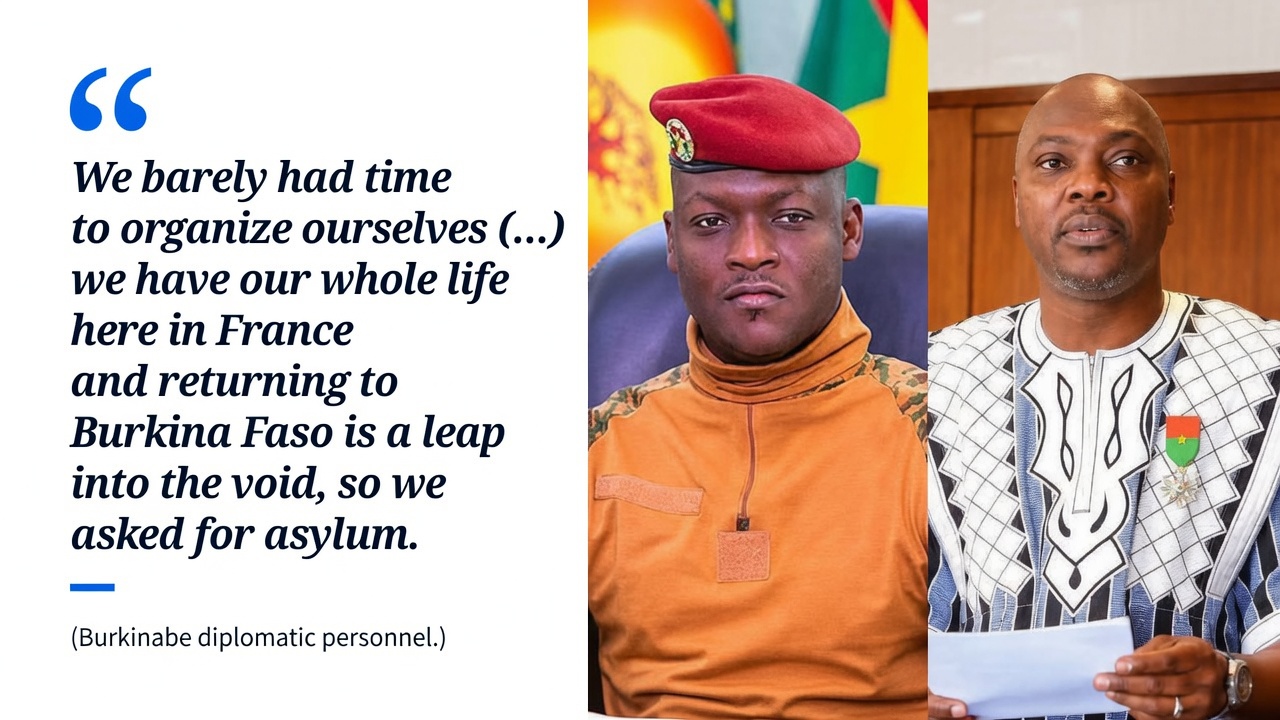
A rare diplomatic crisis unfolds as Burkinabè embassy staff in Paris pursue political asylum
The political transition authorities in Burkina Faso are facing an unprecedented challenge following revelations that several diplomats stationed at the Burkinabè embassy in Paris have formally requested political asylum from French authorities. This development, while deeply personal for those involved, has exposed broader discontent within the nation’s diplomatic apparatus.
The decision comes amid a wave of administrative reshuffles within the country’s diplomatic corps. Recent months have seen Ouagadougou recall numerous foreign-based officials, a move officially framed as part of a restructuring initiative within the diplomatic network. However, for some of these diplomats, the forced return to Burkina Faso represents a far more consequential shift—one fraught with uncertainty.
In a widely circulated statement, the affected personnel articulated their reasons for seeking protection in France. Their words underscore a profound sense of vulnerability:
« We barely had time to prepare. Our lives are here in France—our families settled, our children educated, our careers established. Returning to Burkina Faso feels like stepping into the unknown. That’s why we applied for asylum. »
Their concerns extend beyond logistical challenges. Many express deep apprehension about the political climate awaiting them upon return, particularly in light of Burkina Faso’s ongoing security crisis. The escalating instability has left countless citizens uneasy about the government’s mobilization efforts against armed groups, with reports of civilians being deployed to conflict zones under inadequate preparation.
Security concerns and governance critiques
Observers highlight the timing of these asylum requests as particularly significant. With Burkina Faso still grappling with persistent security threats, the decision of diplomats to seek refuge abroad suggests a broader crisis of confidence. Some diplomats have privately voiced fears that their forced repatriation could place them in harm’s way, especially if their roles or past statements have drawn scrutiny from authorities.
Critics of the transitional government argue that certain administrative decisions lack sufficient consideration for their human impact. The recalls, viewed by some as abrupt and poorly managed, have disrupted the lives of long-serving diplomats and their families. The absence of structured transition plans has further exacerbated anxieties, with detractors describing the approach as emblematic of an overly centralized governance style.
A symbolic rupture in diplomatic trust
This incident carries significant symbolic weight. When diplomats—individuals entrusted with representing their nation abroad—opt to seek asylum rather than return home, it signals a fundamental breakdown in trust between the state and its representatives. Such cases are rare in international relations and often serve as a barometer for political and security instability.
For the transitional government, this episode poses a reputational challenge. Since assuming power, the regime has emphasized national sovereignty and institutional legitimacy. Yet, the spectacle of its own diplomats pursuing asylum abroad inevitably fuels skepticism about the stability of the domestic environment and the protections afforded to state employees.
The human dimension of this crisis cannot be overstated. Behind the administrative decisions lie real lives—families, careers, and futures abruptly upended. The statement from the embassy staff serves as a stark reminder that governance choices at the highest levels can have profound, often unintended, consequences for those tasked with serving the nation overseas.