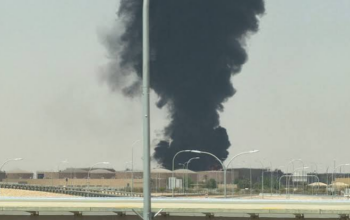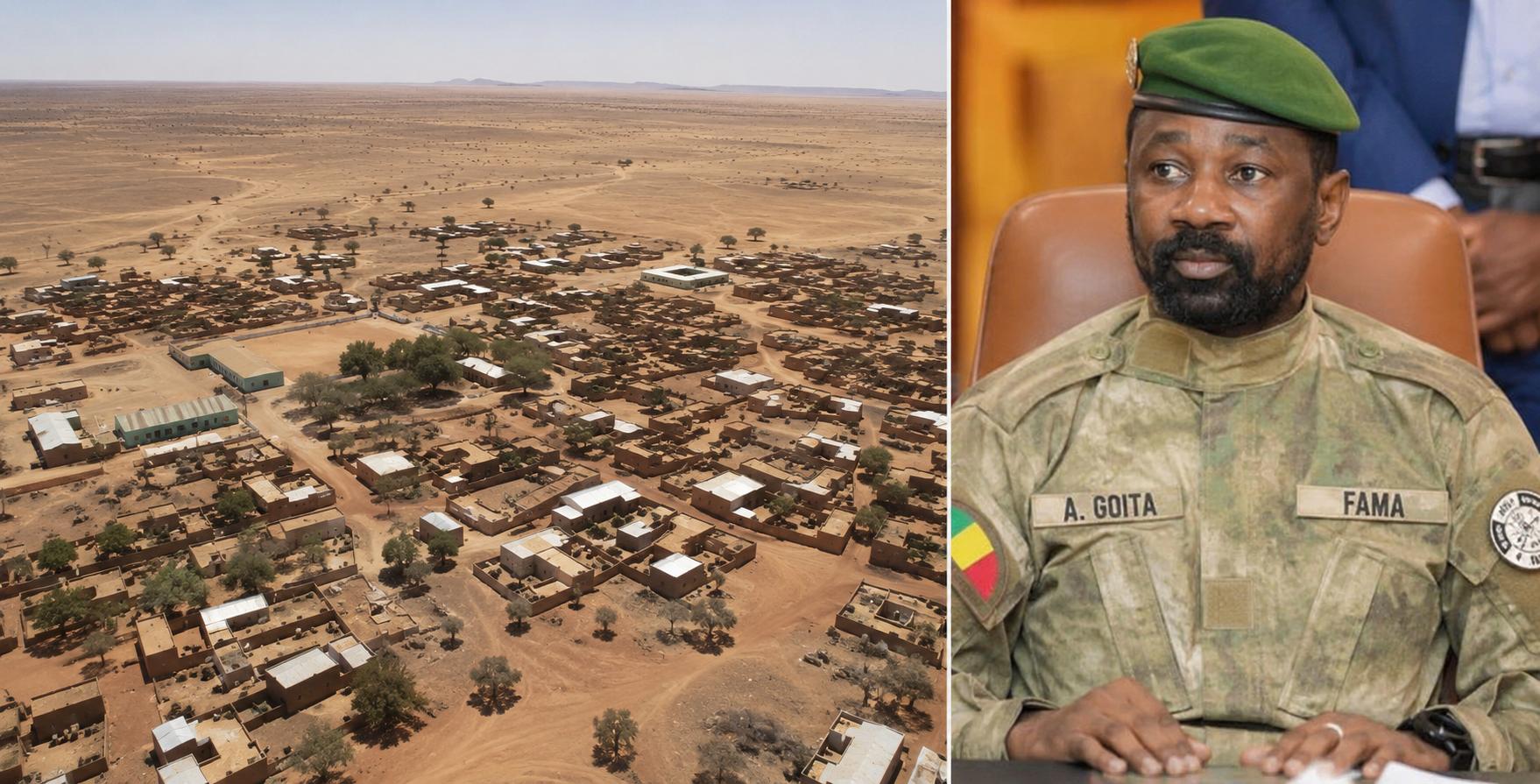
The northern reaches of Mali have once again become a battleground as fierce fighting erupted near Tin Araban, close to Tabankort, pitting a heavily escorted military convoy against a formidable alliance of armed and jihadist factions. This latest clash exposes the growing fragility of the Malian transitional authorities’ narrative of control over the region.
a massive military supply line ambushed in the heart of the Sahel
A substantial military detachment, comprising around sixty vehicles including logistics trucks, armored carriers, and ground troops, departed Gao earlier this week. The mission: reinforce and resupply the beleaguered outpost of Anéfis, a key position in the Kidal region under relentless pressure from armed groups opposed to Bamako’s authority. However, the convoy never made it to its destination.
At Tin Araban, a remote desert stretch roughly 100 kilometers south of Anéfis, the convoy fell into a meticulously planned ambush. Reports indicate the attackers belonged to a volatile coalition merging Tuareg separatists from the Azawad Liberation Front (FLA) and jihadist operatives from the Group for the Support of Islam and Muslims (JNIM), an al-Qaeda affiliate. The engagement lasted for hours, marked by intense artillery exchanges, drone strikes, and sustained gunfire.
unofficial reports point to heavy losses on both sides
While the Malian military’s official channels remain silent, unverified reports circulating through insurgent networks suggest significant material and human casualties. Several of the Malian Armed Forces’ transport vehicles and light armored units operated by Russian instructors from Africa Corps (formerly Wagner) were reportedly destroyed or seized. Fragmentary footage also points to the loss of reconnaissance drones and multiple fatalities across both sides.
Twenty-four hours after the ambush near Tabankort, no official statement has been issued by the Malian transitional government or its military communications directorate. The absence of information is not a logistical oversight but a deliberate strategy to obscure the true extent of the setback.
Bamako’s silence masks a widening security crisis
The government’s refusal to acknowledge the scale of the defeat or the intensity of the fighting in the north reveals a calculated effort to uphold a facade of military progress. By withholding details, Bamako risks deepening a dangerous disconnect between official rhetoric and ground reality, leaving citizens in the dark about the true state of the nation’s security.
the strategic stakes of the tin araban ambush
The stakes extend far beyond the immediate tactical loss. Securing the Gao-Anéfis corridor is vital for Mali’s ability to maintain control over northern territories. If the convoy’s failure leads to the isolation of the Anéfis garrison, the region could face a coordinated counteroffensive from the coalition of northern armed groups. Such a scenario would further undermine Bamako’s already strained authority in the Sahel.
As the dust settles over Tin Araban, one question looms large: how long can the transitional government sustain its narrative of strength in the face of mounting evidence to the contrary?