Morocco’s Islamic model: a bulwark against extremism
Following the devastating Casablanca attacks in 2003, Moroccan authorities opted for a comprehensive response that extended beyond mere security enhancements. They initiated extensive reforms designed to meticulously regulate the religious sphere, focusing particularly on the rigorous training of imams and proactive measures to prevent extremist narratives from taking root.
This strategic approach, detailed in a recent study by the Institut d’études de géopolitique appliquée (IEGA), forms part of a broader national strategy for prevention, deradicalization, and the reinforcement of religious institutions across Morocco.
The Commander of the Faithful: A Core Pillar
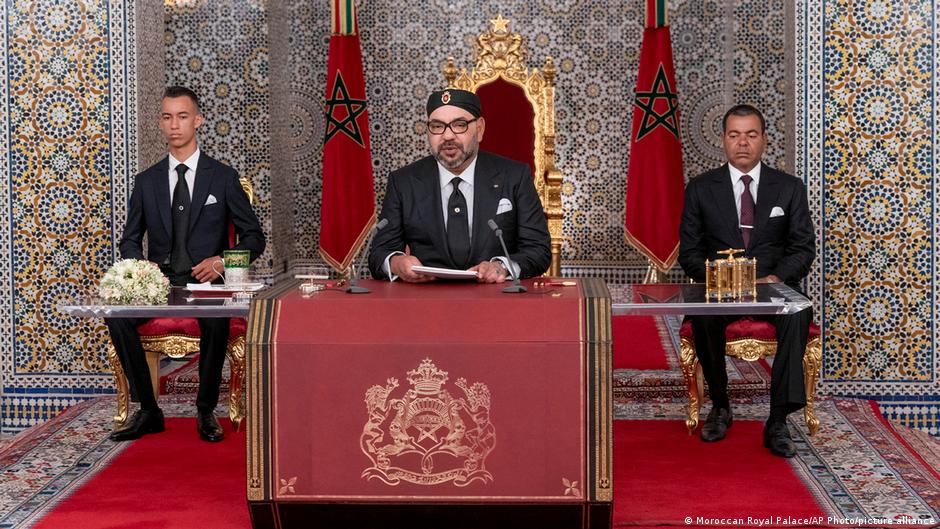
At the heart of this unique Moroccan religious model lies the Commanderie des croyants (Imarat al-Mouminine). This pivotal institution, enshrined in the Moroccan Constitution, operates under the direct authority of King Mohammed VI. It bestows upon the monarch significant religious legitimacy, enabling him to adjudicate doctrinal matters and actively champion a moderate interpretation of Islam.
Alexandre Negrus, president of the IEGA and a co-author of the report, emphasizes that the Commanderie des croyants serves as the fundamental cornerstone of this entire framework. He notes, “What truly sets Morocco apart from other states attempting to regulate the religious domain is that this regulation originates from within the religious sphere itself. The sovereign is recognized as a religious authority, not merely a political overseer.”
The Moroccan model is further underpinned by three significant doctrinal references: Malikism, a legal tradition historically prevalent across the Maghreb and the Sahel; Ash’arism, which advocates for a harmonious balance between faith and reason; and Sufism, which addresses spiritual and communal aspirations often exploited by extremist movements seeking to gain influence in West Africa.
Inspiring Nations Across the Sahel
Many observers commend Morocco’s innovative response to the extremist threat, which prioritizes religious guidance and prevention as essential complements to security measures. This holistic approach to countering extremism has garnered significant attention.
Driss Aït Youssef, a distinguished security expert, shares this perspective. He suggests that several nations in the Sahel region, grappling with the persistent jihadist threat, could draw valuable lessons from various facets of the Moroccan experience.
However, the expert also highlights crucial limitations in directly transposing this model. He asserts that Morocco’s enduring stability largely stems from the unique status of King Mohammed VI as the Commander of the Faithful, a role that enjoys widespread recognition and legitimacy among the populace. This inherent legitimacy, he argues, is instrumental in structurally regulating the religious landscape over the long term.
The study also underscores Morocco’s proactive initiatives in prevention and deradicalization, notably through the Moussalaha program. This program aims at religious and social reconciliation for individuals convicted of terrorism-related offenses. Furthermore, the Mohammed VI Institute plays a vital role, training hundreds of African imams annually to disseminate a message of moderate Islam throughout the region, including countries like Mali, Niger, and Burkina Faso, contributing to Sahel breaking news in religious diplomacy.
Navigating Digital Challenges and Transferability Limits
Despite its proven successes, the Moroccan model for countering extremism faces its share of challenges and critiques. Alexandre Negrus of the IEGA points out that while the standardization of sermons effectively prevents official mosques from becoming conduits for radical discourse, this approach can inadvertently foster an institutionalized form of Islam sometimes perceived as detached from the daily concerns of worshippers.
The IEGA president further identifies the burgeoning influence of digital platforms as a primary contemporary challenge. Radical ideologies now proliferate widely beyond traditional religious regulatory frameworks, thereby diminishing the efficacy of institutional control mechanisms in the digital age.
Another significant limitation highlighted by the study is the inherent difficulty in replicating this model precisely in diverse national contexts. While several Sahelian states draw inspiration from it, its foundational elements are deeply rooted in Moroccan specificities. These include the Commanderie des croyants and the historical legitimacy of the monarchy, components that largely lack direct equivalents in most other countries in the region, impacting Sahel politics today.
Consequently, the report’s authors conclude that the Moroccan model should be viewed more as a valuable source of inspiration than a universally reproducible blueprint. Nevertheless, they contend that it offers crucial insights for enhancing societal resilience against radicalization and identity fragmentation, particularly within the turbulent security landscape of the Sahel.
You may also like
Niger’s jailing of lawyer Abdourahamane Lirwana: is free speech now a crime in the country?
Can Benin turn a €500 million loan into lasting social change?
Burkina Faso: what does Ibrahim Traoré’s four-year record truly mean for the displaced and the silenced?
Will Benin’s UCESIF gambit in Bucharest pay off for francophone social dialogue?
Niger’s sovereignty paradox: can the junta’s UN rhetoric survive the SOMAÏR and SONIDEP collapse?