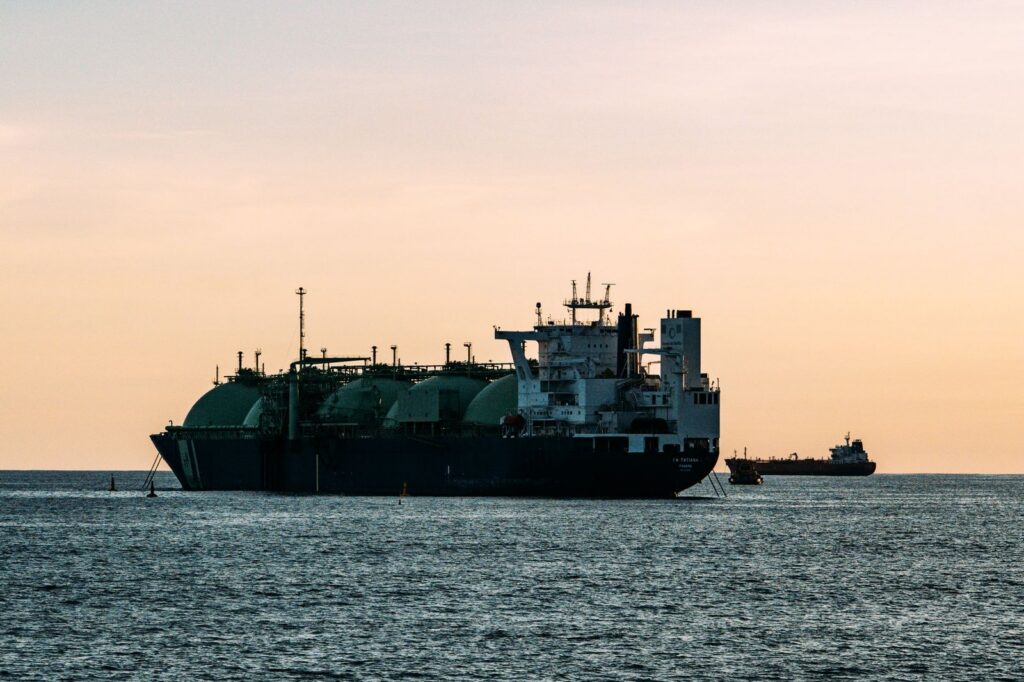
In a significant development for West Africa’s energy landscape, the Grand Tortue Ahmeyim (GTA) gas project, operated by Kosmos Energy, is gaining momentum. The American energy firm has shared fresh updates on the project’s ramp-up, which entered commercial production in early 2025. The initiative, spanning Senegal and Mauritania, has drawn close attention from Dakar, where Prime Minister Ousmane Sonko has prioritized the oversight of extractive resources as a cornerstone of his administration.
GTA: a transformative cross-border initiative for Senegal and Mauritania
The GTA project, born from years of bilateral negotiations between Dakar and Nouakchott, taps into a shared offshore reservoir at their maritime border. The resource-sharing model is notably balanced, with both nations holding equal stakes—an arrangement uncommon in West Africa’s extractive sector. Kosmos Energy leads the development alongside bp, the historic permit operator, while Senegal’s Petrosen and Mauritania’s Société Mauritanienne des Hydrocarbures (SMH) represent state interests.
The first phase hinges on a floating liquefied natural gas (FLNG) unit designed to process gas before export. The initial target capacity stands at 2.3 million tons of LNG annually. Kosmos reports steady progress toward this nominal output, following technical commissioning last year and the dispatch of first cargoes.
Kosmos Energy addresses Senegal’s policy expectations
Since the March 2024 election of President Bassirou Diomaye Faye and Prime Minister Ousmane Sonko, the project’s trajectory has faced heightened scrutiny in Dakar. The government has underscored its commitment to reviewing or auditing legacy contracts, which it views as skewed against Senegal’s interests. This stance briefly unsettled international operators, including Kosmos and bp.
The recent updates from Kosmos aim to reassure stakeholders about the project’s operational stability. The company emphasizes the continuity of its partnerships with both governments and ongoing technical talks for future expansions. However, some ambitions have been scaled back, with financial analysts noting a gap between early production volumes and initial projections.
For Senegal, the GTA ramp-up promises substantial budgetary inflows. Once fully operational, the project is expected to generate hundreds of billions of CFA francs annually. These revenues are slated to fund the Intergenerational Fund and national budget—key pillars of Dakar’s natural resource management framework.
Phase 2, local content, and energy sovereignty
Beyond the first phase, attention turns to the project’s expansion. GTA Phase 2, once envisioned to lift capacity to around 3 million tons per year, remains pending agreement among partners. Kosmos has indicated ongoing studies but has yet to set a firm timeline. International LNG prices and the operator’s debt-reduction strategy further complicate the equation.
Local content is a critical issue for both Dakar and Nouakchott. Senegal’s government has urged deeper integration of domestic firms across the value chain, from industrial subcontracting to logistics. Prime Minister Sonko has also floated the idea of redirecting part of GTA’s output to domestic power plants, aiming to cut energy costs and bolster grid reliability.
Yet, Dakar’s room for maneuver remains constrained by existing contracts and the need to maintain the MSGBC basin’s appeal to investors. With adjacent blocks still under exploration, the government’s stance toward Kosmos and bp could set a precedent. Senegal’s gas ambitions now hinge as much on the FLNG’s operational efficiency as on the decisions made in its ministry corridors.
You may also like
Mali: can justice deliver for civilians after Amnesty’s war crimes findings?
Mali’s fuel lifeline: can a single BOAD loan of 8 billion CFA truly steady the nation’s energy sector?
Burkina Faso’s gold refinery: a genuine step toward sovereignty or a new form of dependence?
Niger’s competitive dialogue at three years: reform breakthrough or just paperwork?
Can Benin’s UN push for security cooperation and multilateralism deliver on its promises?