- Diplomacy
empowering beninese women through digital and economic partnerships
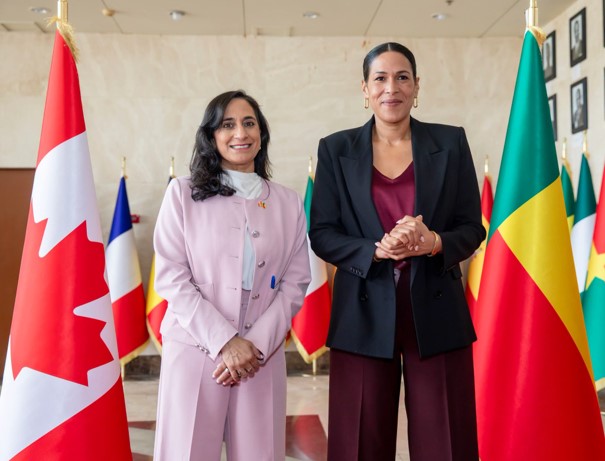
While diplomatic handshakes and investment agreements often dominate headlines, the recent visit by Canadian Minister Anita Anand to Cotonou on August 5 revealed a deeper commitment: a partnership built on social inclusion and women’s leadership. These priorities are not mere rhetoric but are backed by concrete financing and strategic decisions from both governments.
Women’s inclusion: more than a pledge, a funded reality
Nearly $11.5 million CAD—equivalent to 4.68 billion FCFA—has been allocated to support women’s economic empowerment, digital inclusion, and broader social integration. This funding spans entrepreneurship initiatives and port economy projects, signaling a shift from symbolic gestures to tangible policy implementation.
“Equality between women and men is too often just a slogan,” noted a leader from a Beninese women’s entrepreneur organization. “Here, we’re talking about credit access, market opportunities, and training. This is inclusion that can be measured, not just proclaimed.”
The partnership’s approach reflects a shared belief: empowering women is not an afterthought but a catalyst for economic growth. By providing Beninese women with the tools to succeed in business, the collaboration aims to unlock untapped productivity potential.
Driving economic growth through women’s entrepreneurship
This initiative holds particular significance in a country where the informal sector—heavily dominated by women—forms the backbone of daily economic activity. By targeting women-led entrepreneurship, both Ottawa and Cotonou aim to create a multiplier effect: every dollar invested in a woman entrepreneur benefits her family, neighborhood, and supply chains.
“When a woman thrives, an entire community moves forward,” shared a participant in a support program during the visit. “For many of us, this funding is the difference between merely surviving and truly growing.”
The partnership’s focus on the port economy is noteworthy. By integrating women’s empowerment into a strategic sector like logistics, the collaboration ensures they are not sidelined but positioned at the heart of national economic activity.
You may also like
South Africa’s mass shooting crisis: can Johannesburg and Cape Town ever feel safe again?
Senegal’s December 2, 2026: will Diomaye Faye dissolve parliament or play the long game?
Senegal’s 2026 budget revision: can Dakar still rescue its growth and investment agenda?
Senegal’s 2026 revised budget: a trap vote for Pastef or a necessary evil?
Burkina Faso’s armored vehicles: can Faso Armored’s 300-unit claim survive the scrutiny?