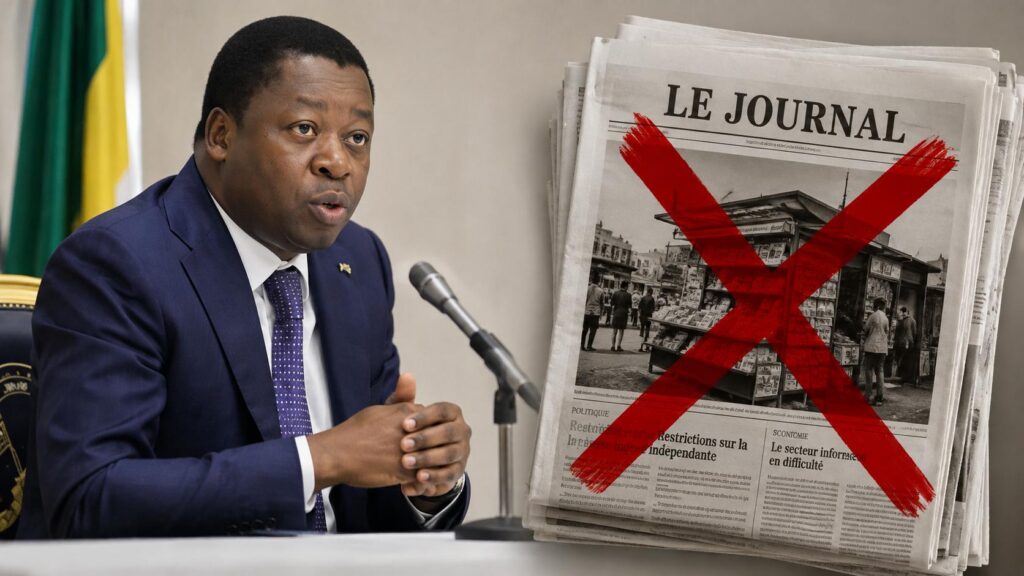
The erosion of press freedom in Togo has moved beyond bureaucratic reports and regulatory statements. Today, it plays out on the streets of Lomé, where distributing a newspaper has become a dangerous act. By extending its crackdown to street vendors, President Faure Gnassingbé’s administration has crossed a dangerous line—one where free speech is not just restricted but actively suppressed.
Retailers Bear the Brunt of State Repression
For years, the government relied on traditional tools to control the media: summoning journalists, suspending publications, revoking press cards, and threatening libel lawsuits. These tactics forced many newsrooms into self-censorship, yet they failed to silence the public’s demand for uncensored information.
The recent wave of arrests targeting independent newspaper vendors in Lomé signals a new, more insidious strategy. By targeting the most vulnerable link in the information chain—those who earn a living by selling newspapers—authorities are no longer just punishing content. They are severing the direct link between the press and its audience.
Attacking distribution is a calculated move. It instills fear in vendors, pushing them to avoid stocking opposition or investigative titles. The result is an invisible but devastating commercial blockade, suffocating already struggling media outlets.
Is the HARC a Regulator or a Censorship Tool?
The High Authority for Communication Regulation (HARC) lies at the center of this strategy. Designed to uphold press freedom and balance the media landscape, the institution is now widely seen by journalists and media owners as an extension of state censorship.
Under the guise of public health, sector cleanup, or combating misinformation, sanctions disproportionately target outlets that scrutinize governance, financial matters, or political management. Meanwhile, pro-government media face minimal scrutiny. This double standard has hollowed out public debate, turning the official media landscape into a distorted reflection of Togo’s reality.
Democracy Suffers in the Shadows
While official narratives tout institutional modernization and economic progress, the open crackdown on media actors exposes a different truth: a shrinking democratic space. Press freedom is not a privilege granted to journalists—it is a fundamental right for all citizens.
By silencing dissent and persecuting those who distribute independent news, the Togolese government achieves a false calm. But in stifling independent information, it does not erase social and political tensions—it merely deprives society of the legitimate channels to voice them.
You may also like
Mali: can justice deliver for civilians after Amnesty’s war crimes findings?
Mali’s fuel lifeline: can a single BOAD loan of 8 billion CFA truly steady the nation’s energy sector?
Burkina Faso’s gold refinery: a genuine step toward sovereignty or a new form of dependence?
Niger’s competitive dialogue at three years: reform breakthrough or just paperwork?
Can Benin’s UN push for security cooperation and multilateralism deliver on its promises?