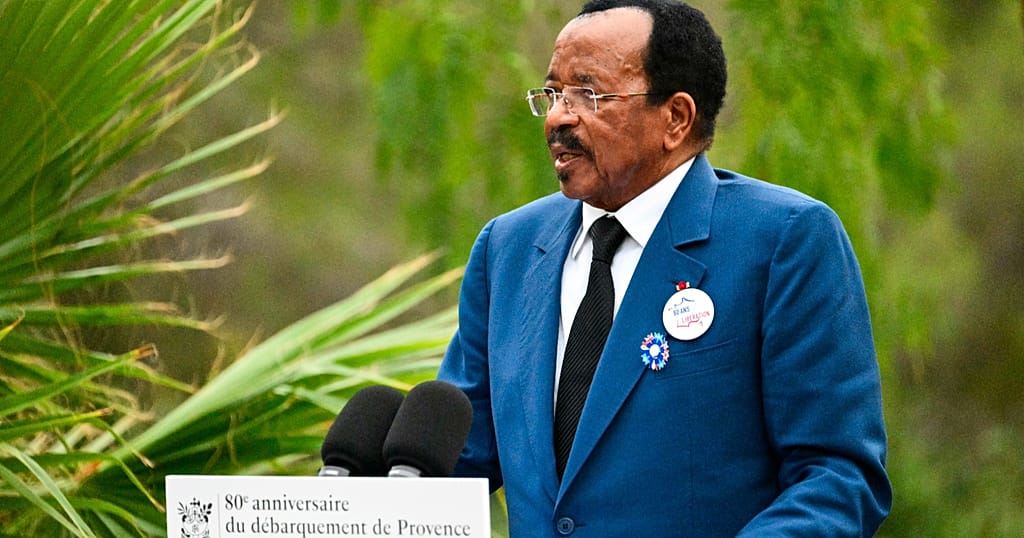
The prolonged absence of Cameroon’s president has fueled speculation about a potential power vacuum, prompting President Paul Biya, now 93, to issue a flurry of decrees aimed at reasserting his grip on governance.
Biya and his wife departed Cameroon on June 7, described at the time as “a brief private stay in Europe.” Yet, nearly two months later, the head of state remains out of public view, with growing concerns over his health dominating national discourse.
In response to mounting uncertainty, Biya has adopted a proactive approach, flooding the public sphere with presidential decrees to demonstrate unbroken executive control.
Key policy moves and security reshuffles
On July 31, the president signed a decree empowering the Economy Minister to finalize a landmark financing agreement with the Islamic Development Bank, totaling nearly 28 billion CFA francs. This financial maneuver underscores Biya’s commitment to steering major economic initiatives despite his absence from the country.
Days later, on August 3, the president executed a sweeping overhaul within the military hierarchy. Five colonels were elevated to brigadier general rank, and General of Division Ebaka Hypolite was appointed as the new Chief of Army Staff. These strategic appointments not only reinforce Biya’s influence over state affairs but also tighten his control over the security apparatus.
Official reassurances vs. opposition skepticism
Government officials have vehemently dismissed reports of the president’s declining health, affirming plans for his imminent return to Cameroon. However, opposition figures remain unconvinced, framing his prolonged absence as a “constitutional crisis” and accusing the administration of operating in “autopilot mode.”
The opposition has long called for the appointment of a vice president and a new cabinet, changes that have yet to materialize. Critics argue that Biya’s extended absence has left critical leadership roles unfilled, exacerbating governance challenges in the country.
You may also like
South Africa’s mass shooting crisis: can Johannesburg and Cape Town ever feel safe again?
Senegal’s December 2, 2026: will Diomaye Faye dissolve parliament or play the long game?
Senegal’s 2026 budget revision: can Dakar still rescue its growth and investment agenda?
Senegal’s 2026 revised budget: a trap vote for Pastef or a necessary evil?
Burkina Faso’s armored vehicles: can Faso Armored’s 300-unit claim survive the scrutiny?