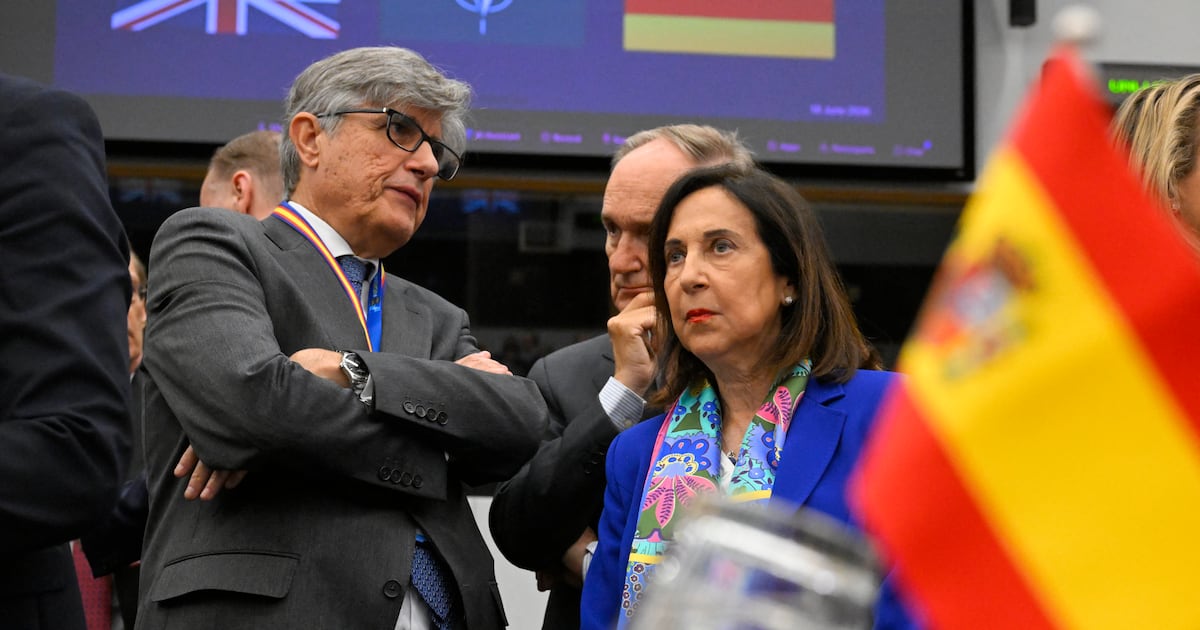
During a congressional hearing, Spanish Defence Minister Margarita Robles acknowledged that a Supreme Court ruling on border expulsions at Ceuta had triggered what she described as an “appel d’air”, contributing to the surge in migrant crossings on July 30 and 31.
The minister cited a report from Spain’s Defence General Staff, which outlined three phases in the escalation of migration flows. The first phase, labelled “concentrated migration”, began after the July 8 court decision that prohibited immediate maritime expulsions of swimmers reaching Ceuta.
Within days, hundreds of people started crossing, with numbers gradually increasing until thousands attempted to enter simultaneously. Robles attributed this surge to what she called an “interpretation-driven call effect”, amplified on social media platforms.
Increased crossings tied to Morocco’s Throne Day
Robles also highlighted a secondary factor: the spread of misleading messages claiming that Moroccan security forces would be thinner on the ground during the Throne Day celebrations. These claims, she noted, were widely circulated on Facebook groups, creating a false sense of opportunity among potential migrants.
According to her account, the so-called “mass assault” was not centrally organised but emerged from “self-organised” actions by migrants responding to viral social media posts. These messages suggested that crossing the border would face minimal resistance.
Social media’s role in overwhelming security forces
The Defence Minister stressed that the rapid spread of these messages prevented security forces from responding in time as thousands converged on the border at once. She warned that deploying force to block such large groups would have led to catastrophic consequences, including “an incalculable death toll”.
Unified command to address border crisis
Robles’ testimony came as the Spanish government launched a unified command structure to manage the crisis, triggered 26 days earlier by the arrival of around 80,000 migrants. The new command, led by Territorial Policy Minister Ángel Víctor Torres, includes representatives from the National Intelligence Centre, government delegates, and security officials.
Prime Minister Pedro Sánchez presided over the inaugural meeting of the National Security Council, attended by senior government officials and Juan Jesús Vivas, who joined remotely. The meeting formalised the coordinated response, aiming to restore order while ensuring proportional and lawful border management.