The hidden forces shaping Mali’s counterterrorism pivot toward Abidjan
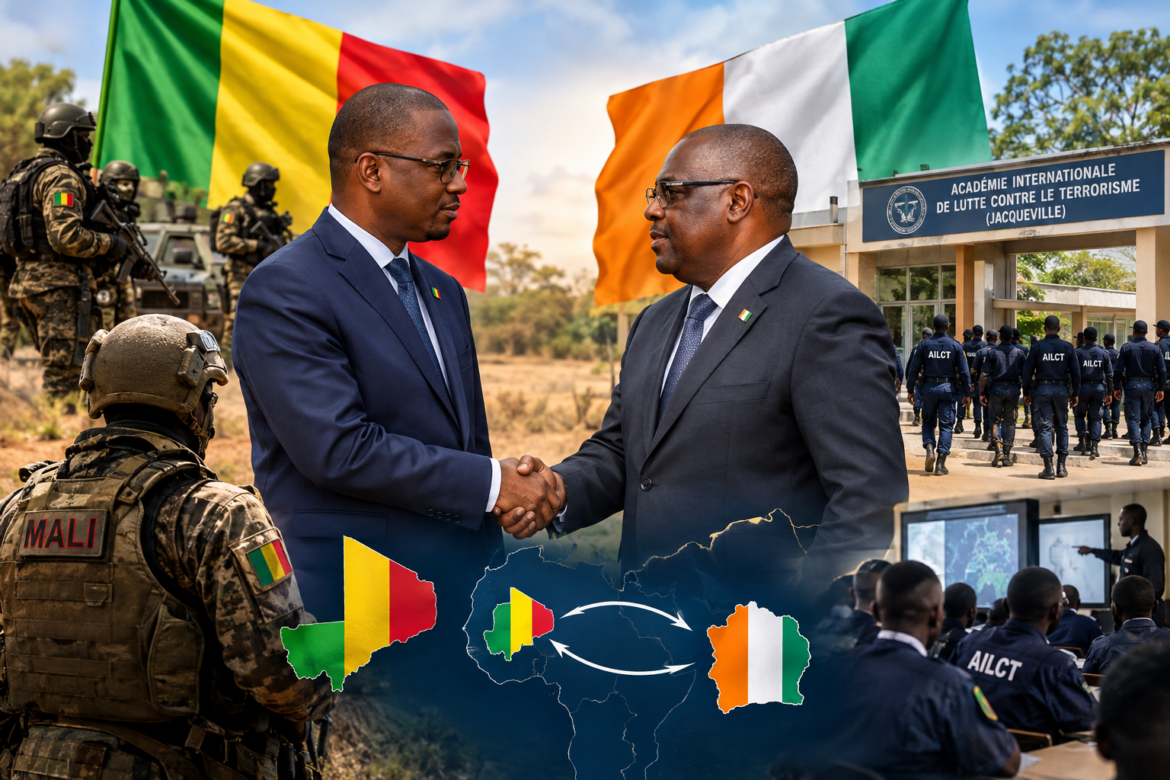
The arrival of Côte d’Ivoire’s top intelligence chief in Bamako on October 15, 2026, marks more than a diplomatic courtesy it signals a behind-the-scenes reassessment of Mali’s security strategy. Vassiriki Traoré, director of Ivory Coast’s intelligence agency, has been invited by his Malian counterpart, Modibo Koné, to discuss how Bamako can adapt lessons from Abidjan’s counterterrorism model to its own fight against armed groups.
This meeting comes as both nations face a shared enemy: a terror threat that has defied borders and conventional military responses. While Mali grapples with insurgencies in its central and northern regions, Côte d’Ivoire has quietly built a reputation for turning the tide against violent extremism not through raw firepower alone, but through intelligence-driven prevention, inter-agency coordination, and targeted training.
What Mali stands to gain from Ivory Coast’s antiterrorism toolkit
The heart of Côte d’Ivoire’s approach lies in its specialized training infrastructure. The Jacqueville International Counterterrorism Academy (AILCT), operational since 2021, serves as a regional hub for equipping security forces with advanced counterterrorism skills. Unlike conventional military academies, this institution focuses on three core pillars:
Strategic foresight: Teaching officers to anticipate attacks before they occur, using scenario-based simulations and threat analysis.
Operational flexibility: Training units in rapid response techniques, hostage rescue, and secure communications across military-police-judicial networks.
Crisis rehabilitation: Preparing security personnel to manage post-attack recovery, including public messaging and community reconciliation.
For Mali, the AILCT offers more than a curriculum it provides a template for reforming its own forces. The Malian army and police, already stretched thin by insurgent movements, could benefit from Ivory Coast’s emphasis on preventive intelligence rather than reactive deployments.
The regional cost of inaction: Why Mali cannot afford to wait
The decision to seek Ivory Coast’s expertise isn’t just strategic it’s economic. Persistent insecurity has eroded Mali’s development, with foreign investment fleeing and regional trade routes becoming corridors for militant groups. While military operations remain critical, studies show that nations with robust inter-agency intelligence sharing reduce attack frequencies by up to 30% within two years.
Bamako’s challenge isn’t just about adopting Ivory Coast’s methods it’s about integrating them without compromising its sovereignty. The AILCT model, for instance, allows partner nations to send officers for training while retaining command over their own operations. This balance of learning from others while maintaining autonomy could redefine Mali’s counterterrorism future.
Will Bamako walk the talk after the Abidjan exchange?
The intelligence summit in Bamako isn’t a magic solution but it’s a turning point. Past cooperation efforts between the two countries stalled over mutual distrust, with neither side willing to share sensitive intelligence. This visit, however, arrives at a time when both nations recognize the futility of working in isolation.
Key questions remain: Will Mali commit to sending officers to the Jacqueville academy? Will the two countries establish a joint intelligence cell for real-time threat sharing? And most critically, will Bamako translate these discussions into measurable security gains within the next six months?
The answers lie not in the rhetoric of the meeting hall, but in the battlefields of central Mali, where the next attack could determine whether Mali’s security evolution was mere talk or a lasting shift toward resilience.
Lessons from Ivory Coast: A blueprint Mali can adapt
Côte d’Ivoire’s journey hasn’t been flawless. Early counterterrorism efforts in 2016 saw failures due to over-reliance on foreign partners. But by 2019, Abidjan pivoted to a localized intelligence-first approach, training border guards and community leaders to spot and report suspicious activity before attacks could materialize.
Mali’s path forward could mirror this trajectory: Start with small, targeted training exchanges. Test intelligence-sharing protocols with a single region. Gradually expand successes while avoiding the pitfalls of premature overreach. The goal isn’t to copy Ivory Coast but to adapt its proven strategies to Mali’s unique terrain, population, and threat landscape.
Sovereignty vs. survival: Mali’s high-stakes calculus
At its core, Mali’s decision to learn from Ivory Coast is a question of survival. The terror threat isn’t static; it evolves with each failed operation, each mismanaged intelligence gap. By embracing targeted cooperation, Bamako isn’t surrendering control it’s borrowing the tools it needs to reclaim it.
The October meeting could be remembered as the moment Mali chose strategic humility over fractured self-reliance. Or it could fade into another missed opportunity. One thing is certain: The Sahel’s security future depends on whether nations like Mali and Ivory Coast can turn their shared struggles into shared solutions.
By Pierre Tchuente — Journalist