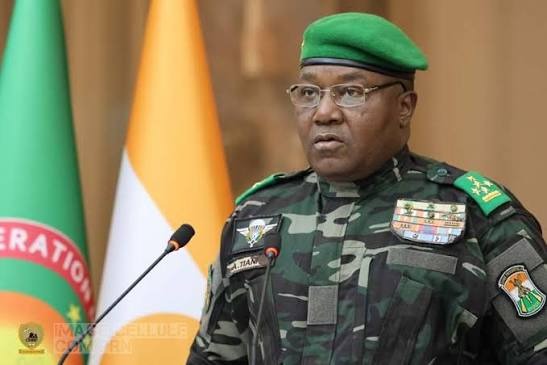
Despite intense socio-economic pressures and regional instability, Niger has been pouring unprecedented sums into its defense apparatus. But as security spending devours public funds, one question looms large: does this massive financial commitment actually translate into real protection for its people—and a tangible return of state authority across the country?
The numbers behind the defense surge
In 2024, Niger allocated nearly 960 billion CFA francs to defense and security—an unprecedented share of national wealth. Over the next three years, annual military expenditures stabilize at $435–464 million (260–280 billion CFA), representing up to 2.2% of GDP. This is a historic high for a country where defense has traditionally been a smaller budget line.
Beyond regular defense allocations, exceptional mechanisms like the Patriotic Salvation Solidarity Fund (FSSP) have injected over 58.8 billion CFA directly into the armed forces—funds used to purchase armed drones, air and armored vehicles. Even more recently, in August 2026, an additional 58.3 billion CFA was reallocated to meet urgent operational needs. These figures underscore a rapid militarization of public finance—but without clear evidence that the strategy delivers sustainable security results.
Emergency spending or hidden structural flaws?
The recurring budget boosts are routinely justified as a response to immediate operational needs: acquiring advanced equipment, sustaining counter-insurgency sweeps, and maintaining tactical pressure. Yet this ‘spend-first’ doctrine is beginning to reveal serious weaknesses. Heavy investments in high-tech hardware don’t necessarily fill the gaps left by deeper strategic failures.
Key concerns include:
- Misalignment with threat reality: Do costly acquisitions like combat drones and armored convoys actually address the asymmetric warfare waged in rural zones?
- Inequitable credit allocation: Are funds distributed based on a coherent territorial security grid, or are they being used in an ad hoc crisis-response mode?
- Civilian protection and governance: Do rising defense budgets help restore long-term administrative presence and basic services in areas controlled by armed groups?
Without transparent, regularly published performance metrics, it remains unclear whether these billions yield any meaningful improvement in daily security for Niger’s citizens.
Crowding out development: the cost of an all-military approach
This defense-first strategy comes at a steep price. With total public revenue under strain (the 2025 general budget was revised from 3,033 billion to 2,749 billion CFA), every extra dinar allocated to security reduces resources for health, education, and infrastructure. The paradox is unmistakable: while schools, clinics, and public services remain absent in peripheral zones, recruitment for armed groups thrives on the perception of state abandonment. Continuing to divert civil investments to fund the military risks deepening the very insecurity it aims to combat.
From black box to accountable governance
To prevent the defense budget from spiraling into financial fiction, financial transparency must become a core pillar of governance. While national security and operational secrecy are valid concerns, they cannot justify an absence of oversight over public procurement or the use of emergency funds.
Real solutions exist: parliamentary oversight, independent audits, and public reporting of key budget execution data—all while preserving tactical confidentiality. Only with such measures can Niger assess whether its billions are being spent wisely—or simply disappearing behind closed doors.
Measuring impact beyond the rhetoric
The debate is no longer about how much Niger spends on its military, but about what it gains in return. For a budget of this magnitude to be sustainable, it must be tethered to verifiable outcomes: secure road networks, reopened schools, and a real return of government services to insurgent-affected areas. Without such benchmarks, the rising tide of defense spending will only strain the nation’s economy—without delivering the lasting peace its people deserve.