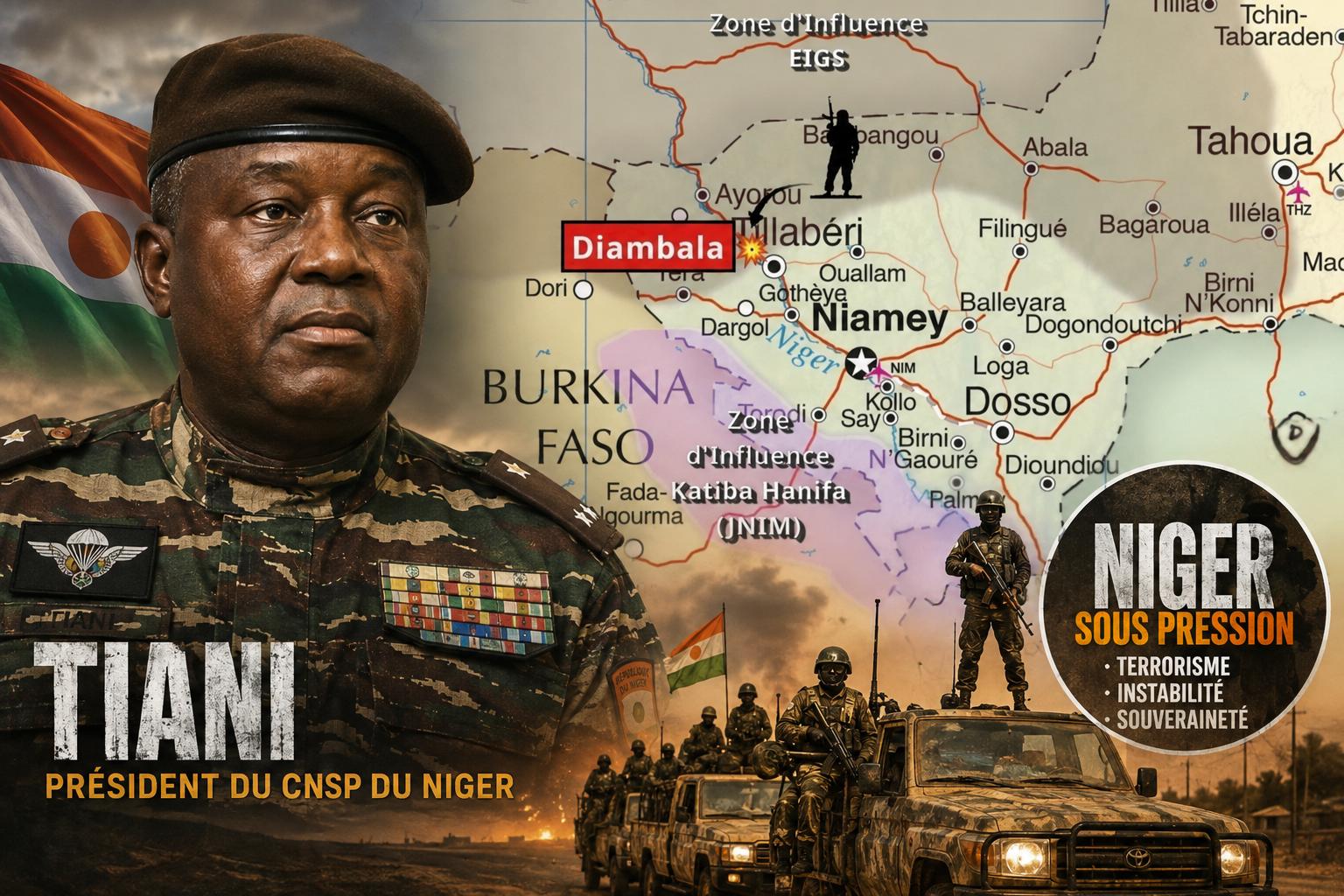
The security situation in western Niger remains highly volatile. While the military administration intensifies its public relations efforts to rally citizens around the head of state, General Abdourahamane Tiani, fresh insurgent attacks in the Tillabéri region serve as a grim reminder of the persistent threat posed by armed groups.
On September 2, 2026, armed assailants targeted several communities within the Tillabéri department. The villages of Darbani, Diamballa, and Namarigoungou were struck during the coordinated raids.
In Diamballa, tragedy struck when two young girls drowned in a local pond while desperately attempting to escape the attackers. Another resident sustained gunshot wounds during the assault. Meanwhile, in Namarigoungou, a man was killed by the gunmen. The raiders also plundered livestock across all three affected villages before fleeing the scene.
The wave of violence continued into the following day. On September 3, another armed incursion occurred in Zibane, located within the rural commune of Anzourou in the Tillabéri department. Local self-defense forces engaged the attackers in a shootout, resulting in the death of one militia member.
A relentless cycle of violence in the borderlands
These recent confrontations underscore the extreme vulnerability of a region that regularly experiences incursions by armed factions. Tillabéri, situated within the volatile tri-border area shared by Niger, Mali, and Burkina Faso, remains one of the primary hotspots of instability in the country.
For rural populations, these raids represent far more than an immediate physical danger. The ongoing violence severely disrupts farming and herding activities, forces families to abandon their homes, and worsens the economic and social hardships of communities already living under extreme pressure.
Under these conditions, each new assault raises pressing questions about the government’s ability to provide lasting protection for its citizens, particularly those living far from major urban centers.
Political mobilization in support of General Tiani
This harsh reality on the ground stands in stark contrast to the intense promotional campaigns orchestrated by the military government. Following a recently thwarted coup attempt, authorities and their allies have launched extensive public relations initiatives designed to consolidate popular backing for General Abdourahamane Tiani.
Through messages of solidarity, public gatherings, and appeals to stand behind the head of the regime, the administration is actively working to strengthen his political legitimacy and public image.
The division is striking: while official channels focus on national unity and public adoration for the leadership, residents in Tillabéri continue to endure the daily terror of armed raids and instability.
Balancing political campaigns with urgent security needs
Securing popular support has become a critical objective for the ruling military council in a highly sensitive political landscape. However, for those living in exposed border communities, the most urgent priority remains basic survival: the freedom to move, farm, and tend to livestock without the constant fear of violence.
The tragic events of recent days in Tillabéri demonstrate that the fight against armed groups is far from over. They also highlight a fundamental challenge: beyond political messaging and rallies for General Tiani, what concrete, long-term strategies will the government implement to protect citizens facing daily threats?
Ultimately, the disconnect between political maneuvers in the capital and the ongoing security crisis in Tillabéri highlights the deep challenges facing the nation.