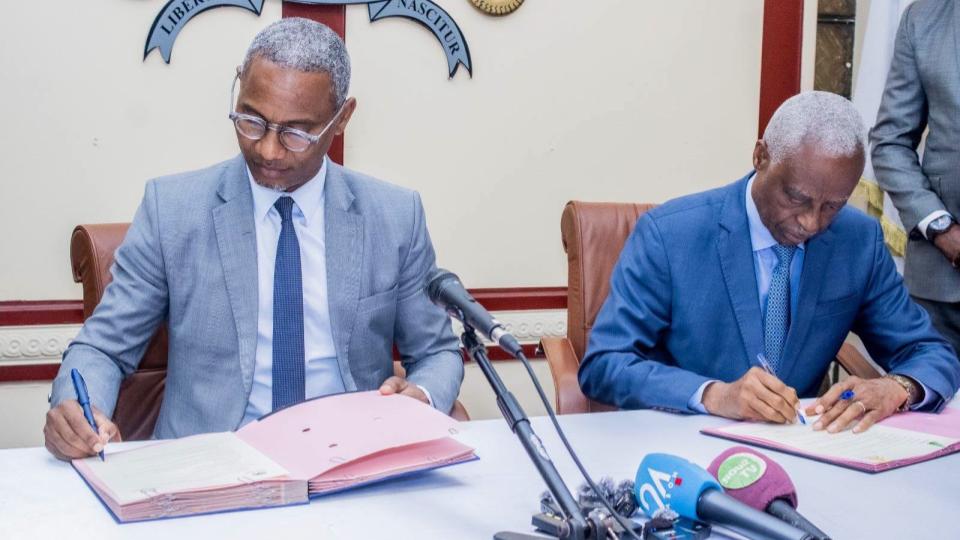
Gabon takes a decisive step toward decentralization as Minister of Youth, Sports, Cultural Outreach and Arts, Paul Kessany, formalizes a landmark agreement with Libreville’s municipal government. Signed on July 30, 2026, the framework agreement outlines the progressive transfer of critical competencies to the capital’s local authorities, advancing the structural reforms championed by President Brice Clotaire Oligui Nguema.
This initiative, embedded within the broader national decentralization agenda, seeks to bridge the gap between public policies and citizens by empowering local governments with greater decision-making authority. By devolving responsibilities closer to the communities they serve, the reform aims to enhance the responsiveness and quality of essential public services.
The agreement specifically targets sectors under Kessany’s purview—youth engagement, sports infrastructure, cultural promotion, artistic talent development, and community association support. The move aligns with the president’s vision of transforming Gabon’s administrative landscape into a more agile, citizen-focused governance model.
Empowering local governments through shared vision
The signed accord establishes a clear roadmap for transferring administrative and operational responsibilities to Libreville’s municipality. This includes oversight of sports facilities, cultural event organization, talent nurturing programs, and grassroots association funding. The goal is twofold: to decentralize decision-making and to ensure local authorities can deliver tailored solutions that reflect the unique needs of their populations.
Kessany emphasized that this reform represents more than a symbolic gesture—it is the first concrete implementation of the president’s decentralization strategy within his ministry. By placing resources and authority in the hands of municipal leaders, the initiative aims to foster a culture of accountability and responsiveness in public service delivery.
Ensuring sustainable transformation requires more than paperwork
While the agreement marks a pivotal moment, its success hinges on additional commitments. Libreville’s mayor stressed that effective decentralization demands more than the transfer of administrative duties. It requires the concomitant allocation of human, technical, and financial resources, alongside sustained state support during the transition period.
This perspective underscores a core principle of President Oligui Nguema’s decentralization policy: empowerment must be accompanied by the means to act. Without adequate funding, technical expertise, and institutional backing, local governments risk being unable to fulfill their new responsibilities, potentially undermining the reform’s objectives.
Cultural festival launches new governance model
The partnership between the Ministry and Libreville’s municipal government will be immediately visible through an upcoming event. Next week, the two entities will co-host the Festival of Cultures, a celebration designed to showcase the tangible benefits of decentralization. Beyond its cultural significance, the festival will serve as a pilot initiative demonstrating how local governance can drive community engagement and social cohesion.
For Kessany, this agreement is not an endpoint but a starting point. The real test lies in whether the transferred competencies enable Libreville’s government to operate with greater efficiency, autonomy, and impact. If successful, the model could set a precedent for extending decentralization across Gabon’s other municipalities, reinforcing the president’s commitment to building a more inclusive and responsive state.
You may also like
Bénin : le Sénat tient sa séance inaugurale sous la conduite de Patrice Talon
Gabon : le citoyen au cœur de la nouvelle donne démocratique
Gabon : l’association Force lance sa rentrée citoyenne à Akanda
Is Chad truly entering a period of political easing?
Nucléaire : Faure Gnassingbé plaide pour une souveraineté énergétique africaine