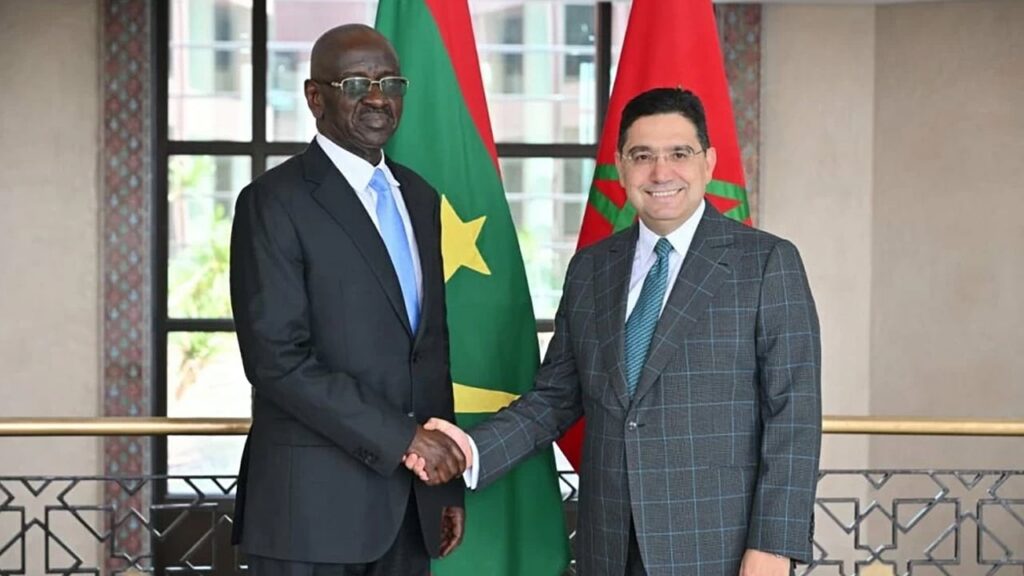

Diplomatic exchanges in Dakar have reignited long-standing discussions about the Western Sahara issue, drawing renewed attention to the positions of Morocco and Mauritania. The topic dominated conversations during a recent high-level gathering, highlighting the persistent sensitivities tied to the decades-old territorial dispute.
Key players and recent dialogue
The meeting brought together top diplomats from both nations, including Nasser Bourita, Morocco’s Minister of Foreign Affairs, and Mohamed Salem Ould Merzoug, his Mauritanian counterpart. Their discussions underscored the strategic importance of the Western Sahara question in shaping bilateral relations between Rabat and Nouakchott.
Observers noted that the talks in Dakar were not merely procedural but reflected deeper geopolitical currents. The Sahara issue remains a cornerstone of regional diplomacy, influencing alliances and partnerships across West Africa.
Historical context and ongoing tensions
The Western Sahara conflict traces its roots to the mid-20th century, when territorial claims clashed following Spain‘s withdrawal. Morocco has consistently advocated for a solution that aligns with its sovereignty claims, while international actors continue to seek a resolution acceptable to all parties.
Recent diplomatic overtures suggest that Mauritania, though not a direct party to the dispute, plays a pivotal role in regional negotiations. Its proximity to the conflict zone and historical ties with both Morocco and the Polisario Front make it a key interlocutor in ongoing peace efforts.
Implications for West Africa
The resurfacing of the Western Sahara debate in Dakar carries broader implications for West Africa. The region’s stability is closely linked to resolving long-standing disputes, and the Sahara question remains a litmus test for diplomatic cooperation.
Morocco‘s push for international recognition of its autonomy plan for Western Sahara has gained momentum, with several African nations expressing support. Meanwhile, Mauritania continues to navigate its delicate position, balancing its historical relationships with both sides of the conflict.
The outcome of these discussions could redefine regional dynamics, particularly in West Africa, where economic and political alliances are increasingly shaped by geopolitical realities.
You may also like
Senegal’s December 2, 2026: will Diomaye Faye dissolve parliament or play the long game?
Senegal’s 2026 budget revision: can Dakar still rescue its growth and investment agenda?
Senegal’s 2026 revised budget: a trap vote for Pastef or a necessary evil?
Burkina Faso’s armored vehicles: can Faso Armored’s 300-unit claim survive the scrutiny?
Can Senegal and Azerbaijan turn a New York memorandum into a lasting political partnership?