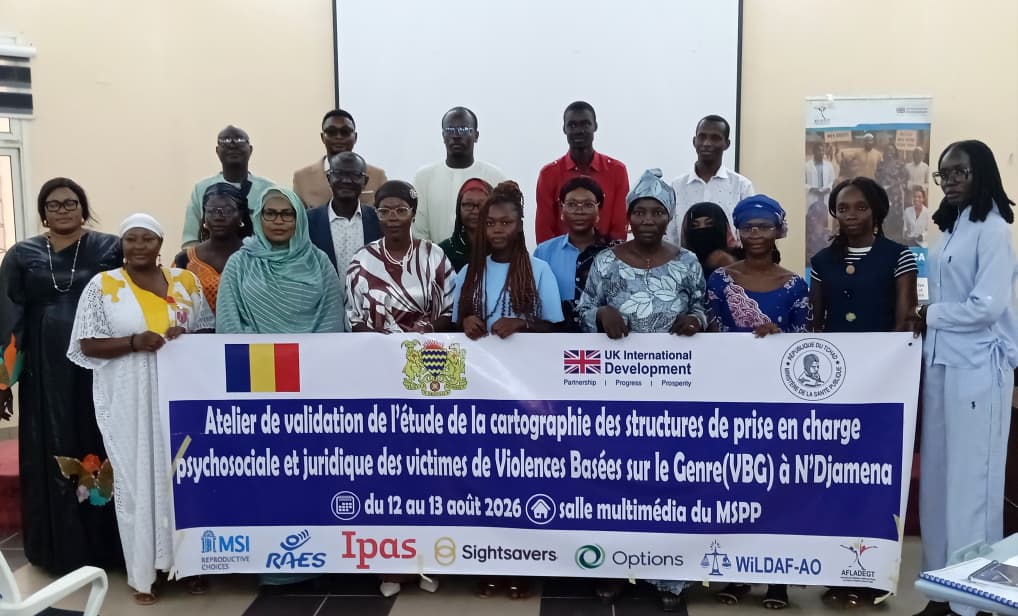
At the heart of N’Djamena, a pivotal two-day workshop is set to validate groundbreaking research on the mapping of legal and psychosocial assistance services for survivors of gender-based violence (GBV). Organized by the Association of Feminist Leaders for Access to Rights and Gender Equity in Chad (AFLADEGT) from August 12 to 13, 2026, this initiative falls under the WISH 2-WACA project framework. Its core objective is to streamline victim referrals and enhance coordination among service providers.
The event will bring together key stakeholders, including government officials, civil society representatives, technical and financial partners, and specialized agencies. Together, they will review and refine the findings of this comprehensive mapping exercise.
Strengthening victim support through strategic mapping
During the opening ceremony, AFLADEGT President Wouténé Mélissa emphasized the critical role of this mapping tool in improving survivors’ access to essential services. She stressed that the document is far more than just a static report—it serves as a dynamic instrument for guiding victims, coordinating care, and advocating for policy changes at the highest levels.
« When a woman or girl becomes a victim of violence, every second counts. She needs to know immediately where to turn for help, which services are available, and how to receive tailored support, » Wouténé Mélissa stated.
The study reveals significant gaps in service coverage, victim awareness, referral mechanisms, and resource allocation. These findings will inform actionable recommendations to bolster existing services, refine referral pathways, and secure additional funding.
Addressing systemic challenges in GBV response
Dr. Kadidja Amadaye Abgrene, Director of Reproductive Health, highlighted the severe impact of gender-based violence on fundamental rights and dignity. She acknowledged government efforts, including legal reforms and the establishment of integrated multisectoral service centers, yet underscored the persistent challenges.
The data underscores alarming shortfalls: less than 11% of identified victims receive effective legal assistance. Informal settlements, inadequate information dissemination, and disjointed referral systems exacerbate the crisis. The mapping exercise also exposed disparities in service availability across N’Djamena’s neighborhoods, a lack of secure and confidential spaces for survivors, and critical shortages in human and material resources.
According to Dr. Kadidja Amadaye Abgrene, the study’s findings must now drive operational improvements, ensuring smoother referrals between sectors and informing evidence-based public policies.
You may also like
Cameroon’s youth confront social media’s real impact in #PSE debate
Cameroun’s douala-bafoussam highway in critical condition
Gabon debates dignity after attacks on president’s mother
Rising cost of living in Chad: economist calls for market price monitoring
Benin traditional leaders: trusted figures but urged to stay out of politics