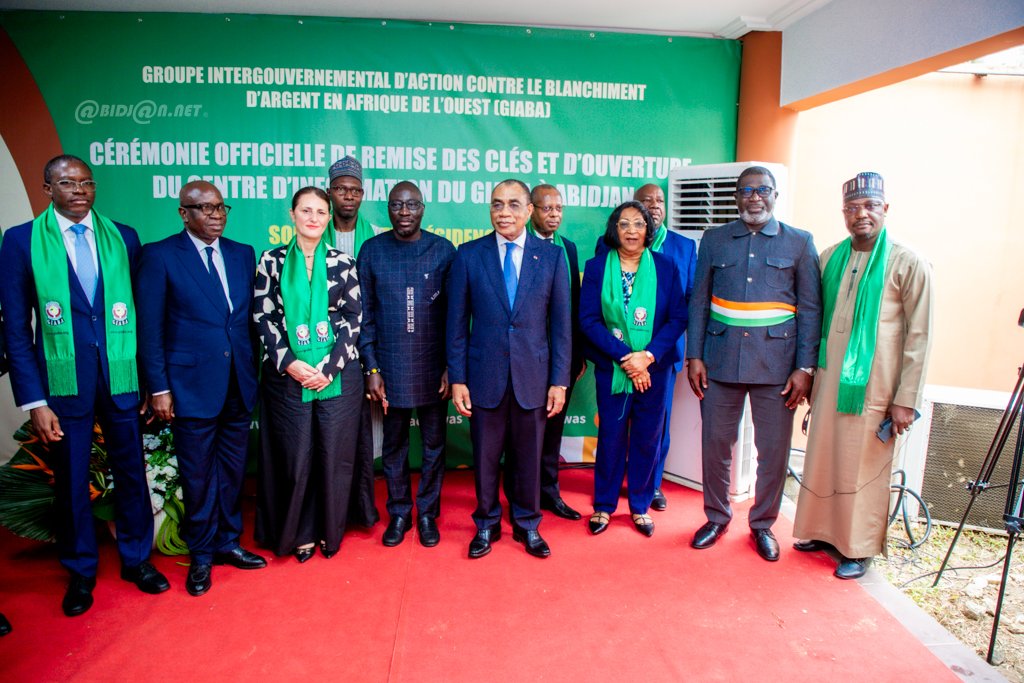
Côte d’Ivoire hosts upgraded GIABA hub to sharpen anti-money laundering efforts
In a move to tighten regional defences against illicit financial flows, the Ivorian government handed over brand-new facilities to the Intergovernmental Action Group against Money Laundering in Africa (GIABA) in Cocody, Abidjan. The handover ceremony, led by Adama Coulibaly, Minister of Economy, Finance and Budget, marks a major step forward in collaborative crime fighting across West Africa.
The new GIABA Information Centre was formally delivered on a date that underscores Côte d’Ivoire’s ongoing commitment to the CEDEAO Headquarters Agreement. This infrastructure upgrade reinforces the country’s role as a key player in regional financial integrity initiatives.
From vision to reality: two decades of progress
The decision to set up two GIABA information hubs—one in Lagos for anglophone member states and one in Abidjan for francophone and lusophone countries—was first made by CEDEAO ministers during their 65th ordinary session in Abuja on 26 November 2010. Abidjan’s original centre opened its doors on 21 September 2015, following the signing of the Headquarters Agreement in Yamoussoukro on 29 March 2014, during the 44th CEDEAO Summit.
Strengthening regional cooperation against financial crime
Speaking at the inauguration, Minister Coulibaly highlighted how rapidly evolving money laundering and terrorist financing schemes demand coordinated regional responses. “No single country can tackle these sophisticated threats alone,” he noted. “Pooling expertise, intelligence and resources has become essential.”
He described the revamped centre as a regional hub for awareness-raising, capacity building, research and documentation, serving all CEDEAO member states. Coulibaly called on all stakeholders to harness this facility as a permanent asset in the fight against financial crime.
GIABA chief outlines bold future for Abidjan hub
Edwin W. Harris Jr., GIABA Director-General, reflected on the centre’s achievements since 2015. Under his leadership, the facility has hosted open days for students, public conferences, regional public speaking contests, media sensitisation seminars and training sessions for religious leaders and civil society groups. It has also supported mutual evaluation exercises that assess countries’ anti-money laundering systems.
With the move into its new premises, the centre is poised to become a true regional knowledge and innovation platform dedicated to combating money laundering and terrorist financing (ML/TF). Harris invited public administrations, financial regulators, supervised professions, universities, research centres, media outlets, civil society organisations and technical partners to make full use of the space for training, conferences and collaborative projects.
A special focus will be placed on engaging young people—students, researchers and early-career professionals—to foster a culture of integrity, good governance and sustainable economic development across West Africa.
Cutting-edge training for sharper skills
The upgraded centre introduces a state-of-the-art Computer-Based Training (CBT) system. This cutting-edge tool delivers tailored modules for judges, investigators, financial institutions, designated non-financial businesses and professions, academics and other actors involved in anti-ML/TF systems. Participants can earn certificates upon completion, helping to professionalise regional expertise and strengthen collective defences against illicit financial flows.
The timing of the inauguration holds added significance: Harris’s tenure as GIABA Director-General concludes on 31 August 2026. By unveiling the new facility just days before his departure, he leaves behind a durable infrastructure designed to sustain cooperation, information sharing and skills development in the ongoing battle against financial crime.
You may also like
As donor fatigue spreads, can Benin’s €544,042 UNAIDS pledge keep the HIV response on track?
Who pays the price when Burkina Faso’s public payroll contracts? Households weigh the cost of 1,917 fewer agents
Libya pushes for direct Tripoli-Yaoundé flights as Cameroon sets up working groups
JNIM seizes three Burkinabè positions in a single day as Traoré’s security record faces hard questions
Chad condemns Ennedi-East airstrikes at un general assembly, warns of retaliation