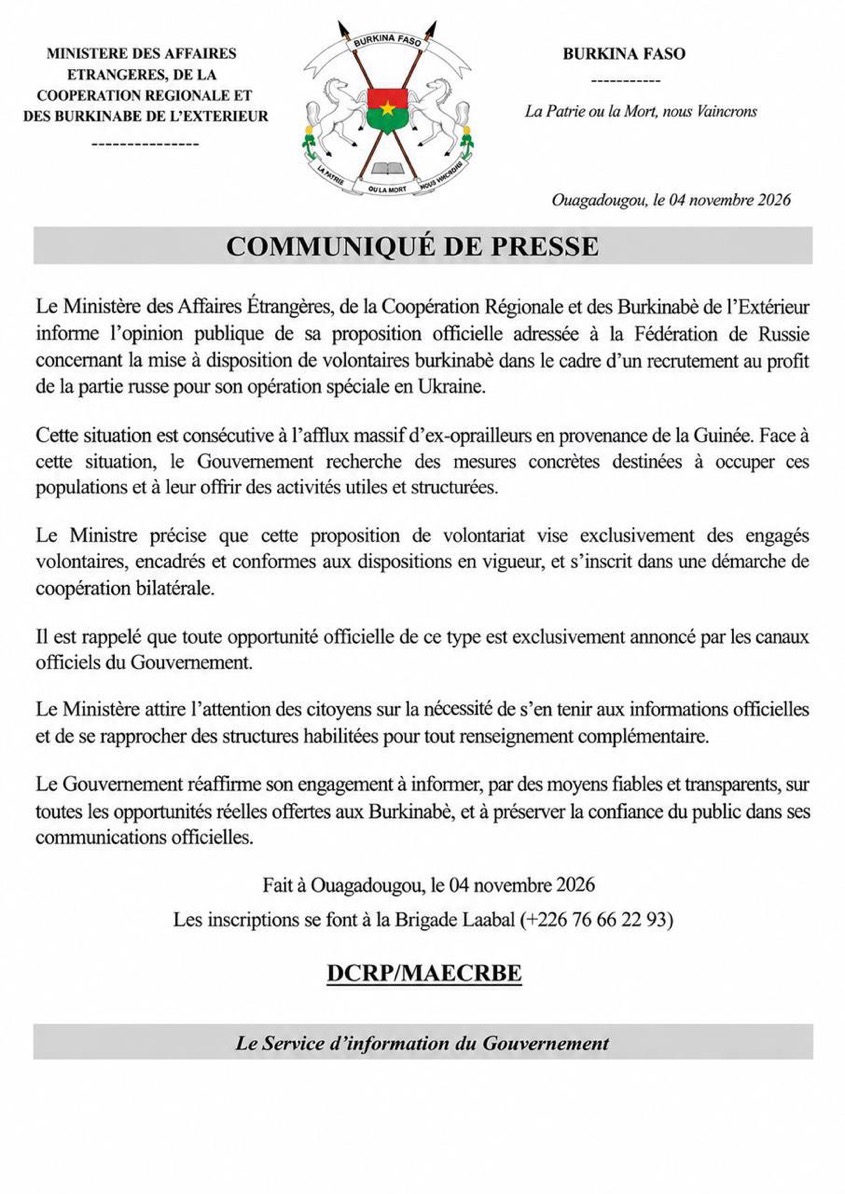
The strategic partnership between Burkina Faso and Russia is raising troubling questions about the human cost of geopolitical maneuvering. Recent reports suggest that Ouagadougou may have proposed deploying volunteers many of them small-scale gold miners expelled from Guinea to bolster Russia’s fighting forces in Ukraine. This alleged initiative, framed as humanitarian repatriation, could represent a calculated shift from aid to recruitment, transforming already vulnerable individuals into potential combatants in a distant war.
From expulsion to potential enlistment
The miners in question are Burkinabè nationals who had been working illegally in Guinea’s artisanal gold mines before being forcibly removed. Their expulsion left them without livelihoods, forcing many into precarious conditions back in Burkina Faso. Now, they find themselves at the center of a complex and concerning geopolitical negotiation one that may prioritize strategic interests over human welfare.
The proposed grouping of these displaced miners in Ouagadougou’s makeshift reception centers suggests a coordinated effort. But beyond the stated purpose of resettlement, observers question whether their final destination might instead be the battlefields of Ukraine. If this turns out to be the case, their recruitment would occur under highly questionable circumstances, leveraging their economic vulnerability as a means to fill foreign military ranks.
The untold motives behind Ouagadougou’s collaboration with Moscow
Burkina Faso’s pivot toward Russia under transitional leader Ibrahim Traoré has been widely documented, marked by the visible presence of Russian paramilitary personnel and a narrative of breaking away from Western military influence. Yet, this strategic alliance extends beyond security partnerships and public declarations it may now involve the direct mobilization of Burkinabè citizens into Russia’s ongoing war effort.
Russia, facing severe manpower shortages in Ukraine, has increasingly relied on foreign fighters. The inclusion of Burkinabè volunteers especially those displaced and economically desperate could represent a low-cost, high-yield solution for Moscow. But for Ouagadougou, this raises critical ethical and sovereign responsibilities: is the state acting as a facilitator in exporting its own citizens to a foreign conflict?
Is voluntary consent possible in a system of coercive environment?
Key concerns center on the transparency of recruitment. Were these miners informed of their potential destination before consenting? What safeguards exist to ensure their decision was truly voluntary, given their immediate need for income and stability? Without clear guarantees, the line between voluntary engagement and exploitation blurs dangerously.
The responsibility of Burkinabè authorities is paramount. They must clarify whether this grouping exercise is genuinely humanitarian in nature or merely a prelude to military deployment. Transparency regarding the status, rights, and protections afforded to these individuals is non-negotiable. A sovereign state cannot claim independence while dispatching its most vulnerable citizens into harm’s way without full disclosure and moral accountability.
The human dimension: lives shaped by expulsion and war
Behind the geopolitical calculations lie real people men who once dug for gold under precarious conditions, only to be expelled and left without recourse. Their potential conscription into a war thousands of kilometers away underscores a paradox: a nation asserting sovereignty while its citizens may become expendable tools in a foreign conflict.
This situation forces a reckoning with the true cost of strategic alliances. When humanitarian crises become recruitment pools, the principles of justice and human dignity are undermined. The international community, alongside regional observers, must demand answers: Is Burkina Faso facilitating a path back to safety, or preparing its people for the frontlines?
What lies ahead: protection or peril?
As these displaced miners are gathered under the banner of repatriation, the question remains: Is their final destination a stable future in Burkina Faso or a deployment order bound for Ukraine? The answer will reveal whether this alliance values human life above geopolitical advantage. It will also determine whether Burkina Faso’s claim to sovereignty includes the moral duty to protect its citizens from being weaponized in distant wars.
Until clear explanations are provided and safeguards put in place, the growing suspicion is that this is less about aid and more about filling the ranks of a foreign military campaign. And if that proves true, the most vulnerable citizens of Burkina Faso may soon bear the heaviest burden of its new alliance.
By Pierre Tchuente — Journalist