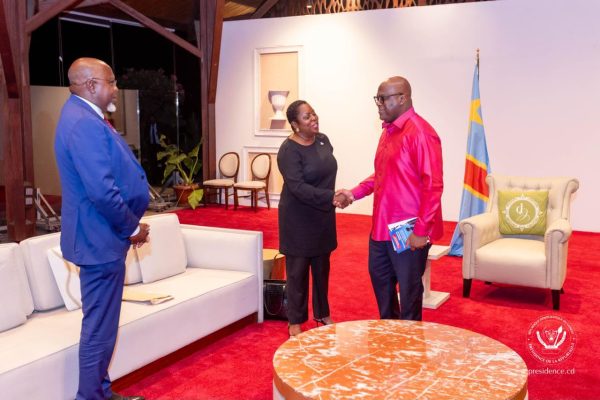
A coordinated diplomatic campaign to secure international recognition of the GENOCOST genocide in the Democratic Republic of Congo (DRC) is set to begin in France when parliament reconvenes. This initiative, announced by the Collective of French Elected Officials from Congo-Kinshasa (CEFOCK), follows a meeting with President Félix Tshisekedi at the Cité de l’Union Africaine in Kinshasa.
The CEFOCK’s strategy includes organizing awareness-raising events, academic conferences, and targeted advocacy with French local governments, national institutions, and the Congolese diaspora. The goal is to elevate the GENOCOST narrative from advocacy circles to a central topic in French and global policy discussions.
The collective’s efforts aim to break the silence surrounding the mass atrocities committed in the DRC, positioning the genocide as a matter of public policy rather than a humanitarian issue confined to NGO platforms.
Strengthening the case with institutional backing
To reinforce their campaign, the CEFOCK will collaborate closely with the Inter-institutional Commission for Victim Support and Reform Assistance (CIA-VAR), a Congolese government body responsible for documenting atrocities, facilitating reparations, and preserving historical memory.
This partnership has two key objectives: first, to ensure the victims’ stories remain unforgotten through sustained remembrance initiatives; second, to push for official recognition of the genocide, which would unlock justice mechanisms and reparative measures for survivors and affected communities.
President Tshisekedi endorsed the initiative, describing it as a vital contribution to the DRC’s memorial diplomacy on the world stage.
The diaspora steps into political advocacy
The announcement arrives as Kinshasa escalates its global lobbying for international recognition of the genocide, particularly the systematic crimes linked to resource exploitation since 1996. The Congolese diaspora—now represented in French municipal, departmental, and regional councils—plays a pivotal role in this push.
Through the CEFOCK, the diaspora transitions from sharing personal testimonies to wielding political influence. By engaging French lawmakers at all levels, the campaign seeks to mirror the parliamentary recognition granted to other historical genocides, applying pressure for official acknowledgment of the GENOCOST in France.
This mobilization aligns with domestic efforts. On August 2, during the national GENOCOST commemoration in Kinshasa, President Tshisekedi led a memorial ceremony and unveiled plans for the National GENOCOST Museum and a dedicated memorial site. These projects signal the government’s commitment to institutionalizing remembrance and ensuring the genocide’s legacy is preserved in Congolese history.
With coordinated action at home and abroad, the DRC is deploying every available tool to secure formal international recognition of the genocide tied to the plundering of its natural resources.
You may also like
Will the AES ever launch its own currency? The question Traoré keeps leaving unanswered
Can Ibrahim Traoré’s 300 armored vehicles claim survive scrutiny? Inside Faso Armored’s made-in-Burkina Faso gamble
Can Washington force third-country deportations? Ivory Coast’s refusal raises the stakes
Will Benin’s AEO exporters finally crack the Chinese market?
Northern Niger’s unanswered question: can Tiani’s government deliver water and power where it matters most?