Burkina Faso’s military ruler declares democracy ‘irrelevant’ for the nation
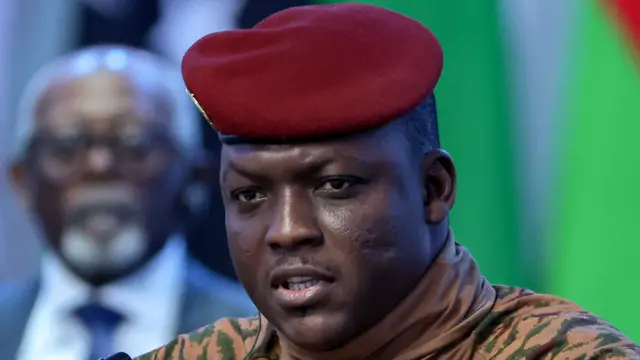
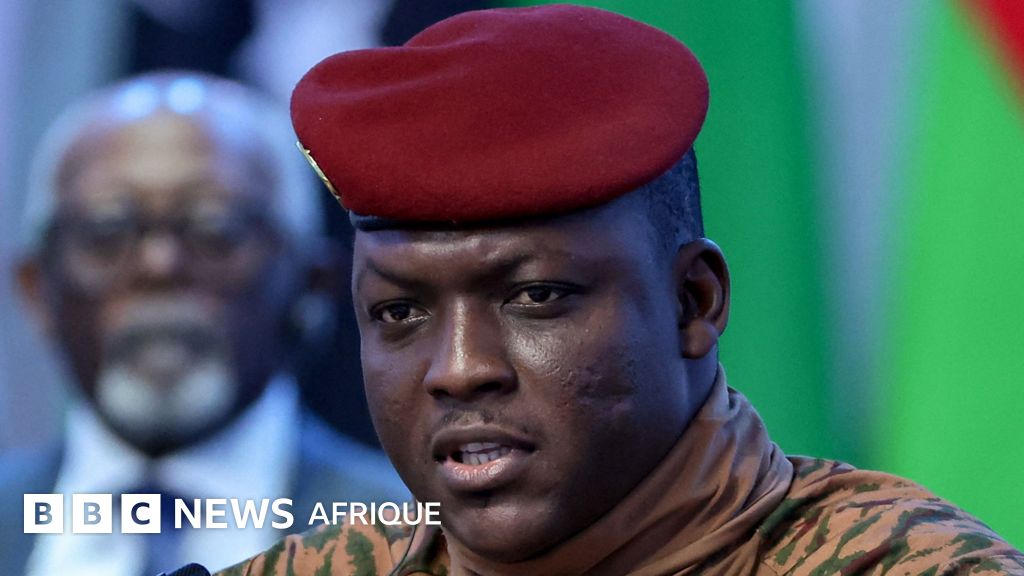
Ouagadougou, Burkina Faso — The military leader of Burkina Faso has publicly dismissed democracy as an incompatible system for the country, calling for its abandonment in favor of an undefined alternative approach. Captain Ibrahim Traoré, who seized power three years ago, made these remarks during a nationally televised interview on Thursday evening.
Traoré asserted that democracy “does not suit us,” urging citizens to “forget about it entirely.” His statements came just two months before the originally promised transition to civilian rule, which has now been postponed by five years. “The people must abandon the question of democracy,” he declared. “Democracy is not for us.”
The 38-year-old leader, who presents himself as a revolutionary challenging Western imperialism, drew a parallel with Libya, describing it as a cautionary example. He referenced the decades-long rule of Colonel Muammar Gaddafi, whose authoritarian regime provided social housing, free education, and healthcare before its violent collapse following a Western-backed uprising. Since then, Libya has remained mired in instability, with no elections held and the nation divided between rival administrations and armed factions.
Traoré also justified the recent ban on all political parties, labeling them as divisive and incompatible with his revolutionary project. “In Africa, or at least in Burkina Faso, a true politician embodies all vices: a liar, a flatterer, a smooth talker,” he stated. He did not outline a specific alternative system but emphasized Burkina Faso’s unique path: “We have our own approach. We are not trying to copy anyone. We are here to completely change how things are done.”
The junta leader outlined a vision centered on sovereignty, patriotism, and revolutionary mobilization, with traditional leaders and grassroots structures playing key roles. He stressed the need for economic and military self-reliance, arguing that Burkina Faso cannot progress with standard six-to-eight-hour workdays. “We must work harder,” he insisted.
Since taking power, Traoré’s administration has faced criticism for suppressing dissent, targeting opposition figures, media outlets, and civil society groups. Reports have also emerged of critics being sent to frontline combat positions against Islamist militants. Despite this, his anti-Western rhetoric and pan-Africanist stance have garnered significant continental support.
Like neighboring Mali and Niger, Burkina Faso has distanced itself from Western partners, particularly France, in its fight against Islamist insurgents. Instead, it has turned to Russia for military assistance, yet violence in the region continues unabated. A recent report by Human Rights Watch (HRW) revealed that over 1,800 civilians have been killed in Burkina Faso since Traoré’s 2023 takeover, with two-thirds of these deaths attributed to the army and allied militias.
As Burkina Faso’s military government consolidates power, its rejection of democratic norms marks a stark departure from regional trends, raising questions about the country’s future stability and governance.