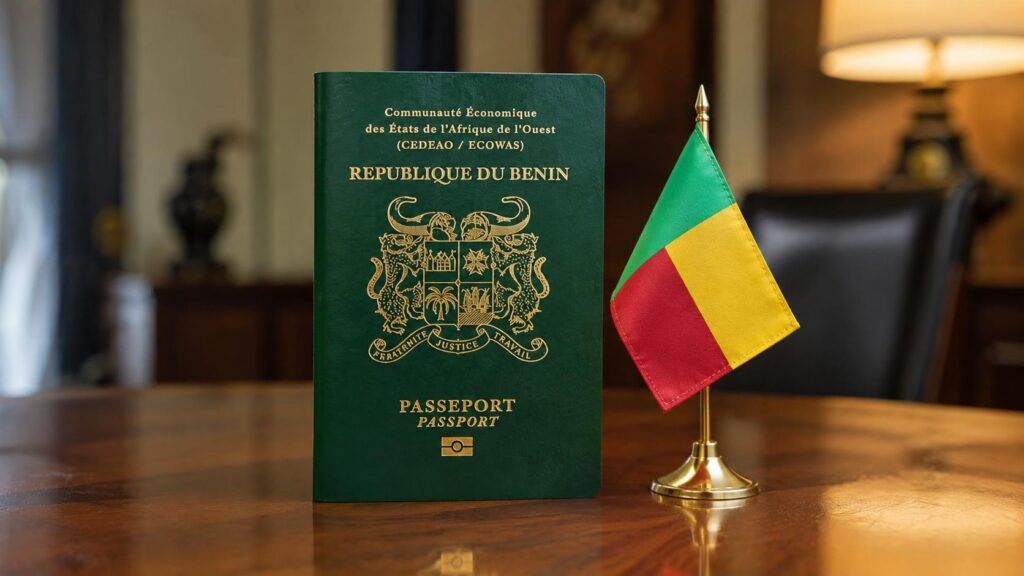
The Benin passport has surged to the second position in Africa for intra-continental mobility, a testament to the nation’s bold diplomatic strategy and technological innovation. Over recent years, this travel document has climbed the rankings of the continent’s most powerful passports, reflecting a deliberate policy shift toward fostering open borders and seamless travel across West Africa.
How the Benin passport stands in continental rankings
The remarkable standing of the Benin passport is best understood through two distinct evaluation frameworks:
- Intra-African mobility (2nd place): Within the framework of the Intra-African Openness and Mobility Index—a metric closely aligned with initiatives like the African Development Bank’s programs and the African Continental Free Trade Area (AfCFTA)—Benin secures the second-highest position on the continent. This ranking assesses how easily citizens can travel to any of Africa’s 54 countries without prior visa requirements or with visas granted upon arrival.
- Global mobility (1st in UEMOA / ~13th in Africa): When evaluated against the broader Henley Passport Index, which measures access to all countries worldwide, the Benin passport ranks around the 13th position in Africa and within the top 70 globally. Notably, it holds the top spot within the West African Economic and Monetary Union (UEMOA) zone.
Key drivers behind Benin’s diplomatic success
Benin’s ascent in passport rankings is rooted in a proactive foreign policy built on three core pillars:
Championing panafrican openness
The government’s decision to unilaterally waive visa requirements for all African nationals entering Benin has set a powerful precedent. This move not only streamlined travel for millions but also sparked a wave of reciprocity, prompting neighboring countries to ease entry conditions for Beninese citizens in return.
Enhancing document credibility through technology
The Benin passport’s reputation has been bolstered by sweeping modernization efforts. The integration of cutting-edge biometric technologies, coupled with the digitization of civil registration processes, has elevated the document’s security and reliability. These advancements have earned global trust, making border crossings smoother for Beninese travelers.
Expanding bilateral agreements
Benin’s diplomatic corps has aggressively pursued visa exemption agreements with third countries, covering ordinary, service, and diplomatic passports. These bilateral arrangements have further dismantled travel barriers, reinforcing the passport’s global utility.
Economic and geopolitical ripple effects
The Benin passport’s newfound prominence unlocks tangible benefits for entrepreneurs, cultural figures, and academics. Reduced bureaucratic hurdles pave the way for deeper integration into regional markets, accelerate the implementation of the AfCFTA, and solidify Cotonou’s role as a key sub-regional business hub.
You may also like
Senegal’s December 2, 2026: will Diomaye Faye dissolve parliament or play the long game?
Senegal’s 2026 budget revision: can Dakar still rescue its growth and investment agenda?
Senegal’s 2026 revised budget: a trap vote for Pastef or a necessary evil?
Burkina Faso’s armored vehicles: can Faso Armored’s 300-unit claim survive the scrutiny?
Can Senegal and Azerbaijan turn a New York memorandum into a lasting political partnership?