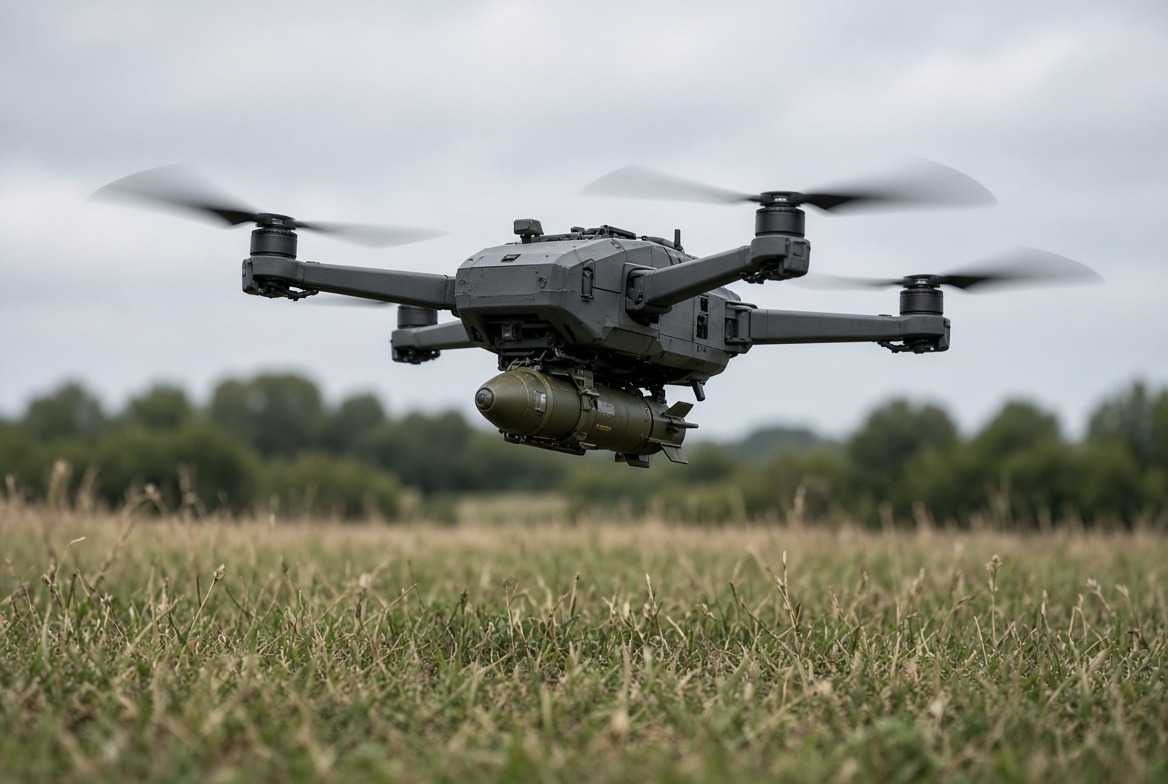
Beneath the radar of global headlines, Sudan’s brutal civil conflict has entered a devastating new phase. Between January and October 2026, drone strikes orchestrated by warring factions claimed the lives of more than 1,630 civilians—representing 75% of all recorded civilian deaths in the country during that period. What began as a power struggle between military leaders has evolved into a systematic campaign of aerial terror, reshaping the nature of warfare and leaving entire communities in ruins.
Why drones became the weapon of choice in Sudan’s hidden war
The shift toward drone warfare wasn’t accidental—it was a calculated escalation. As traditional frontlines blurred and conventional battles failed to deliver decisive victories, both sides turned to unmanned aerial vehicles (UAVs) to project power beyond the battlefield. These strikes weren’t limited to military outposts. Instead, they deliberately targeted the lifelines of civilian life: markets bustling with shoppers, hospital corridors filled with patients, and neighborhoods where children walked to school. The result? A humanitarian catastrophe unfolding in plain sight.
The United Nations’ grim assessment confirms what survivors have been reporting for months: drones are not just weapons of war—they are now instruments of population control, designed to inflict maximum suffering while minimizing risk to combatants. Each strike sends a message: nowhere is safe.
The infrastructure of survival: when basic needs become death traps
Behind the death toll lies a calculated assault on Sudan’s civilian infrastructure. The UN’s investigative team documented dozens of attacks on vital systems:
- Fuel depots and power stations, plunging entire districts into darkness and stranding medical equipment reliant on electricity;
- Water treatment facilities, cutting off access to clean drinking water for communities already reeling from famine;
- Hospitals and dialysis centers, where patients with chronic illnesses were among the first to die when systems failed;
- Public markets and transport hubs, turning routine commerce into a gamble with life.
In the Kordofan and Darfur regions—epicenters of the drone campaign—families now live under dual threats: starvation from blocked aid routes and instant death from a drone that could appear without warning at any time. The psychological toll is immeasurable. Parents report children too terrified to walk to school; elders describe the constant hum of drones as the sound of doom.
Who is flying the drones? The invisible hand behind the carnage
The demand for armed drones has surged in war-torn regions, but supply follows power—and power in Sudan is fragmented. Foreign actors, eager to influence the outcome of the conflict, have flooded the battlefield with sophisticated aerial weapons. While neither side has officially claimed responsibility, multiple independent sources confirm the presence of Turkish-made Bayraktar drones on both sides of the divide. These systems, capable of carrying guided munitions, have redefined tactical engagement, allowing strikes to be launched from miles away with terrifying precision—or indiscriminate devastation.
Human rights monitors have noted a disturbing pattern: drone strikes often precede or follow ground offensives, creating a cycle of terror that makes civilian survival nearly impossible. The absence of any credible military justification for targeting non-combatants has led international observers to label these actions as systematic violations of international humanitarian law.
The road to war: from revolution to robotic terror
To understand how Sudan arrived at this point, we must rewind to 2019, when a wave of popular protest toppled the decades-long dictatorship of Omar al-Bashir. The euphoria of revolution was short-lived. Rather than ceding power to a civilian-led transition, the military—led by General Abdel Fattah al-Burhan—and his rival, paramilitary commander Mohamed Hamdane Daglo (known as “Hemetti”), formed a fragile alliance. Hemetti, whose rise began in the infamous Janjaweed militias of the Darfur genocide, had built a parallel financial empire through gold mining, granting him autonomy from state control.
By October 2021, the alliance had collapsed. The two generals staged a coup, dismantling democratic institutions and crushing dissent. On April 15, 2023, their rivalry erupted into open war. What followed was not a swift battle for control, but a slow-motion annihilation. Cities fell. Ethnic cleansing campaigns surged. And by 2024, both sides had pivoted to drone warfare, outsourcing destruction to machines while preserving their own forces.
The human cost: beyond the numbers
The death toll—more than 1,630 civilians in just ten months—tells only part of the story. Behind each figure lies a shattered life: a mother killed while buying bread for her family; a teacher whose school was flattened mid-lesson; a farmer whose water pump was destroyed, rendering his land barren. Over 25 million Sudanese now face acute food insecurity. More than half the population lives under emergency humanitarian levels. Aid workers describe scenes of desperation: hospitals overflowing with the critically injured, families subsisting on one meal a day, children dying from preventable diseases in makeshift shelters.
The world has condemned the violence. The UN has warned of war crimes. Yet the drones keep flying. The arms continue to flow. And in Sudan’s skies, a new form of warfare has found its perfect battleground: the heart of civilian life.
The international stain: complicity in the silence
Despite global outrage, the supply chain of drone warfare remains intact. Arms embargoes are skirted. False end-user certificates are issued. The message is clear: in the calculus of modern conflict, civilian lives are acceptable collateral—and the cost of drones is measured not in currency, but in human suffering.