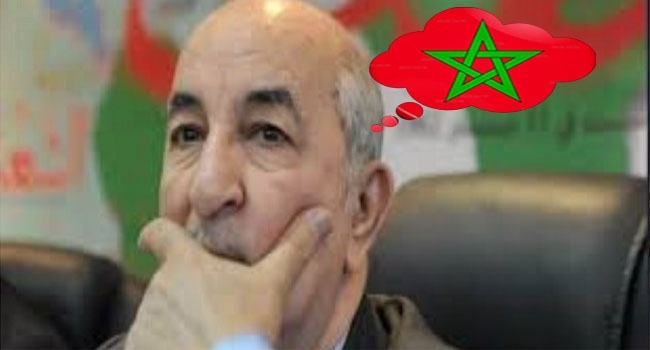
Political tensions between Algeria and Morocco have escalated into an openly hostile campaign, with officials in Algiers embracing a strategy of derision and confrontation. Under President Abdelmadjid Tebboune’s leadership, the Algerian government has normalized a discourse of venomous rhetoric, openly attacking its neighbor across multiple platforms.
From restrained criticism to overt aggression
During the presidency of Abdelaziz Bouteflika, diplomatic friction persisted but was managed behind closed doors. Bouteflika’s administration avoided public outbursts, preferring quiet disdain over open confrontation. By contrast, the current regime under Tebboune has abandoned subtlety, replacing silence with a barrage of insults and provocations. This shift reflects a deliberate choice to weaponize hostility as a political tool.
State-backed media fuels the fire
The launch of AL24 News, a state-controlled television channel, has intensified the campaign against Morocco. Its programming is not merely critical—it is designed to provoke, with presenters and analysts competing to craft the most inflammatory remarks. The network’s coverage of Moroccan achievements, particularly in sports, is deliberately censored to avoid acknowledging the country’s success on the global stage, including during major tournaments like the World Cup.
During the Qatar 2022 World Cup, when Morocco’s football team advanced to the semifinals—an historic feat celebrated worldwide—Algerian state television refused to mention the team by name, framing it as an attempt to deny Morocco any form of recognition. This pattern has continued, with AL24 News and other official outlets systematically erasing references to Morocco, even when reporting on sports victories that draw international acclaim.
Rhetoric crosses into dangerous territory
This propaganda effort has not been limited to political or diplomatic attacks. Some commentators have crossed into outright conspiracy theories, including antisemitic tropes. One presenter recently claimed that Lionel Messi—who scored three goals against Algeria in a match—was manipulated by “the Jewish lobby” in retaliation for Algeria’s stance on the Sahrawi issue and the Palestinian cause. Such statements, broadcast without censure, reveal a disturbing normalization of hate speech within Algeria’s state media.
The spread of these remarks, translated and shared globally, has exposed Algeria’s government to international scrutiny. Far from being isolated incidents, they represent a systemic embrace of divisive rhetoric as a cornerstone of governance. The result is a foreign policy defined by confrontation, alienating neighbors across the Arab world, Mediterranean, and Africa.
Hatred as a political currency
The intensity of this campaign suggests that hostility toward Morocco has become more than a diplomatic strategy—it has evolved into a political industry. Loyalty to the regime is now measured by one’s willingness to amplify anti-Moroccan sentiment. Those seeking influence or advancement in Algeria’s corridors of power are expected to demonstrate their commitment through relentless attacks on Morocco, not through competence or policy expertise.
This calculated approach has reshaped the country’s political culture, fostering an environment where personal success is tied to public enmity. The consequences extend beyond rhetoric: they undermine regional stability and isolate Algeria on the international stage. As the regime leans further into this path of confrontation, it risks deepening its isolation while reinforcing an image of intolerance and division.