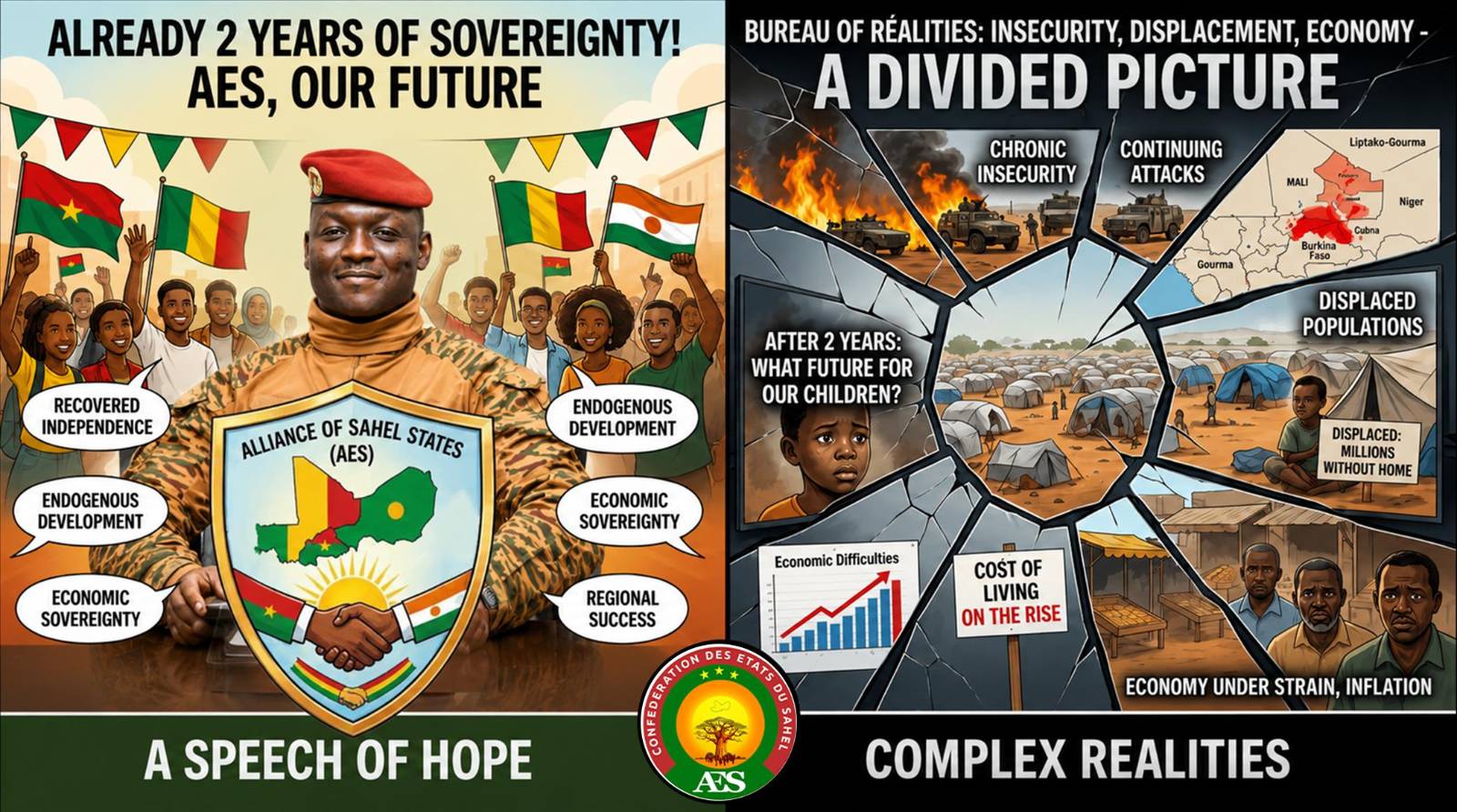
The Alliance of Sahel States (AES) marked its second anniversary with declarations of political and strategic triumph, framed around the principles of sovereignty, solidarity, and regional cooperation among Burkina Faso, Mali, and Niger. While the narrative resonates with segments of the population, tangible outcomes remain elusive for many who seek concrete progress.
The leadership of the AES has consistently emphasized the alliance’s advancements in diplomacy, defense, and institutional frameworks. However, the persistent security threats and socio-economic challenges that prompted its formation continue to challenge the credibility of these claims.
The discourse on sovereignty has emerged as the cornerstone of the AES’s political identity. Yet sovereignty extends beyond mere disengagement from traditional partners or realignment in international relations. It fundamentally hinges on a state’s ability to safeguard its citizens, uphold institutional integrity, sustain economic resilience, and provide opportunities for its youth.
Despite repeated assertions of military successes, armed factions continue to operate across multiple regions in the three countries. Civilians remain displaced, humanitarian crises persist, and the specter of violence looms large in daily life. The proclaimed security gains have not translated into tangible relief for affected communities.
Economically, the promised benefits of regional integration have yet to materialize. Trade flows remain constrained, fiscal pressures persist, and purchasing power continues to erode for many households. Critics argue that the anticipated dividends of the AES remain largely theoretical, with little visible impact on the ground.
The focus on sovereignty, while symbolically powerful, has overshadowed critical governance issues such as transparency, accountability, and institutional efficacy. A regional union cannot secure long-term public trust without robust institutions, effective public policies, and responsible resource management.
Two years into its existence, the AES undeniably represents a pivotal shift in West Africa’s political landscape. Yet its legacy will not be defined by official rhetoric alone. The true measure of its success lies in its ability to deliver measurable improvements in security, economic stability, and social welfare for the people of Burkina Faso, Mali, and Niger.
Until such outcomes are realized, the alliance’s narrative of sovereignty will remain incomplete—unable to address the urgent needs of those it claims to represent.