Transforming Abidjan: A Vision for a Modern City
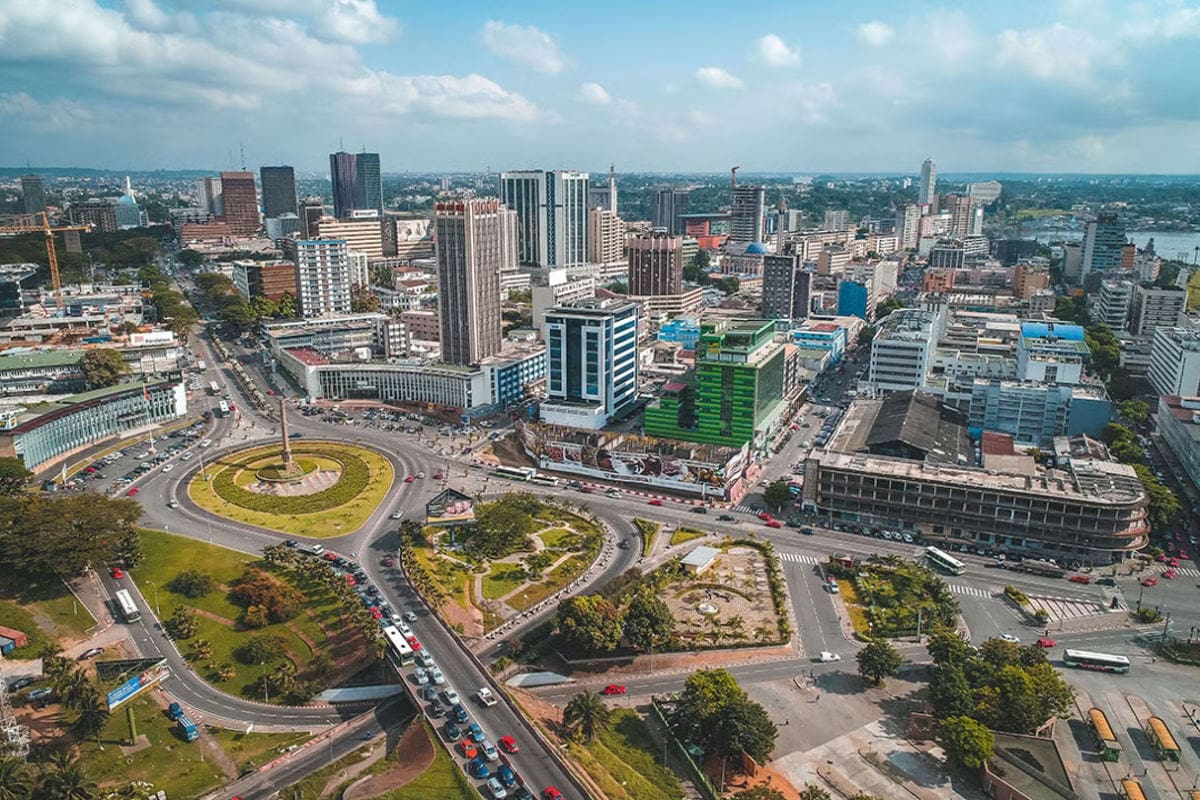
The city of Abidjan, the economic capital of Côte d’Ivoire, is undergoing a major transformation to become a model for sustainable urban development in Africa.
The government has launched a ambitious plan to replace informal and polluting transportation systems with eco-friendly infrastructure, aligning with the country’s transition to a low-carbon economy. The new metro line, set to open in 2029, will transport 500,000 passengers daily, reducing congestion and greenhouse gas emissions.
But the vision goes beyond Abidjan’s city limits. A high-speed rail link connecting the capital to Ferkessédougou aims to bridge the country’s north-south divide, making Côte d’Ivoire the second African nation with a high-speed rail network.
Securing Urban Development: Order, Resilience and Accessible Housing
To support these large-scale projects, the government has introduced stricter land-use regulations to free up space for new infrastructure and prevent illegal construction in high-risk areas. The Projet d’Assainissement et de Résilience Urbaine (PARU) is also underway, focusing on major drainage networks and road realignment to protect residents from flooding.
Accessible housing is another key priority. A 4,300-unit social and economic housing project has been formalized, featuring modern architecture and designed for low-income families. By combining space rationalization, transportation projects, and affordable housing, Côte d’Ivoire is structuring its capital’s growth around safety and economic efficiency.