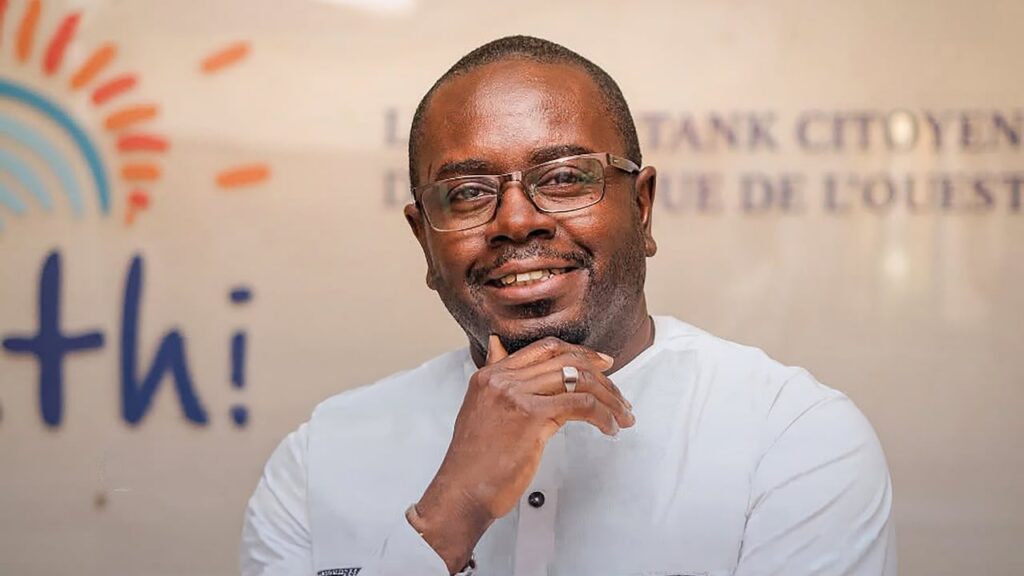
In Senegal, a single question is now dominating political conversations from Dakar to Ziguinchor: can President Bassirou Diomaye Faye survive the local elections that are supposed to anchor his reform agenda? The stakes could hardly be higher. According to political analyst Babacar Ndiaye, time itself has become the president’s most formidable opponent. “Le temps joue contre Bassirou Diomaye Faye,” he warns, and that warning carries consequences for every household, business and institution in the country.
The clock as an adversary: why delay is dangerous for the presidency
When Bassirou Diomaye Faye and his Pastef party swept to power, the promise was rapid, sweeping change. Local elections were meant to be the first concrete step toward decentralising power and legitimising the new administration at the grassroots level. Instead, the calendar has become a trap. Every postponement erodes the momentum that brought the president to office, allowing frustration to fester and opponents to organise.
Babacar Ndiaye’s analysis is blunt: the longer the wait, the more the presidency appears indecisive. Voters who once saw Faye as the embodiment of a break with the past may begin to wonder whether the system has swallowed him too. For a leader whose mandate rests on the promise of rupture, that perception is toxic.
The political cost of an uncertain timeline
Senegal’s local elections are not merely administrative exercises. They determine control of municipalities and regions, shaping everything from public spending to party machinery ahead of future national contests. For Pastef, winning these elections would consolidate the party’s grip on power and validate its reform programme. Losing them — or seeing them delayed indefinitely — would signal weakness.
Meanwhile, opposition figures and former allies are watching closely. Ousmane Sonko, the prime minister and a central figure in the Pastef movement, remains a lightning rod for both support and controversy. The delicate balance between the president and his prime minister adds another layer of uncertainty. Any misstep at the local level could expose cracks within the ruling coalition.
What Babacar Ndiaye’s warning really means for Senegal
Ndiaye’s intervention is more than a commentary on electoral mechanics. It is a strategic alarm. He argues that the government’s window of opportunity is narrowing, and that the president must act decisively to set a date and prepare his party for battle. Otherwise, the narrative will shift from transformation to stagnation.
The economic dimension cannot be ignored either. Investors and international partners look for stability and predictability. A prolonged electoral limbo raises questions about governance capacity, potentially slowing down the very reforms needed to revive the economy and create jobs. For ordinary Senegalese, the wait translates into continued uncertainty about local services and development projects.
Three scenarios that could define the coming months
Political observers in Dakar are sketching out possible paths, each with distinct risks for the presidency:
- Fast-track elections: The government sets an early date, mobilises Pastef’s grassroots network, and turns the vote into a referendum on the reform agenda. This would require rapid organisational capacity and could catch opponents off guard.
- Extended delay: Postponements continue, giving the opposition time to regroup and amplify criticism. Public trust erodes, and the president’s authority weakens with each passing month.
- Compromise date: A middle-ground timeline is agreed, allowing some preparation but not enough to fully satisfy either side. This scenario risks pleasing no one and leaving the political class in a state of permanent campaign.
The road ahead: decisions that cannot wait
Babacar Ndiaye’s message is ultimately a call for clarity. Bassirou Diomaye Faye must decide whether to confront the electoral challenge head-on or risk being defined by delay. The president’s supporters argue that his mandate remains strong and that local elections will confirm his popularity. But even they acknowledge that time is a resource that cannot be recycled.
For Senegal, the local elections are more than a test of parties; they are a test of whether the country’s democratic institutions can deliver change at the pace citizens expect. As the clock ticks, the answer to the question posed at the outset — can the presidency survive the wait? — will be written in the decisions taken in the coming weeks.
You may also like
Senegal’s budget: can Ousmane Sonko afford to block Bassirou Diomaye Faye’s 2026 plan?
Senegal electoral reform: Khalidou dit Mbaye Sokoma’s full proportional representation push
Senegal’s local elections: Bassirou Diomaye Faye still won’t set a date
Alain-Georges Moukoko takes over Libreville prosecutor general’s office
Bénin : le Sénat tient sa séance inaugurale sous la conduite de Patrice Talon