When Guinea launched a sweeping crackdown on illegal gold mining in November 2026, the operation revealed more than just a security measure. Behind the headline-making arrest of 1,412 miners—including hundreds of Burkinabè nationals—lies a complex web of regional economic pressures, unmet expectations, and systemic failures that have driven thousands to risk their lives in neighboring goldfields.
From repression to revelation: what 1,412 arrests really tell us
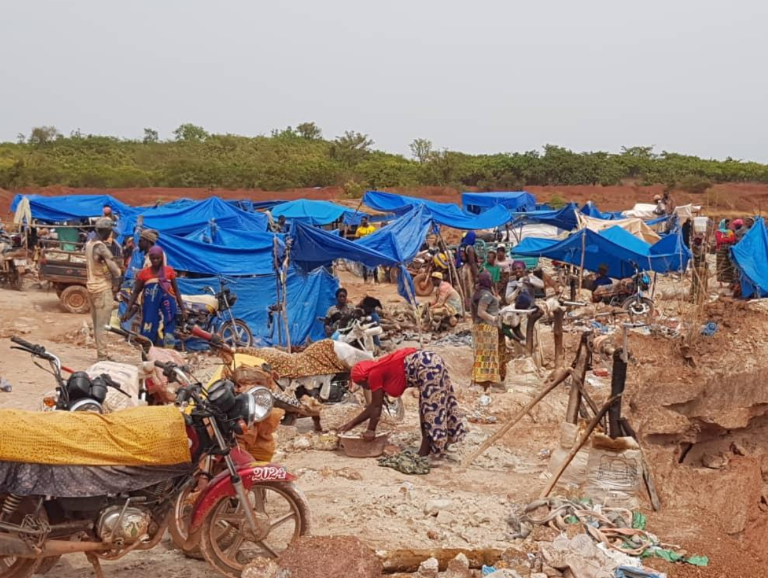
The joint announcement from Guinea’s Ministries of National Defense, Security, and Civil Protection confirmed that during coordinated raids across Kérouané and Siguiri prefectures, authorities dismantled over 50 illegal mining sites. While the operation targeted environmental degradation and unregulated exploitation, it inadvertently uncovered a hidden migration crisis: Burkinabè workers—many fleeing economic despair at home—had become central to Guinea’s informal gold economy.
The arrests, spanning multiple days in early November, were not isolated incidents. They were the visible tip of a long-standing phenomenon: a transnational workforce drawn to Guinea’s gold-rich regions by the promise of income in a region plagued by instability, poverty, and shrinking opportunities in their home country.
Why Burkinabè miners are voting with their feet—and shovels
Burkina Faso’s economic landscape has deteriorated under years of compounded crises. Insurgency, climate events, and structural weaknesses have eroded rural livelihoods, leaving communities with few alternatives to subsistence farming. In such conditions, the allure of informal mining—despite its dangers—becomes more than an economic choice; it’s a survival strategy.
Guinea’s artisan gold sector, though informal and risky, offers immediate cash—crucial for families facing food insecurity or debt. While Burkina Faso boasts significant mineral wealth of its own, including operational industrial mines, many communities lack access to stable income, training, or fair market access. For countless Burkinabè, crossing the border to dig for gold in Guinea is not a dream, but a necessity born of national policy shortcomings.
Three unmet promises that fuel the exodus
- Economic sovereignty without equity: Since gaining power in 2022, Captain Ibrahim Traoré’s government has positioned mineral resource control as a cornerstone of sovereignty. Yet, millions remain excluded from the benefits of gold extraction.
- Employment failure in rural zones: Despite gold’s contribution to state revenue, job creation in mining regions has not matched population growth or inflation.
- Infrastructure and safety gaps: Many Burkinabè artisanal miners lack access to safe equipment, credit, or market linkages—leaving them vulnerable to exploitation and willing to migrate.
The paradox of sovereignty: exporting labor while enriching neighbors
Burkina Faso holds Africa’s fourth-largest gold reserves. Yet, paradoxically, its citizens are among the primary suppliers of manual labor in Guinea’s gold rush. This reality challenges the narrative of self-sufficiency promoted by Ouagadougou’s leadership. If national wealth is not translating into local opportunity, what purpose does sovereignty serve if not to improve lives?
The dilemma extends beyond economics. It strikes at the heart of governance: can a country claim sovereignty over its resources while allowing its people to be pushed into dangerous, unregulated industries abroad?
A crackdown in Guinea, but the roots of the problem run deeper
Guinea’s recent judicial response reflects legitimate concerns over environmental damage: mercury poisoning, river siltation, and deforestation threaten public health and food security. But while arrests and prosecutions send a message, they do little to address the economic desperation that fuels migration.
Without coordinated policy shifts—including regional dialogue, vocational training in artisanal mining, access to finance, and cross-border labor agreements—Guinea’s crackdown risks being a temporary pressure valve, not a solution. The cycle of clandestine migration and repression will likely persist as long as structural inequalities remain unaddressed.
What’s missing from the official data?
While Guinea’s communiqué confirms 1,412 arrested individuals, it does not break down nationalities. The true count of Burkinabè miners could be significantly higher, given long-standing migration patterns and the porous nature of Sahel borders. Without accurate demographic tracking, policymakers are operating in the dark—unable to tailor responses to the human scale of the crisis.
Beyond the numbers: lives on the line
Each arrest represents a life disrupted: a father temporarily separated from his family, a breadwinner facing prosecution, a community left without its primary income source. These aren’t just statistics—they’re testimonies to unfulfilled development promises and a regional economy that has failed to protect its most vulnerable members.
For Guinea, the challenge is to balance environmental protection with compassion. For Burkina Faso, the reckoning is more profound: to transform rhetoric about sovereignty into tangible prosperity for its people—or risk watching yet another generation leave, not out of ambition, but out of sheer necessity.
Toward a new regional approach: security, development, and dignity
The way forward requires more than judicial action. It demands:
- Cross-border cooperation: Shared databases on migrant miners and joint patrols to monitor illegal sites.
- Economic alternatives: Funded artisanal mining cooperatives in Burkina Faso with fair wages, safety standards, and market access.
- Policy accountability: Clear metrics for how sovereignty translates into local employment and poverty reduction.
Only then can the true meaning of economic independence be realized—not in the quantity of gold produced, but in the dignity of the people who produce it.