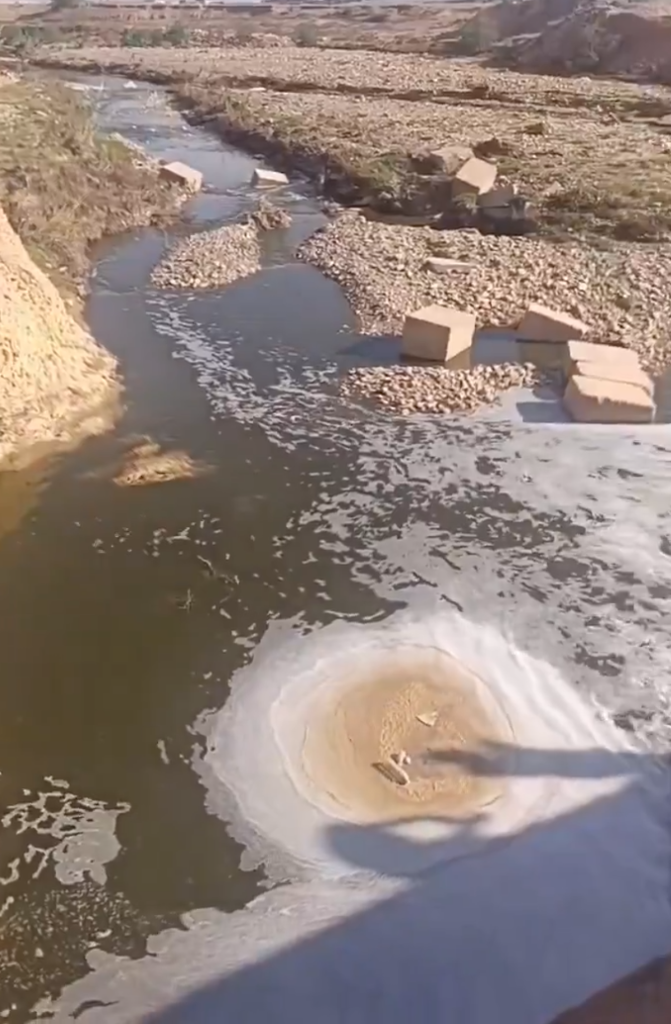
The delicate balance between two North African neighbors has once again been disrupted, this time by an environmental crisis flowing beneath the surface. Algerian officials have sounded the alarm over a severe degradation of water quality in the Moulouya River’s tributary, the Oued Mouilah, near Tlemcen. While the immediate concern is the health of the ecosystem and local populations, the roots of this pollution extend deep into transnational tensions that could reshape diplomatic dynamics in the region.
Behind the crisis: tracing the origins of the Oued Mouilah pollution
Environmental degradation in Algeria’s Oued Mouilah is not an isolated incident but the result of a complex interplay of industrial and domestic waste discharges originating from across the border. Algerian authorities have linked the contamination to upstream activities in Morocco, where untreated industrial effluents and domestic sewage allegedly enter the Oued Isly before flowing into the Oued Mouilah watershed. This cross-border pollution chain raises urgent questions about responsibility, enforcement, and the fragility of shared water resources.
Key indicators of contamination include elevated levels of nitrites, heavy metals, pharmaceutical residues, and other chemical pollutants. These substances pose severe threats to aquatic life, drinking water supplies, and public health in regions dependent on the river’s water. With the Oued Mouilah feeding into the Hammam Bougara dam—critical for drinking water in Tlemcen—the stakes are higher than ever.
The science (and uncertainty) of pollution provenance
Determining the exact origin of the pollutants is a scientific challenge. Without comprehensive, independently verified water sampling across the entire basin—including Moroccan and Algerian segments—it is difficult to conclusively assign blame. While Algerian officials insist on a Moroccan origin, the absence of transparent, third-party data raises the possibility of multiple contributing sources. This ambiguity complicates diplomatic efforts and underscores the need for joint environmental investigations.
Until conclusive evidence is available, claims of Moroccan responsibility remain allegations, not certainties. Yet, the potential scale of environmental harm demands swift action, whether through science-based verification or bilateral cooperation.
Diplomatic fallout: can environmental crises ignite new conflicts?
This pollution dispute lands in a geopolitical minefield. Algeria and Morocco have seen their diplomatic ties deteriorate sharply since 2021, with long-standing political and territorial disagreements festerin. The introduction of a transboundary water crisis compounds existing tensions, as water—a non-renewable and increasingly scarce resource—becomes not only an environmental issue but a matter of national sovereignty and state responsibility.
While neither country has indicated military escalation, the rhetoric grows more strident. Algerian parliamentarians and local officials have called for international legal involvement, invoking the principles of shared water resource protection and transboundary environmental harm prevention. These appeals hint at a potential shift from environmental crisis to international legal dispute, especially if cooperation continues to stall.
International law and shared rivers: what are the obligations?
International water law provides a framework for addressing cross-border pollution. Under the UN Watercourses Convention and other instruments, riparian states must prevent significant harm to downstream countries from activities within their borders. Algeria’s potential recourse to international mechanisms reflects a growing trend: treating water as a strategic asset where environmental governance and geopolitics intersect.
However, initiating formal legal proceedings requires more than political will—it demands solid evidence, procedural legitimacy, and bilateral willingness to engage. A gesture toward international bodies may be a strategic maneuver, but a full legal case remains uncertain at this stage.
From crisis to cooperation: pathways to resolution
Despite the tensions, the immediate priority must be protecting populations and ecosystems. A joint hydrological and toxicological assessment—conducted with the involvement of neutral scientific bodies—could clarify pollutant sources, assess health risks, and guide remediation efforts. Such collaboration would not only serve environmental aims but could also rebuild trust and open channels for dialogue.
Short-term measures such as real-time water quality monitoring, emergency filtration systems, and public health advisories must accompany long-term strategies like wastewater treatment upgrades and stricter industrial regulations on both sides of the border.
The human dimension: communities on the frontline
Residents of Tlemcen and surrounding areas bear the brunt of this crisis. For years, they have relied on the Oued Mouilah and Hammam Bougara Dam for drinking water and agriculture. Now, fears of contamination have eroded confidence in local water supplies. Public anxiety, compounded by a lack of transparent communication, risks turning an environmental emergency into a social one.
While central governments engage in political maneuvering, local communities need clear, consistent information and immediate protection. This includes access to clean water, health monitoring, and assurances about the safety of agricultural produce irrigated by the affected river.
Beyond Tlemcen: the broader challenge of transboundary water governance
The Oued Mouilah case is emblematic of a larger challenge facing the Maghreb—how to manage shared water resources amid political tensions and climate pressures. With climate change intensifying droughts and reducing river flows, the stakes for cooperation will only grow. The crisis underscores a fundamental truth: water flows without regard for borders, and its preservation demands shared responsibility.
As Algeria and Morocco navigate this new front of contention, the world watches. Will this become a cautionary tale of environmental deterioration triggering diplomatic paralysis? Or can it become a model for science-led, cooperative water governance in a fractured region?
The answer lies not in who assigns blame first, but in who acts first to protect the river—and the people who depend on it.