After more than three decades on the run, Jean Léonard Teganya’s return to Rwanda this November marks a critical moment in the country’s pursuit of justice for the 1994 genocide against the Tutsi people. Expelled from the United States on November 9, 2026, the 55-year-old former medical student is now at the center of a judicial process that raises pressing questions about accountability, international cooperation, and the enduring legacy of mass atrocities.
From accused to fugitive: a timeline of decades-long evasion
The roots of Teganya’s legal troubles trace back to 1994, when he was a medical student at the University of Rwanda and completing a residency at the Butare University Teaching Hospital. Today, the former hospital is known as the Butare University Teaching Hospital (CHUB), located in the Huye district of southern Rwanda. Prosecutors allege that he played a direct role in identifying and targeting Tutsi patients and refugees who sought shelter within the hospital’s walls—a betrayal that underscores the extreme vulnerability of victims even in places meant for healing.
By July 1994, as the genocide drew to a close, Teganya had fled Rwanda. His journey took him through the Democratic Republic of the Congo, Kenya, and India before he arrived in Canada in 1999, where he applied for asylum. Canadian authorities denied his request, citing clear evidence linking him to the mass killings in Butare. Though he remained at large, international warrants followed, and his name became synonymous with impunity.
The long arm of justice: how Teganya’s past caught up with him
Between 2014 and 2019, Teganya’s path converged with U.S. immigration law in a series of events that ultimately led to his expulsion. In August 2014, he crossed from Canada into the United States. Later, he was arrested in Maine and charged with immigration fraud and perjury—charges unrelated to the genocide accusations, yet they ultimately provided the legal mechanism for his removal.
A federal jury in Boston found him guilty in April 2019, and he was sentenced to 97 months in prison. Though this conviction addressed procedural misconduct rather than the substance of the genocide charges, it created a judicial pathway for Teganya’s transfer. His removal this month signals a pivotal shift: a nation prioritizing truth over time, and a fugitive whose evasion spanned continents now facing justice on home soil.
What the past reveals: cooperation, evidence, and the mechanics of accountability
Teganya’s return is the eighth case in which a genocide suspect has been extradited or expelled from the United States to Rwanda since 2007. This pattern reflects a growing international consensus: the pursuit of justice for crimes against humanity is not bound by borders or the passage of time. It is a principle embedded in Rwanda’s post-genocide legal framework, one that continues to draw support from global partnerships in law enforcement and human rights.
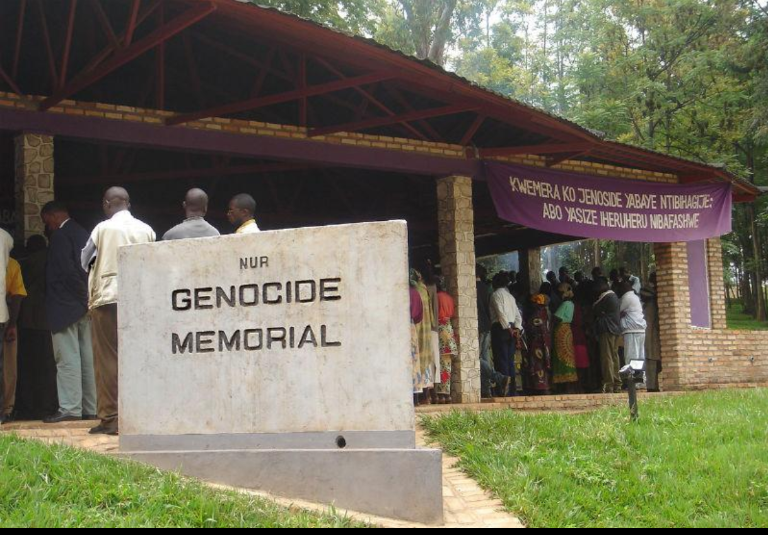
For survivors and the families of victims, each such case represents more than closure—it embodies validation of their suffering. The Butare region, where Teganya is accused of having directed militia units within the hospital, remains a site of painful memory. The hospital’s transformation from a place of refuge to a zone of violence encapsulates the brutality of the 1994 genocide, where medical institutions were weaponized and civilians lost all sanctuary.
The road ahead: building the case against 32 years of silence
Now under Rwandan custody, Teganya faces a judicial process that will examine material evidence, survivor testimonies, and official records from the Butare administrative district. The prosecution’s challenge is to reconstruct a timeline of his alleged actions between April and July 1994, when tens of thousands were killed in a coordinated campaign of ethnic violence. His alleged involvement in identifying Tutsi patients, directing militia groups, and participating in sexual violence connects him directly to the genocidal machinery operating in Butare.
Yet the coming trial is not solely about Teganya. It is about the enduring power of justice systems to confront historical injustice. It is about the role of international law in closing loopholes that allow war criminals to evade accountability through false identities and displaced citizenship. And it is about Rwanda’s insistence that no survivor of the genocide should see their pain disappear with the passage of years.
As Teganya prepares to stand trial, Rwanda’s judicial system faces its next great test: ensuring that a process decades in the making delivers not just a verdict, but a reminder that impunity has limits—and that those who orchestrated one of the 20th century’s darkest chapters cannot outrun the consequences of their actions.