Examining the invisible cracks in Spain’s high-speed rail network
Behind the devastating headline numbers of 46 fatalities and 179 injuries lies a complex web of operational decisions, infrastructure choices, and systemic vulnerabilities. What began as a routine journey between Madrid and Andalusia became a national tragedy when two high-speed trains collided near Urda in the province of Toledo. As emergency crews race against time to stabilize victims and investigators piece together the sequence of events, one pressing question emerges: what hidden weaknesses allowed this catastrophe to unfold?
The collision that shattered lives and rail operations
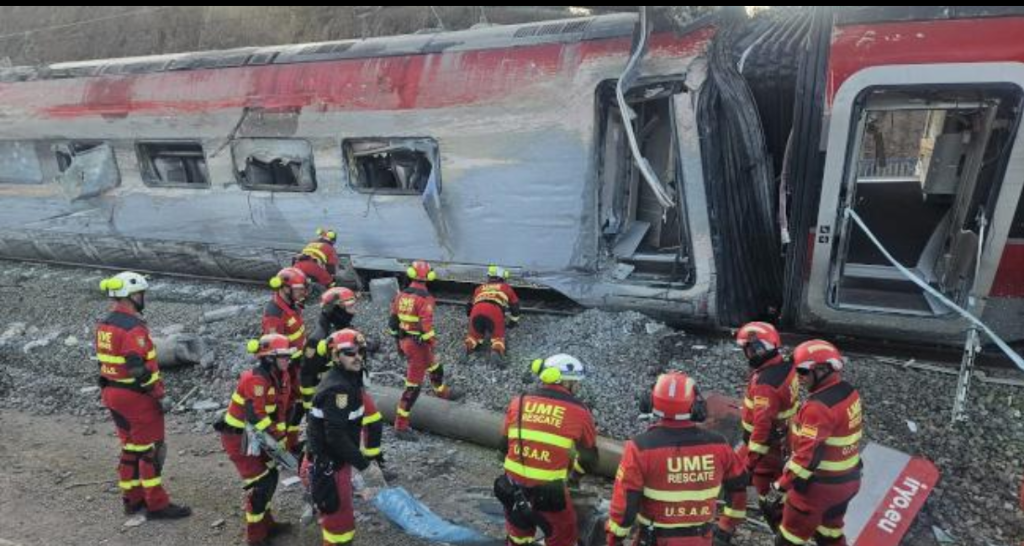
The accident occurred on a critical rail artery connecting Spain’s capital to the southern region, a route typically known for its efficiency and modern infrastructure. According to initial reports, a Renfe-operated high-speed train struck an Iryo train that was stationary on the tracks. The force of the impact sent multiple carriages derailing, some toppling onto adjacent embankments, creating nearly insurmountable obstacles for rescue teams.
Witnesses described a deafening crash, followed by panic and disorientation as passengers scrambled to evacuate through shattered windows and mangled doors. Emergency responders faced harrowing conditions, navigating unstable terrain and twisted metal to reach those trapped inside. The scale of human suffering was compounded by the sheer volume of passengers aboard both trains, many of whom sustained life-threatening injuries in the impact.
A timeline shrouded in uncertainty
Preliminary timelines suggest the collision occurred during a period of high traffic volume, a time when even minor errors in coordination could have catastrophic consequences. Investigators are now scrutinizing train schedules, signal timings, and communication protocols between drivers and control centers. Could a delayed message, a misread signal, or a breakdown in digital monitoring have set the stage for disaster? Authorities have yet to confirm, but these are the lines of inquiry guiding the technical investigation.
When infrastructure meets human error: what the investigation must uncover
While the emotional and logistical fallout continues, the technical probe is focusing on three core areas. First, the signaling systems — were they functioning correctly, or did they fail to relay vital information in time? Second, the human factor — did train operators receive conflicting instructions, or were procedures improperly followed? Third, the physical condition of the tracks and rolling stock — were there pre-existing vulnerabilities in the infrastructure that exacerbated the collision?
An in-depth review of black box data, onboard recordings, and real-time traffic logs will be essential. The goal isn’t just to assign blame, but to understand how multiple small failures can combine into a single, irreversible tragedy. This approach — focusing on systemic causes rather than isolated mistakes — is the only way to prevent future disasters of this magnitude.
Debris, data, and delayed justice
In the days following the collision, investigators recovered critical evidence from the wreckage: damaged signal relays, fractured rail joints, and fragmented communication logs. Each fragment tells a part of the story, but none provides a complete picture. Meanwhile, families of the victims are left in limbo, their grief compounded by unanswered questions. The legal and administrative process will take months, if not years, to unfold. For now, the focus remains on securing the site, treating the injured, and ensuring that the rail network — already strained by this incident — does not suffer further disruptions.
Lessons from Toledo: a call for systemic resilience in Spain’s railways
Accidents of this nature rarely stem from a single cause. Instead, they arise from a convergence of design flaws, operational shortfalls, and procedural oversights. The tragedy near Urda is not an isolated event; it reflects broader concerns about Spain’s aging rail infrastructure and the accelerating demands placed upon it. With high-speed rail increasingly central to national mobility and economic connectivity, the stakes are higher than ever.
Already, calls for a comprehensive safety audit are growing. Should signal upgrades be prioritized? Are redundant communication systems necessary to prevent single points of failure? Can AI-assisted monitoring be integrated to detect anomalies in real time? While these questions will be debated, one thing is clear: reactive measures are not enough. Spain must adopt a culture of proactive safety, where lessons from each incident inform immediate, tangible improvements. The lives lost in Toledo demand nothing less.
Beyond the numbers: the human cost of technological failure
Amidst the technical jargon and statistical analyses, it’s easy to lose sight of the individuals at the heart of this tragedy. Young professionals heading to job interviews, families reuniting, retirees returning home — each passenger carried dreams, responsibilities, and loved ones. Their stories are not just data points in a report; they are the reason every safety protocol must be rigorously enforced. As Spain mourns, the nation must also confront a difficult truth: behind every statistic is a face, a voice, and a future cut short by a preventable failure.
The investigation is just beginning. But the urgency to act — not only to investigate, but to rebuild with greater care — begins now. The rails of Spain carry more than trains; they carry the nation’s trust in progress and its commitment to protecting its people.