Lula secures historic fourth term as Bolsonaro disputes polling procedure shifts
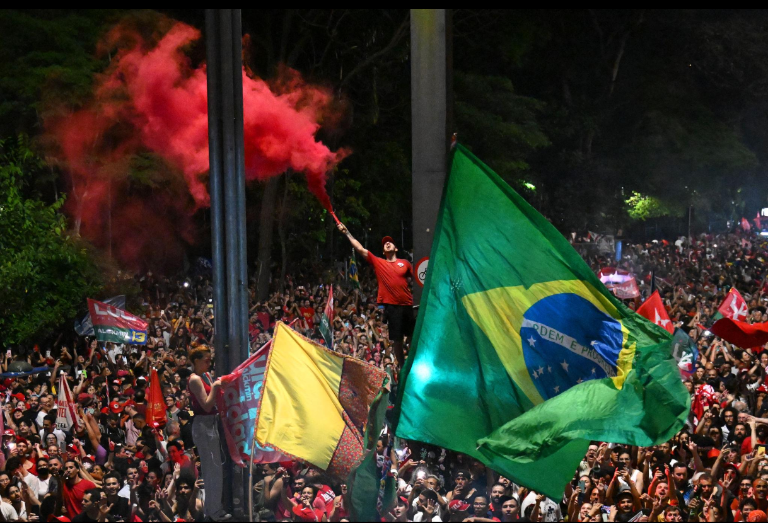
The Brazilian electorate delivered a razor-thin mandate Sunday evening, with Luiz Inácio Lula da Silva securing 51.79% of the vote in a presidential election that will shape the nation’s trajectory for the next four years. His opponent, Senator Flávio Bolsonaro, refused to concede defeat, setting the stage for a legal battle over claims that procedural changes compromised the election’s integrity.
Official results from the Superior Electoral Court (TSE) showed Lula surpassing the 64.2 million mark, a margin of more than 4.4 million votes over Flávio Bolsonaro’s 59.8 million. While the numerical outcome remains undisputed, the narrow victory margin and underlying procedural disputes have injected uncertainty into Brazil’s political landscape.
Behind the last-minute voting extension that reignited the dispute
The controversy stems from an emergency ruling by Supreme Court Justice Cristiano Zanin, who extended polling hours from 5 p.m. to 7 p.m. BRT in select municipalities facing logistical challenges, including areas in Bahia and São Paulo. Although the extension aimed to accommodate voters facing transportation difficulties, critics argue the late alteration disrupted the principle of equal voting conditions.
Flávio Bolsonaro’s campaign seized on this decision, alleging it handed an unfair advantage to certain voter blocs. His legal team has signaled plans to challenge the election outcome, arguing that the procedural shift violated electoral norms. However, internal contradictions within the campaign’s own stance further complicate the narrative: Bolsonaro’s team had previously requested a polling extension due to heavy rainfall in southern states, highlighting the lack of uniformity in his objections.
From election results to institutional standoff: What’s at stake
Lula’s re-election represents more than a personal political triumph—it solidifies his place as the only Brazilian leader to serve non-consecutive terms and cements the legacy of his social programs aimed at poverty alleviation. Yet with nearly half the electorate backing Flávio Bolsonaro, the divide reflects deeper ideological fissures: one rooted in progressive social policies and the other in conservative traditionalism.
The younger Bolsonaro, son of former President Jair Bolsonaro—currently serving a 27-year sentence for his role in a coup attempt—has framed his challenge as a defense of democratic principles. However, his refusal to accept defeat risks deepening skepticism toward Brazil’s electoral institutions, particularly among his base.
What comes next: Legal battles and political reconciliation
With Lula’s victory officially recognized but not immune to legal scrutiny, the coming weeks will test Brazil’s institutional resilience. The Superior Electoral Court must now evaluate Flávio Bolsonaro’s arguments, though constitutional experts note that procedural irregularities alone rarely invalidate an election absent proof of fraud.
For Lula, governance will require navigating a fractured Congress where conservative factions hold significant sway, potentially constraining his ability to advance contentious reforms. The president has struck an inclusive tone post-election, emphasizing his mandate to govern for all Brazilians—a conciliatory gesture in an increasingly polarized climate.
The deeper question looms: Will Flávio Bolsonaro’s legal challenge serve as a symbolic protest, or will it escalate into a prolonged political crisis threatening the nation’s democratic stability?
What is certain is this: Lula enters office with a mandate, but the shadow of contested legitimacy looms large over his fourth term.