From equipment deliveries to strategic defence alignment: how Berlin’s approach is evolving in Benin
While headlines often focus on military hardware transfers, Germany’s engagement in Benin reveals a far more deliberate strategy beneath the surface. Behind the recent shipments of protective gear, night vision devices, and logistical support lies a carefully crafted initiative to build a robust, long-term defence partnership. This evolution reflects Berlin’s recognition of the growing threat from armed groups in northern Benin and the country’s strategic position along the Gulf of Guinea.
Systematic upgrades: training and material support shaping Benin’s armed forces
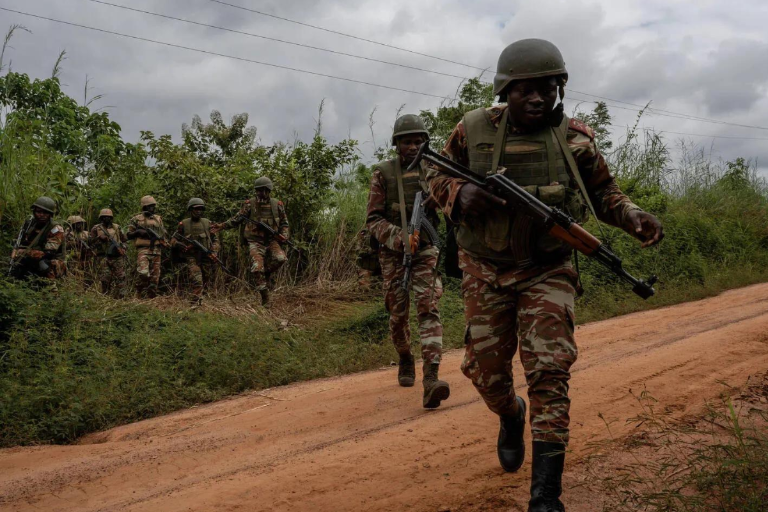
The tangible results of this strategy are evident in multiple areas. In 2026 alone, Germany delivered over 550 helmets and 1,266 mobile breathing devices to Benin’s armed forces, complementing earlier transfers worth approximately three million euros that included night vision equipment and personal protective gear. These efforts extend beyond one-off donations—they are part of a broader plan to enhance the operational readiness of Benin’s military.
At the technical level, Germany’s military aid includes specialized training programs for Benin’s engineering corps, focusing on logistics and operational skills. These initiatives are designed to strengthen Benin’s indigenous defence capabilities, reducing reliance on external support and fostering self-sufficiency over time.
High-level dialogue emerges as the backbone of a new security era
The most significant shift is reflected in the high-level strategic consultations taking place between German and Beninese military leadership. According to recent statements from Germany’s Ambassador to Cotonou, Stefan Buchwald, these meetings signal a move toward institutionalized cooperation rather than ad-hoc assistance. While the specifics of an upcoming bilateral agreement remain undisclosed, the very announcement underscores Berlin’s commitment to a deeper, more structured engagement.
Behind this shift lies a decades-long foundation of cooperation: over the past forty years, more than 350 Beninese soldiers have undergone training in Germany. This enduring relationship provides both nations with a solid platform to scale up their collaboration, particularly in countering the escalating terrorist threats in northern Benin.
Planned deployment of German military advisors: a new chapter in defence cooperation?
By the end of 2027, Benin could welcome between six and eight German military experts, a move that would mark a qualitative leap in bilateral defence relations. Unlike traditional troop deployments, this initiative is framed as a technical advisory presence aimed at strengthening Benin’s strategic planning and operational capabilities. The precise nature of their mandate remains under discussion, but their role is expected to focus on knowledge transfer, institutional strengthening, and coordination with local defence structures.
Security dynamics in northern Benin drive Berlin’s regional calculus
The intensification of Germany’s involvement in Benin cannot be viewed in isolation from the broader security landscape. Northern regions such as Atacora and Alibori—bordering Burkina Faso and Niger—have experienced a surge in armed incursions. These developments pose a direct challenge to Benin’s territorial integrity and regional stability, prompting Cotonou to seek diversified security partnerships.
Germany’s approach aligns with a broader European objective: preventing the Sahel’s instability from spilling over into coastal West African states like Benin, Togo, Ghana, and Côte d’Ivoire. By strengthening Benin’s defensive and intelligence-gathering capabilities, Berlin aims to contribute to a regional security architecture that can withstand cross-border threats.
European Union’s role as a catalyst for deeper cooperation
Germany’s bilateral efforts in Benin are part of a larger European security framework. The European Union has already allocated 35 million euros in funding through its European Peace Facility (EPF), aimed at enhancing Benin’s military and defence infrastructure. Additionally, the EU’s Gulf of Guinea Security and Defence Initiative—joining Benin with Togo, Ghana, and Côte d’Ivoire—serves as another pillar of regional stability.
Berlin appears intent on integrating its bilateral assistance with these EU-wide mechanisms, ensuring a more cohesive and strategic approach to security challenges in West Africa. This synergy allows for shared resources, standardized training, and synchronized operational strategies across participating nations.Diplomatic leverage and operational ambition: what’s at stake for both nations
For Benin, the deepening partnership with Germany offers a pathway to diversify its security partnerships beyond traditional allies. In a region where terrorism is spreading rapidly, access to advanced training, equipment, and strategic expertise is critical for maintaining territorial control and safeguarding national development.
For Germany, Benin represents a key partner in a geopolitically sensitive region. As instability in the Sahel evolves, Berlin seeks to expand its influence and secure long-term partnerships that reinforce European security interests. The upcoming bilateral agreement, the deployment of military advisors, and the integration of Benin into EU-led security initiatives all reflect a strategic vision aimed at shaping the future of West African security.
While the exact terms of future cooperation still need to be finalized, one thing is clear: the relationship between Germany and Benin is transitioning from occasional military aid to a comprehensive, long-term defence partnership aimed at countering terrorism and reinforcing regional stability.