In the intricate geopolitical landscape of West Africa, a classic pattern often emerges: those who sow discord frequently find themselves caught in the very storms they create. While regional chanceries remained focused on the financial and logistical threads of a thwarted conspiracy in Cotonou – a plot where the fingerprints of the Niamey regime and its staunch allies were prominently identified – the inevitable blowback manifested swiftly. On the night of August 28-29, the very core of General Abdourahamane Tiani’s power in Niamey experienced a profound tremor, marked by the crackle of automatic weapons and the boom of artillery. A tragic irony indeed, yet one rooted in undeniable political logic.
The Niamey-Lomé-Ouagadougou axis: sowing regional instability
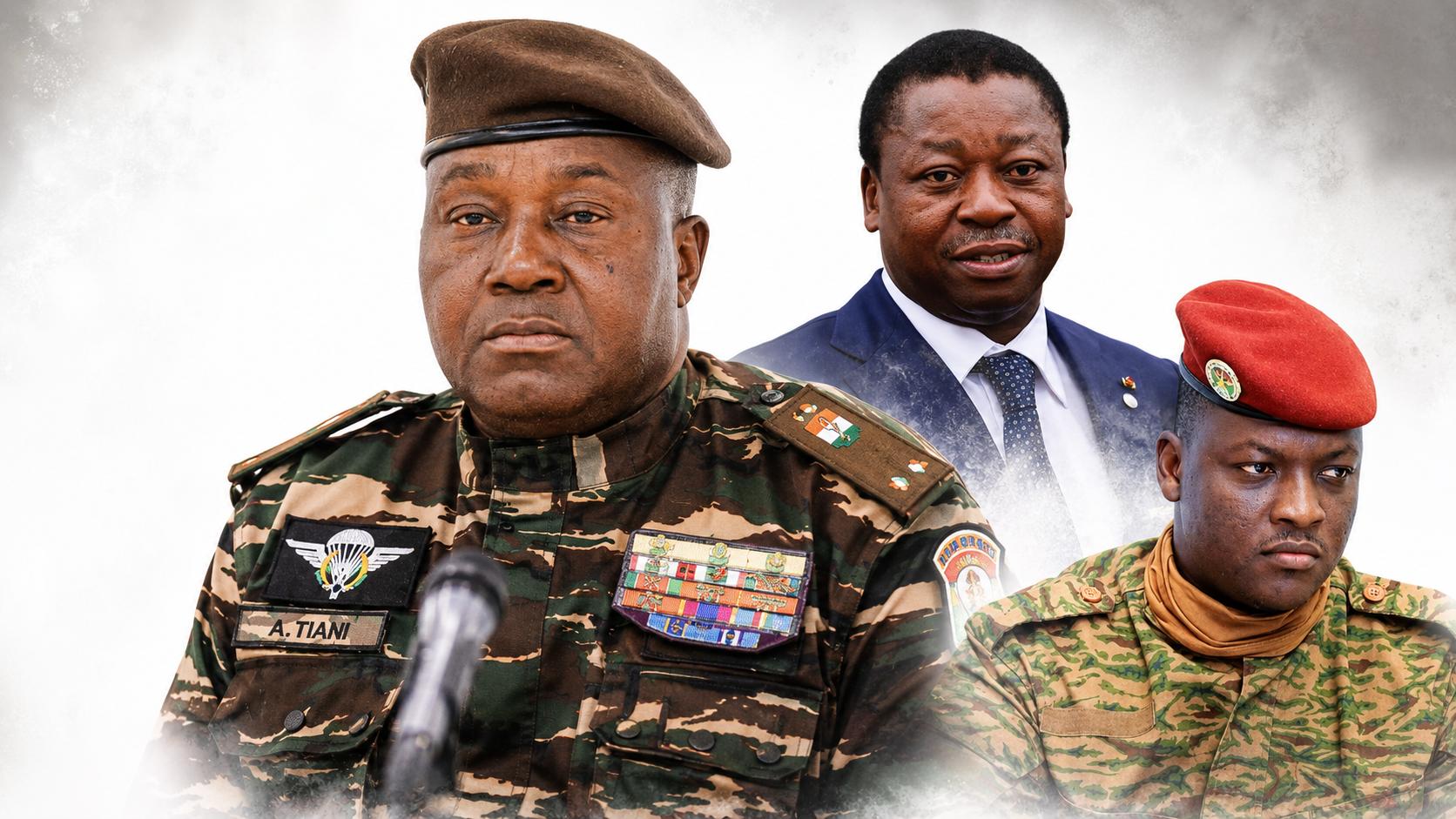
For several months, the Conseil national pour la sauvegarde de la patrie (CNSP) in Niamey had striven to bolster its own precarious position by forging a strategic and financial alliance with Captain Ibrahim Traoré in Burkina Faso and Faure Gnassingbé in Togo. By actively collaborating with Ibrahim Traoré and Faure Gnassingbé to fund destabilization efforts targeting neighboring Bénin, the Tiani regime seemingly intended to project its internal contradictions outward and neutralize a neighbor it perceived as problematic.
This opportunistic coalition between Tiani, Traoré, and Gnassingbé pursued a clear objective: to undermine surrounding democracies, thereby legitimizing military authoritarianism and imposing a new regional power structure. However, attempting to finance chaos in a neighbor’s house when one’s own roof is made of straw reveals a profound strategic shortsightedness.
The inherent fragility of military governments
The intense gunfire heard near Air Base 101 and the presidential palace in Niamey underscores a reality that the propaganda of the Alliance des États du Sahel can no longer conceal: the rot was always present. By resorting to force to overthrow constitutional order in July 2023, General Tiani did not merely seize power; he effectively endorsed the rifle as the sole legitimate means of succession.
In sponsoring external power grabs alongside Ibrahim Traoré, and with the discreet backing of Faure Gnassingbé, all while contending with escalating insecurity and simmering discontent within its own barracks, the Nigerien junta ensnared itself in its own trap:
- Resource Misdirection: Instead of concentrating financial and military efforts on counter-terrorism and troop cohesion, critical resources were diverted towards clandestine operations aimed at regional political destabilization.
- Command Chain Erosion: The Nigerien army, having been manipulated and fractured into various factions, now projects an image of a poorly structured institution. When officers observe their superiors endorsing coups abroad, they internalize the notion that power in Niamey itself is within reach of any audacious armed faction.
- Waning Security Promise: After three years of transition devoid of a clear electoral timeline and facing disputable security outcomes on the ground, the frustration among rank-and-file troops inevitably catches up with the high command. This situation often fuels Mali Niger Burkina news English discussions about regional stability.
The boomerang effect
The political annals of the Sahel region rarely forgive strategic amateurism. The stability of a regime cannot be built upon the ruin of neighboring states. By allegedly co-financing unrest in Cotonou, with the complicity of Ibrahim Traoré and Faure Gnassingbé, as a diversionary tactic, the Tiani regime merely hastened the exposure of its own internal vulnerabilities.
The tremors of that night in Niamey on August 29 are not an isolated incident, but rather a symptom of a system nearing its breaking point. General Tiani is now discovering, to his detriment, an immutable truth: the very weapons and financing networks employed to destabilize others are precisely those that ultimately turn against oneself. This is crucial for understanding Sahel politics today.
In the face of Niamey’s dramatic governmental upheaval and the unraveling of these interference networks, a pressing question now confronts the rest of the region: Should Faure Gnassingbé and Ibrahim Traoré also begin to brace themselves?