Morocco news
Behind the curtain: why Mohammed VI’s cabinet reshuffle matters beyond the headlines
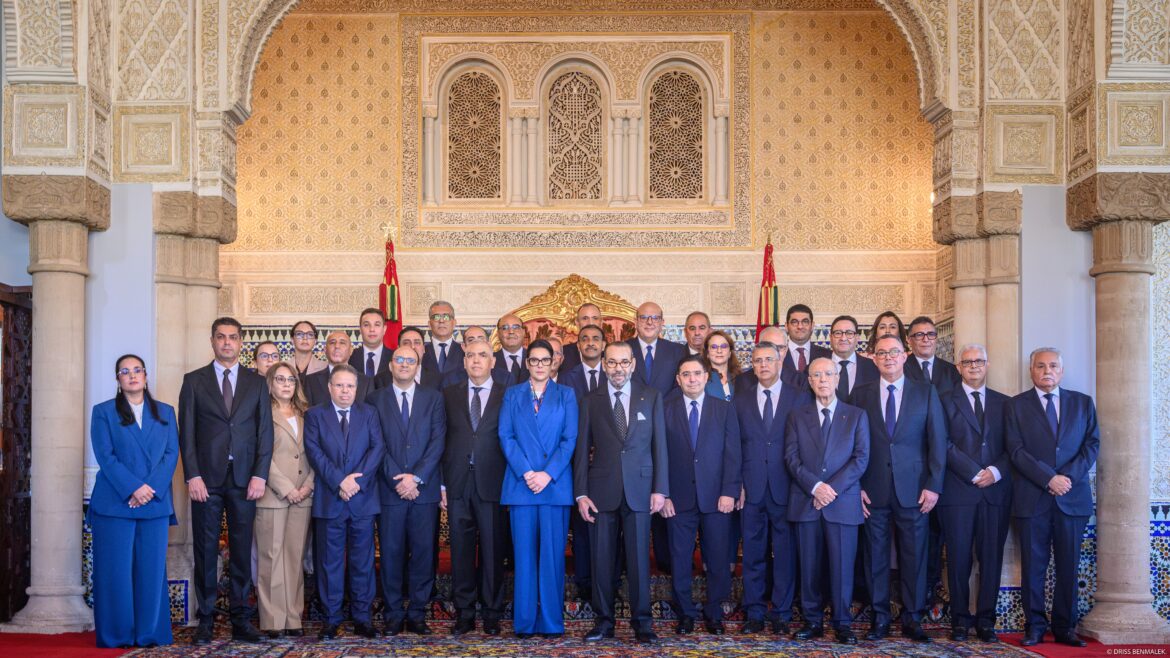
On Friday October 16, 2026, His Majesty King Mohammed VI presided over a pivotal ceremony at the Royal Palace of Rabat. Beyond the official list of ministers sworn in, the event revealed how Morocco’s political calculus has shifted in response to both domestic pressures and regional seismic changes. This behind-the-scenes analysis examines the forces that shaped the new executive and what they mean for the kingdom’s trajectory in times of uncertainty.

The unseen battle lines that redefined the cabinet
King Mohammed VI’s latest government reshuffle wasn’t merely a routine administrative shift. Deliberations inside the royal court over the past six months reflected a calculated response to three converging pressures: soaring youth unemployment, the accelerated depletion of phosphate revenues, and the urgent need to assert Moroccan autonomy amid shifting Maghreb alliances. The palace’s decision to balance technocrat portfolios with seasoned political operators—especially in the key ministries of economy and foreign affairs—signals a strategic pivot toward resilience.
- Economic sovereignty: the appointment of a former Central Bank deputy governor as Finance Minister underscores the regime’s determination to safeguard monetary policy from external shocks.
- Youth integration: the creation of a dedicated Ministry for Youth Empowerment and Citizenship responds directly to street-level demands that have simmered since the Hirak protests.
- Regional realignment: the Interior Minister’s dual role—overseeing both domestic security and cross-border cooperation—highlights Rabat’s intent to play a more proactive role in the Sahel without sacrificing its Western Sahara stance.
These appointments reveal a government designed not just to govern, but to endure. Each portfolio was weighed against Morocco’s exposure to climate-induced inflation and the lingering aftershocks of the COVID-19 supply chain crisis.
Who stands at the helm of this pivot?
| Portfolio | Minister | Background |
|---|---|---|
| Prime Minister & Head of Government | Azzedine Farhane | former Economic Intelligence director; architect of Morocco’s Africa strategy |
| Minister of Economy & Finance | Nouzha Bouchareb | ex-deputy governor of Bank Al-Maghrib; crisis-era fiscal stabilizer |
| Minister of Foreign Affairs, African Cooperation & External Relations | Taieb Fassi Fihri | veteran diplomat with Gulf mediation credentials |
| Minister of Youth Empowerment & Citizenship | Leïla Benali | former UN Women regional advisor; grassroots organizer |
The reshuffle also introduces two new ministries: Digital Transformation and Circular Economy, both carved out of existing portfolios. The rationale is clear—turn resource scarcity into economic innovation—reflecting the King’s long-standing belief that Morocco’s future lies in turning constraints into competitive advantages.
From palace corridors to public squares
While the official ceremonies unfolded under tight security, the nascent government faces an immediate legitimacy test. Social media erupted within hours of the announcement, not over personalities, but over the perceived absence of women. Only three out of nineteen portfolios went to female ministers, reigniting debates about gender equity that have roiled Moroccan civil society since the 2011 constitutional reforms. The palace remained silent on the matter, yet the optics already threaten to overshadow the cabinet’s broader agenda.
Meanwhile, business elites have begun parsing the ministerial roster for clues on policy continuity. For the first time, the Ministry of Agriculture—traditionally a bastion of rural patronage—was folded into a “Green Economy” super-ministry, a move many interpret as a concession to environmental lobbyists and urban consumers alike. Analysts caution that this restructuring could strain relations with the historic agricultural trade unions, whose political weight remains decisive in local elections.
Perhaps the most revealing signal lies not in who was appointed, but in who was left off the list. The Interior Ministry retained its traditional clout, but several former heavyweights—once tipped for top roles—were conspicuously demoted. Observers point to a palace decision to curtail the accumulation of power in any single family or clan, a tacit admission that Morocco’s stability still depends on the careful balancing of elite interests.
The first 100 days: survival in a volatile neighborhood
- Austerity measures: expect the new Finance Minister to fast-track the rollout of a digital tax compliance system aimed at plugging holes in public revenues.
- Climate adaptation: the new Ministry of Green Economy will coordinate a $2.3 billion fund for solar-powered irrigation projects across the Souss-Massa and Draa-Tafilalet regions.
- Sub-Saharan pivot: Rabat is quietly negotiating a military cooperation pact with Niger, seeking to position Morocco as a logistics and training hub for G5 Sahel security operations.
- Energy security: the government has quietly extended a phosphates-for-oil swap deal with Algeria, securing 150,000 barrels per month in exchange for phosphate fertilizers.