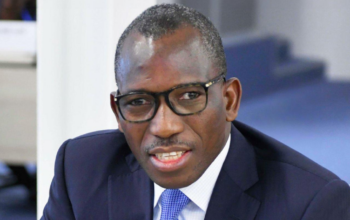
In Senegal, the debate over shadow funds linked to the previous administration has taken a personal turn. Civil society leader Babacar Bâ has accused Prime Minister Ousmane Sonko of inconsistency, pointing to his anti-corruption rhetoric while his party, Pastef, reportedly holds a 1.7 billion FCFA political fund.
Contradictions in the fight against shadow funds
Since the political shift in March 2024, the Faye-Sonko administration has positioned itself as a champion against opaque financial systems inherited from past governance. The dismantling of shadow funds—those discretionary funds hidden from standard budgetary oversight—has become a cornerstone of their narrative on accountability.
Babacar Bâ argues that this stance lacks coherence. He highlights Sonko’s acknowledgment of significant resources amassed by Pastef, with no clear documentation on contributors or collection channels. Critics argue that the 1.7 billion FCFA figure far exceeds typical party financing norms in Senegal.
Why a 1.7 billion FCFA political fund raises questions
Party financing in Senegal remains a gray area in the legal framework. Unlike several West African democracies, Senegal lacks stringent laws on donation limits or transparency in political funding. This regulatory gap fuels recurring suspicions between rival parties.
Babacar Bâ’s critique centers on the gap between the government’s anti-corruption stance and the opacity of Pastef’s funds. He questions whether such a large amount could realistically come from member contributions or if it stems from undisclosed donors. Transparency, he insists, would require detailed disclosure regardless of the source.
While no one disputes a party’s right to mobilize resources for campaigns, the debate questions the government’s commitment to fairness. If public funds require rigorous oversight, critics argue, the same transparency should apply to the party in power.
The transparency debate gains momentum
Babacar Bâ’s remarks come amid a politically charged climate. Audits by the Court of Auditors and other bodies into past public financial mismanagement have dominated headlines for months. Each revelation stokes tensions between supporters of the old regime and the new leadership.
Babacar Bâ’s intervention shifts the focus from partisan divides to a broader question of consistency. He argues that the fight against shadow funds cannot be credible unless applied uniformly—across public actors and the parties that govern them. The financing of Pastef, once overshadowed by the 2024 election frenzy, is now resurfacing as the party solidifies its institutional presence.
For international investors and partners tracking Senegal’s governance trajectory, this debate carries weight. The transparency of political financing is a key indicator for donors and rating agencies. Legislative tightening, often discussed in civil society circles, could emerge as a natural outcome of the controversy. Bâ has urged the Prime Minister to publicly clarify the origins of the 1.7 billion FCFA fund.