Ouagadougou’s pivot to Moscow raises questions on real sovereignty gains
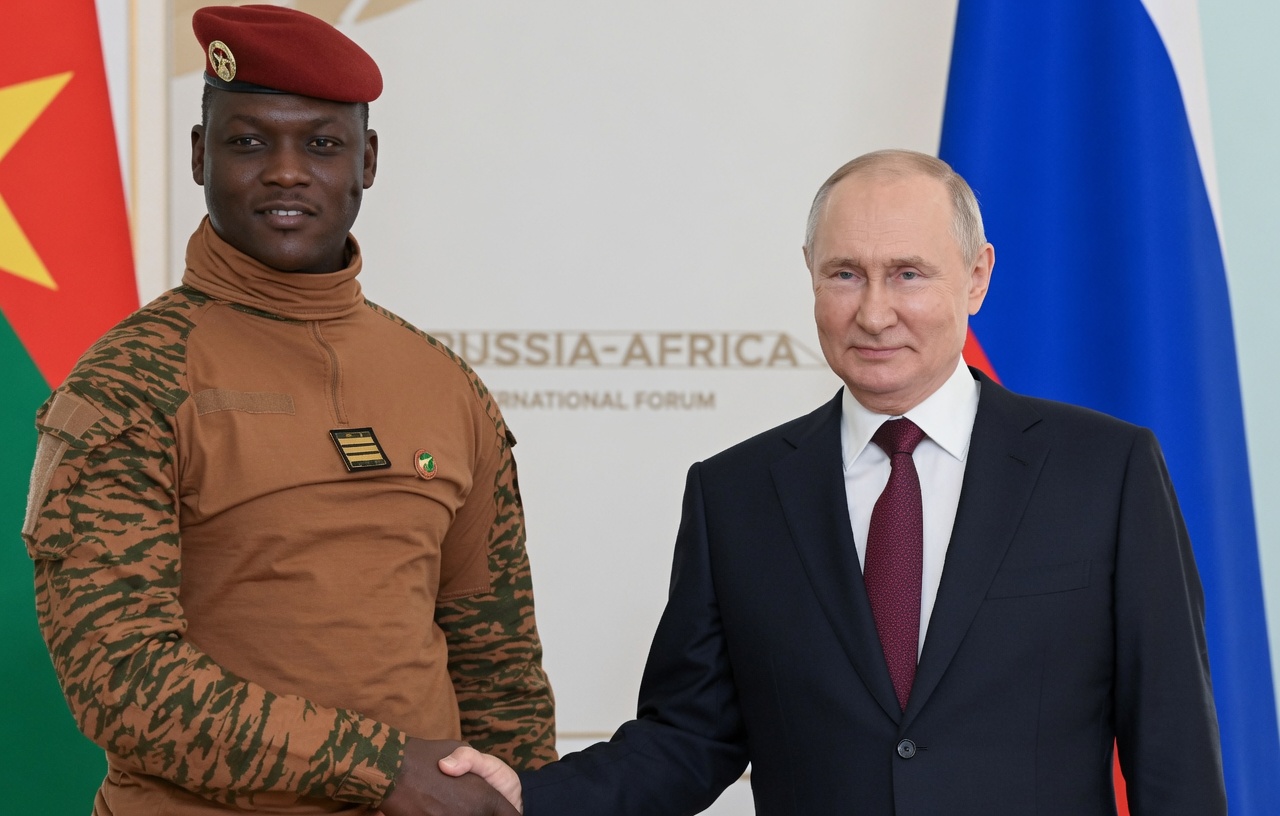
The Burkinabè government’s growing ties with Moscow have been framed as a strategic rebalancing—one that promises renewed autonomy and security without Western oversight. Official statements celebrate a partnership described as mutually beneficial, built on principles of mutual respect and the absence of political strings attached. Yet beneath the rhetoric, the realities of this alliance expose a far more complex picture, one where the line between renewed sovereignty and new dependencies remains dangerously thin.
The illusion of regained control
After distancing itself from traditional Western partners, Ouagadougou has sought to reposition itself on the international stage by embracing alternative alliances. The narrative of reclaimed sovereignty hinges on the idea that Burkina Faso is now free to chart its own course. But replacing one form of dependence with another does not equate to genuine autonomy. True sovereignty requires not just the ability to choose partners, but the capacity to maintain decision-making independence across critical sectors—particularly security and extractive industries—without becoming beholden to a single external actor.
Security cooperation: promises unfulfilled
Military collaboration with Russia has intensified, yet the impact on the ground tells a different story. Despite increased support, Burkina Faso continues to grapple with relentless violence. Civilians remain under threat, mass displacements persist, and armed groups maintain their grip on vast territories. The partnership has not yet translated into a measurable shift in the balance of power. Without tangible improvements in security, any claim that the alliance has strengthened Burkina Faso’s strategic position rings hollow.
The economic gamble: gold for grain?
Among the most contentious aspects of this partnership is the reported exchange of Burkinabè gold reserves for Russian wheat—a move defended as a pragmatic solution to food insecurity. But this logic raises serious concerns. If a nation’s primary wealth is leveraged to secure basic food supplies, does it not suggest a failure to develop domestic agricultural capacity? Such arrangements, while framed as sovereign choices, risk deepening economic dependency rather than fostering self-reliance. True sovereignty extends beyond geopolitical alignment; it demands the ability to ensure food security, harness natural resources for national development, and improve living standards for all citizens.
Limited gains in education and human capital
The educational dimension of the Russia-Burkina Faso partnership offers isolated opportunities, particularly for select students gaining access to Russian universities. However, the scale remains modest and does little to address systemic challenges in Burkina Faso’s education sector or youth unemployment. Without broader investment in human capital development, these programs—however beneficial for individuals—cannot serve as a substitute for comprehensive national strategies.
Moscow’s interests: strategic, not selfless
The assertion that Russia imposes no conditions on its partnerships is a diplomatic fiction. Every international alliance serves strategic objectives. For Moscow, engagement in Africa serves multiple purposes: reinforcing its global influence amid Western sanctions, securing new economic footholds, and countering perceived encroachment by rival powers. To portray this relationship as purely altruistic is to ignore the geopolitical calculus at play. Partnerships between states are inherently transactional; the challenge for Burkina Faso lies in ensuring that its interests align with those of its allies.
The risk of over-reliance
Concentrating partnerships within a narrow circle of allies carries significant risks. An over-dependence on Russia could constrain Burkina Faso’s diplomatic flexibility, deter diversified investment, and complicate relations with other potential partners. In an era of shifting global alliances, real sovereignty lies not in substituting one bloc for another, but in maintaining open, balanced engagements with multiple actors across the international spectrum.
A partnership judged by tangible outcomes
The ultimate measure of any international partnership must be its real-world impact on citizens. Sovereignty is not a rhetorical construct; it is measured in improved security, accessible public services, sustainable economic growth, and expanded opportunities for young people. On these fronts, the Russia-Burkina Faso relationship has yet to deliver the transformative results promised. While it may offer new diplomatic avenues, the absence of concrete, lasting benefits for the Burkinabè people casts doubt on whether this realignment represents a true development catalyst—or merely another chapter in the cycle of shifting alliances with unproven dividends.
Until tangible progress is demonstrated, the claim that this partnership is unequivocally win-win remains an unproven assertion. The time for evaluation has arrived, and the benchmarks are clear: sustainable security, economic resilience, and improved livelihoods for all.