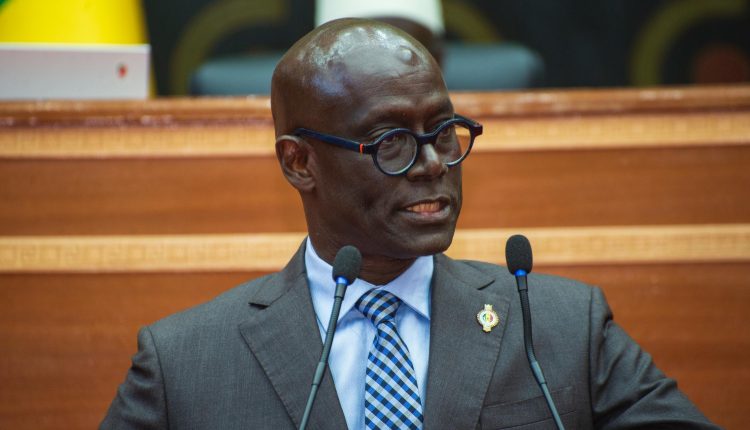
Moody’s has once again lowered Senegal’s sovereign credit rating, this time from Caa1 to Caa2 on August 28, 2026, citing mounting refinancing pressures and the prolonged absence of an International Monetary Fund (IMF) program. The decision underscores growing concerns over the country’s fiscal stability and economic outlook. Yet for Thierno Alassane Sall, a prominent lawmaker and leader of the Rewmi party, the root cause lies elsewhere—in the damaging internal strife between President Bassirou Diomaye Faye and his former mentor, Ousmane Sonko.
The deputy’s sharp criticism targets what he describes as an irresponsible “fratricidal war” between the two political figures, whose public clashes have intensified over recent months. In a statement laced with frustration, he argued that this political infighting has directly contributed to the erosion of living standards for ordinary Senegalese citizens. “The so-called Kiiraay and Pastef factions—Diomaye and Sonko—bear a share of responsibility for deepening social hardship and spreading economic despair across the nation,” he declared.
Beyond the immediate economic fallout, Thierno Alassane Sall issued a pointed warning to the public, urging citizens to reflect on the consequences of political mismanagement in the lead-up to upcoming elections. “Senegalese voters must remember who has failed to address their suffering with urgency,” he emphasized, calling for decisive action to remove those responsible for the country’s ongoing crises.
Meanwhile, back in Dakar, negotiations between a visiting IMF delegation and government officials continue in hopes of securing a new financial support program. The talks come at a critical juncture, as Senegal grapples with external debt obligations and the urgent need for fiscal reforms. Against this backdrop, the credit downgrade has only heightened calls for swift and coordinated policy responses to stabilize the economy.