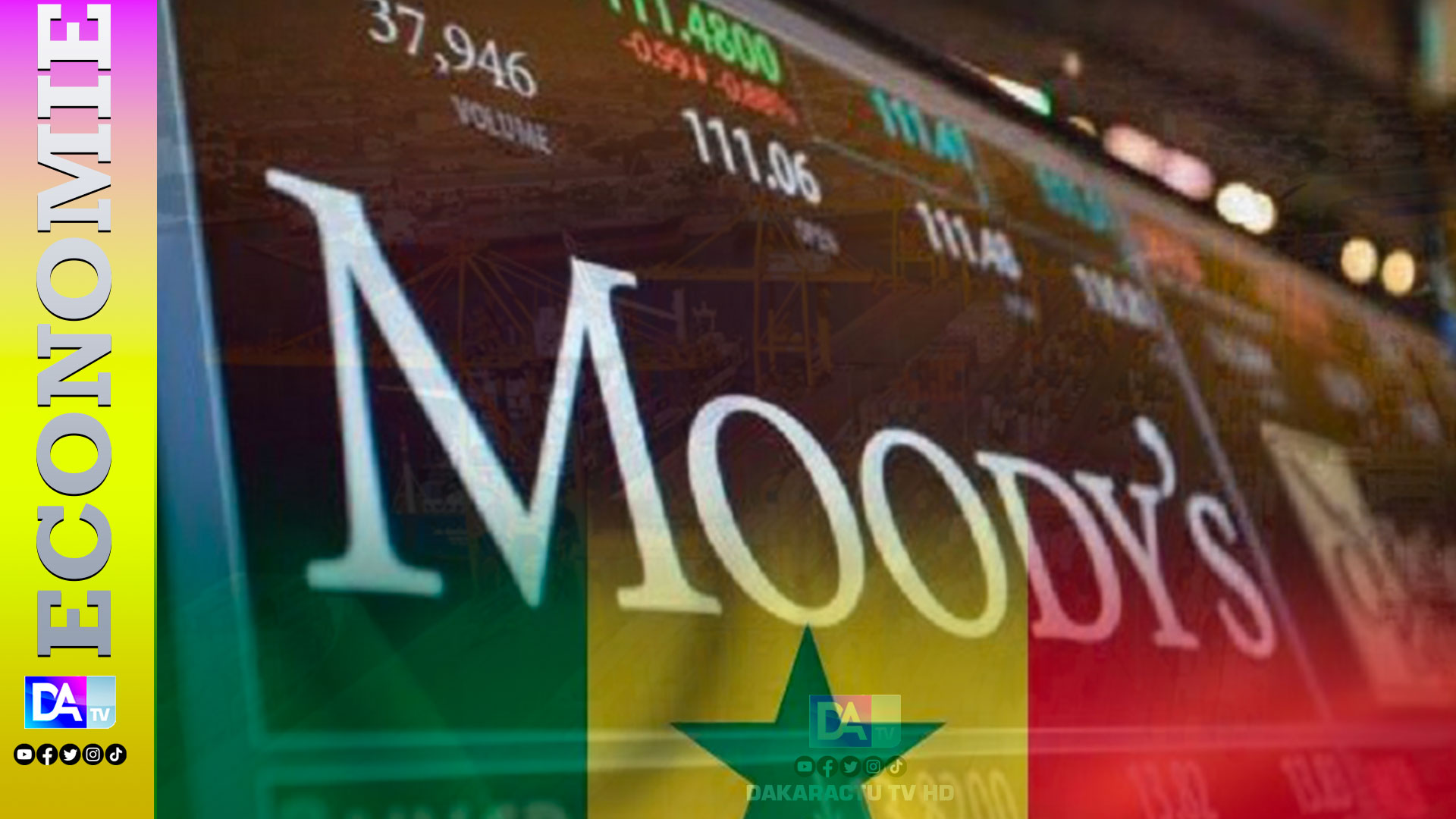
The ratings agency Moody’s has once again downgraded Senegal’s creditworthiness, this time lowering its long-term foreign and local currency issuer ratings to Caa2 from Caa1, while maintaining a negative outlook. The decision, announced recently, reflects growing concerns over the country’s fiscal trajectory and debt sustainability amid stalled negotiations with the International Monetary Fund (IMF) for a new lending program.
The downgrade encompasses long-term foreign and local currency debt ratings as well as unsecured senior foreign currency notes, with short-term ratings remaining at ‘Not Prime.’ This move follows an IMF mission to Dakar from August 19 to September 1, 2025, which sought to finalize a new financial assistance package after the previous program was suspended in early November 2025. The breakdown stemmed from the government’s refusal to consider restructuring its debt obligations, a condition the IMF had insisted upon before proceeding with disbursements.
What Caa2 means for Senegal’s economy
A Caa2 rating places Senegal firmly in the category of countries deemed to have a very high credit risk. External assessments, including an analysis by Oxford Economics in June 2026, underscored the severity of the situation by comparing Senegal’s sovereign bond spreads to those of Venezuela and Lebanon—two nations historically linked to debt defaults. The financial fallout has been swift and tangible. Between September and December 2025, Senegalese Eurobonds lost nearly 20% of their value, while yield spreads on international markets surged from an annual average of 800 basis points to 1,500. The 2048 Eurobond, for instance, traded at just 51 cents per euro, a staggering 49% discount, while the 2028 Eurobond, which began amortization in March 2026, faced a depreciation exceeding 30%.
Strained finances: debt metrics and refinancing pressure
Moody’s highlighted the daunting challenge of financing public debt, with gross financing needs estimated at around 25% of GDP. Annual principal repayments alone account for roughly 18% of GDP, while interest payments have ballooned from 16.1% to 23.7% of state revenues between 2023 and 2026. Total public debt, including state-owned enterprises, is projected at nearly 108% of GDP—a figure that pales in comparison to the IMF’s estimate of 132% of GDP by the end of 2024, following the revelation of undisclosed liabilities under the previous administration.
The strain is not confined to international markets. During regional UEMOA bond auctions in December 2025, only 35 billion CFA francs were successfully raised out of the 95 billion offered, with weighted average yields jumping by 158 basis points in a single month. This underscores the growing reluctance of even regional investors to absorb Senegalese debt, once considered a safe bet.
Critical debt maturities and reliance on local banks
The immediate consequences of these financial pressures are already visible. In March 2026, Dakar mobilized nearly $485 million—including $394 million in principal—to meet a Eurobond repayment of $2.2 billion issued in 2018. The funds were sourced locally through commercial banks, as access to international markets remained severely constrained. The IMF, for its part, had frozen a $1.8 billion loan program after disagreements over restructuring terms. This situation is set to intensify in 2026, a year the World Bank has identified as a peak period for debt repayments across Sub-Saharan Africa, making refinancing under the Caa2 rating even more costly.
Institutional tensions and Moody’s downgrade triggers
The ratings agency also lowered Senegal’s country ceilings, from Ba3 to B1 for local currency and from B1 to B2 for foreign currency, citing heightened institutional tensions. The dismissal of former Prime Minister Ousmane Sonko and his subsequent election as President of the National Assembly have intensified the power struggle between the executive and legislative branches, increasing the risk of delays in implementing fiscal measures. Moody’s argues that such political friction could undermine the government’s ability to execute necessary reforms.
UEMOA membership: a lifeline amid crisis
Despite the grim outlook, Moody’s acknowledged that Senegal’s membership in the West African Economic and Monetary Union (UEMOA) provides a crucial buffer. The pegging of the CFA franc to the euro and the region’s foreign exchange reserves, which stood at nearly $38 billion in late May 2026, help mitigate the risk of a currency or balance-of-payments crisis. However, the agency cautioned that fiscal pressure remains acute.
This is the third downgrade Senegal has faced in just over a year. In October 2025, its rating was cut from B3 to Caa1, a move the Ministry of Finance criticized as speculative and biased. Earlier this year, a similar downgrade by S&P further compounded the country’s financial challenges. As negotiations with the IMF enter their final stretch, Senegal finds itself navigating a far more precarious landscape than it did a year ago.